Mountain Deerfern Care (Blechnum tabulare)

Also known as: Fynbos Fern, Mountain Blechnum, False Tree Fern, Tough Fynbos Fern, Leathery Hard Fern, Mountain Hard-Fern
Mountain Deerfern

About Mountain Deerfern

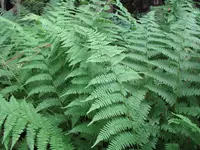
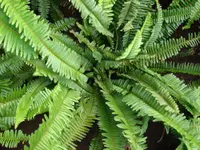
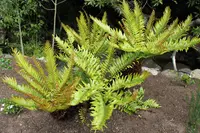
Mountain deerfern, Blechnum tabulare, is an evergreen fern valued for its strong architectural shape and upright rosettes of leathery, divided fronds. Young plants often form a low, neat crown, while mature specimens can develop a short trunk, giving a small tree-fern look in time.

This species is native to higher altitude regions of southern Africa, where it grows in cool, moist habitats with consistent humidity. Its preference for stable moisture, cooler temperatures, and sheltered light makes it moderately demanding in cultivation.

Gardeners who want to care for Mountain Deerfern need to provide evenly moist, well-drained, slightly acidic soil and protection from harsh sun and drying winds.

Main Plant Requirements

Care Difficulty

Moderate Care

Light Preference

Partial Shade

Water Requirements

Keep Soil Moist

Temperature Preference

Warm Climate

Hardiness Zone

9–11

Soil Texture

Loamy, Peaty, Organic-rich

Soil pH

Acidic (5.5–6.5)

Soil Drainage

Moist but well-drained

Fertilization

Light (every 4–6 weeks)

Get Personalized Care Plan

Scan your plant to receive care tips personalized for your specific plant

Available on iOS and Android

How to Care for the Mountain Deerfern

This fern prefers bright, indirect light with protection from harsh midday sun.

  • Provide 3–5 hours of gentle morning sun or bright, filtered light under high tree canopy or shade cloth.
  • Allow partial to full shade during hot afternoons to prevent frond scorch and pale, crisp tips.
  • In summer, increase shade if fronds yellow or curl; in winter, choose the brightest frost-free spot to maintain compact, healthy Mountain Deerfern growth.

This fern prefers steadily moist, never waterlogged soil.

  • Water when the top 2–3 cm of soil feel slightly dry, aiming to keep the root zone consistently damp.
  • Use loose, humus-rich soil with good drainage; prolonged puddling, sour smell, or black, mushy roots indicate overwatering.
  • In cool seasons, let the surface dry a bit more between waterings; drooping, crisp fronds signal underwatering, while yellowing and base rot suggest excess moisture around Blechnum tabulare.

This fern prefers cool to mild, frost-free conditions.

  • Aim for 55–75°F (13–24°C) for steady growth, with best vigor around 60–70°F (16–21°C).
  • Protect from frost; sustained exposure below 30°F (-1°C) can kill fronds and damage the crown, especially in exposed sites.
  • It tolerates short heat up to 85°F (29°C) if soil stays moist and roots are mulched, but prolonged heat and dry air cause browning and stress.

This fern prefers consistently moist air and benefits from elevated humidity indoors.

  • Aim for 60–80% humidity; it tolerates brief dips lower but prolonged dry air will brown frond tips on Mountain Deerfern.
  • Crisping pinnae edges, stalled new fronds, and curling fiddleheads indicate humidity stress rather than underwatering.
  • Increase humidity with a nearby humidifier, grouping plants, or a wide pebble tray, avoiding direct misting that can promote fungal spots.

This fern grows best in consistently moist, airy, organic-rich soil that never becomes waterlogged.

  • Use a loose, humus-rich mix such as 2 parts peat-free compost, 1 part fine bark, and 1 part perlite for structure and air spaces.
  • Ensure fast drainage so water runs through in seconds, yet the mix stays evenly damp; avoid heavy garden soil that compacts.
  • Target slightly acidic to neutral pH, roughly 5.5–7.0, which supports nutrient uptake for Blechnum tabulare.
  • Improve aeration by adding fine orchid bark or coarse perlite and avoid dense pots where the center remains soggy for hours.

This species is suitable for container growing where consistent moisture and shelter can be controlled.

  • Choose a pot just slightly wider than the rootball so the mix dries evenly and does not stay wet for days near the roots.
  • Use a stable, heavier container if the crown becomes tall, preventing the fern from tipping in wind or when watered heavily.
  • Select a pot material that matches watering habits, such as terracotta for faster drying or glazed clay to retain moisture longer.

Blechnum tabulare benefits from light, steady feeding during active growth but does not need heavy fertilization.

  • Use a balanced liquid fertilizer (for example 10-10-10) at 1/4–1/2 strength every 4–6 weeks in spring and summer.
  • Alternatively, apply a thin layer of well-rotted compost over the root zone once in spring for slow nutrient release when growing Mountain Deerfern outdoors.
  • Avoid high-salt synthetic products that can scorch fine roots, especially in containers with limited leaching.
  • Stop feeding in fall and winter, when growth slows, to prevent weak, elongated fronds.

Blechnum tabulare needs only light pruning to maintain a tidy, healthy crown of fronds.

  • Best timing is late winter or early spring, before strong new growth starts, or as needed through the season.
  • Cut dead, yellowing, or damaged fronds cleanly at the base to reduce disease and pest harborage.
  • Thin out crowded inner fronds to improve air flow and light penetration without exposing the crown completely.
  • Use clean, sharp scissors or pruners, disinfecting blades between plants to limit fungal and bacterial spread.

This fern resents major disturbance, so repotting or transplanting Blechnum tabulare is done infrequently and with care.

  • Check for roots circling the pot base, pushing through drainage holes, or reduced vigor as signs it has outgrown its container.
  • Plan repotting or garden transplanting for early spring, aiming for intervals of about 3–4 years in containers.
  • Shift into a pot only 2–5 cm wider, using moisture-retentive, free-draining mix, and keep the crown at the same depth.
  • Handle the rootball gently, avoid breaking rhizomes, water thoroughly after planting, then keep shaded and evenly moist for 1–2 weeks to reduce stress.

Propagation of Blechnum tabulare is possible but usually slower and more technical than many common houseplants.

  • Division of well-established clumps in early spring is the most practical method for home growers.
  • Lift or unpot the plant, then separate sections with several healthy fronds and intact rhizome and roots per division.
  • Replant divisions into humid, shaded conditions with consistently moist but well-drained substrate to support recovery.
  • Spore propagation is also possible but requires sterile media, stable warmth, and high humidity, so it suits more experienced growers.

Blechnum tabulare is moderately cold tolerant but benefits from thoughtful winter care in cooler climates.

  • In mild regions, it may stay evergreen, but repeated hard frosts can burn fronds and weaken the crown.
  • Apply 5–8 cm of loose organic mulch around the root zone in late fall, keeping it slightly away from the crown.
  • In colder zones or exposed sites, grow in containers that can be moved to a cool, frost-free, bright but not sunny indoor or sheltered space.

Care Tips

Sturdy container choice

Use a wide, heavy pot rather than a tall, light one to counterbalance the fern’s upright trunk and prevent tipping as the crown enlarges.

Gradual pot elevation

Raise the pot on feet or a low stand as the trunk elongates to keep old fronds off damp surfaces, which reduces rot and slug damage around the base.

Controlled trunk cleanup

Remove only dry, fully dead lower fronds and cut them close to the trunk, leaving a clean, firm stem that supports good air flow around the crown.

Moisture ring mulching

Apply a thin ring of fine bark or leaf mold on top of the soil, keeping it 2–3 cm away from the trunk, to buffer surface moisture without smothering the growing point.

Cool‑season protection

In regions with cool winters, move containers to a sheltered, frost-free spot and reduce wind exposure, which helps stabilize growth when caring for Mountain Deerfern in borderline climates.

Common Pests and Diseases

Scale insects

This pest feeds on the fronds and rachis, causing yellowing, sticky honeydew, and sooty mold on the leathery foliage. Symptoms include slow growth and a generally weakened fern, especially on plants grown in warm, sheltered patio or indoor sites.

Solution

Remove heavily infested fronds and wipe the remaining foliage with a soft cloth dipped in lukewarm soapy water, repeating weekly until numbers drop. For persistent colonies, use a horticultural oil or insecticidal soap labeled for ferns, applying thoroughly to the undersides of fronds while keeping the plant out of direct sun during treatment.

Fern aphids

These insects cluster on young croziers and soft rachis tissue, sucking sap and causing distorted new fronds and sticky honeydew. This pest is more common in shaded, moist outdoor plantings and in greenhouse or conservatory conditions.

Solution

Spray the plant with a firm stream of water to dislodge colonies, then treat remaining aphids with insecticidal soap, ensuring full coverage of emerging fronds. Encourage natural predators outdoors and avoid high nitrogen fertilization, which promotes the tender growth aphids prefer.

Rhizoctonia crown rot

This disease affects the crown at soil level, where symptoms include browning and collapse of emerging fronds while older fronds may yellow and wilt. The crown tissue becomes dark, sunken, and may emit a musty odor under persistently wet, poorly drained conditions.

Solution

Remove and discard all affected fronds and any soft, discolored crown tissue, then improve drainage and reduce watering so the upper substrate can dry slightly between waterings. In valuable specimens, a fungicide labeled for Rhizoctonia on ornamentals can be applied to the crown zone, combined with better aeration and avoidance of overhead irrigation.

Pythium damping-off of croziers

This disease targets young emerging fronds (croziers) and spores or young plants in propagation, leading to sudden collapse, water-soaked lesions at the base, and failure of new growth. Symptoms include a wet, slimy base of young fronds in consistently saturated, cool media.

Solution

Discard severely affected young plants, and replant into a clean, free-draining medium using disinfected pots and tools. Allow the surface of the substrate to dry slightly between waterings, avoid standing water in trays, and if necessary use a preventative Pythium-active fungicide when propagating or dividing the fern.

Fern scale (armored scale)

This pest appears as small, hard, shell-like bumps on both sides of the fronds and along the stipe, leading to patchy yellowing and gradual decline. These insects are protected under their coverings, so infestations build up slowly, particularly in sheltered, low-air-movement sites such as atriums or shaded courtyards.

Solution

Gently scrape or rub off individual scales with a cotton swab or soft brush, then follow with a thorough application of horticultural oil to smother remaining insects, repeating after 7–10 days. Improve air movement around the plant and avoid severe stress from drought or excessive sun, as weakened ferns are more susceptible.

Interesting Facts

Tree fern structure

Blechnum tabulare develops a stout, upright trunk that can reach several meters tall in the wild, giving it the appearance of a small tree, although botanically it remains a fern. The trunk is formed by a compact mass of old leaf bases and roots rather than true woody tissue.

Southern African native

This species is native mainly to moist, montane regions of South Africa and Lesotho, where it grows along stream banks and in forest margins. It is adapted to cool, humid conditions with frequent mist and cloud cover.

Dimorphic fronds

The fern shows frond dimorphism, meaning its fertile fronds that produce spores differ in shape and posture from the sterile fronds. Fertile fronds are often narrower and more erect, which improves spore dispersal into air currents.

Botan icon

Did you know?

In parts of its native range, the tall and visually striking trunks of Blechnum tabulare have made it a characteristic element of Afrotemperate forest landscapes, and in some conservation areas, mature stands are used as indicators of relatively undisturbed, long-established forest habitat.

FAQs about Mountain Deerfern

Brown fronds usually come from low humidity, excess sun, or irregular watering. Dry, crispy tips suggest air that is too dry. Uniform browning from the base often indicates chronic overwatering and root decline, especially in heavy soil.

Grow Healthy Plants with Botan Care

Keep your plants happy and healthy with plant identification, disease detection, and easy care guidance.

Botan plant care app — identify plants on mobile

Explore More Plants