Early vine training
Install a sturdy trellis or wire system before the first growing season and loosely tie new shoots horizontally along the support to encourage strong lateral fruiting canes instead of a tangled, upright mass.

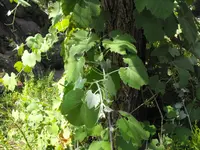
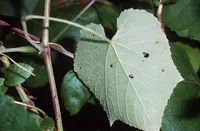
Desert wild grape, Vitis girdiana, is a woody, deciduous vine native to arid regions of the southwestern United States and northern Mexico. It often scrambles over shrubs and rocks, forming dense tangles. Leaves are gray-green and often fuzzy, and small clusters of grapes follow inconspicuous flowers. The fruit provides food for wildlife and has been used traditionally by Indigenous communities. This species tolerates heat, drought, and poor, rocky soils, which can make it easier to grow in dry climates than many cultivated grapes. It generally prefers full sun, occasional deep watering once established, and well-drained soil, which guides how to care for desert wild grape in gardens or restoration plantings.

Care Difficulty
Moderate Care

Light Preference
Full Sun

Water Requirements
Low Water

Temperature Preference
Warm Climate

Hardiness Zone
8–10

Soil Texture
Sandy, Loamy, Rocky

Soil pH
Slightly acidic (6.5–7.0), Slightly alkaline (7.0–7.5)

Soil Drainage
Well-drained

Fertilization
Minimal (feed rarely)
Scan your plant to receive care tips personalized for your specific plant
Available on iOS and Android
This drought-adapted vine thrives in strong light but needs time to establish before handling intense sun.
This species is adapted to dry conditions and prefers deep, infrequent watering once established.
This vine is adapted to warm, arid climates but still responds to clear seasonal temperature changes.
Humidity is rarely a limiting factor for Vitis girdiana because it is adapted to arid, low-humidity environments.
This desert wild grape prefers lean, well-drained, mineral soils that do not stay wet for long.
This species can be grown in containers if the pot is large, stable, and drains rapidly.
This drought-adapted native vine needs only modest feeding when grown in poor or disturbed soils.
Vitis girdiana benefits from structured pruning to manage vigor and support healthy fruiting wood.
This species is usually grown in the ground, so focus on careful transplanting rather than frequent repotting.
This grape is commonly propagated vegetatively to maintain desirable traits and ensure uniform growth.
This desert grape is relatively cold hardy in its native range and usually needs minimal winter intervention in mild climates.

Plant Health Check
Not sure what's wrong with your plant? Check your plant's health inside the app.
This wild grape is native to arid and semi-arid regions of southern California and northern Baja California, where it naturally climbs along washes, canyons, and desert foothills rather than in classic woodland vineyards.
Its woody vine and deep, wide-ranging root system are adapted to survive long dry periods in desert and chaparral habitats, allowing the plant to resprout vigorously after seasonal drought.
The small, dark grapes provide food for birds and small mammals in arid ecosystems, while the dense vine growth offers shelter and nesting sites, making it an important structural species in riparian desert corridors.

Vitis girdiana has been used as a drought-hardy rootstock in some breeding and research programs because of its natural tolerance to heat and low-water conditions in its native desert and chaparral range.
Yellowing leaves usually come from water stress, nutrient deficiency, or natural aging of older foliage. Check soil moisture, improve drainage, and provide balanced fertilizer. Also inspect roots for rot and leaves for pests such as mites or leafhoppers.
Keep your plants happy and healthy with plant identification, disease detection, and easy care guidance.