Install low trellis
Provide a low net or wire trellis 30–60 cm high so vines can climb, which improves air movement around foliage and pods and reduces disease pressure on dense ground-level growth.

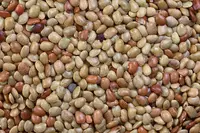
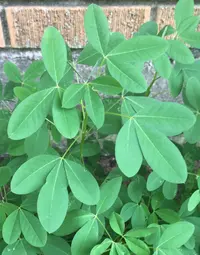
Horsegram, Macrotyloma uniflorum, is a warm-season annual legume grown mainly for its protein-rich seeds and soil-improving abilities. It forms twining or trailing vines with small trifoliate leaves and modest pea-like flowers. Native to dry regions of South Asia and parts of Africa, it is adapted to heat, sun, and relatively poor, well-drained soils. This resilience makes it a useful crop in low-input or drought-prone conditions, though cool, wet climates are less suitable. Gardeners who want to care for horsegram should note that it prefers full sun, moderate moisture, and soils that do not stay waterlogged.

Care Difficulty
Easy Care

Light Preference
Full Sun

Water Requirements
Moderate Water

Temperature Preference
Tropical / Frost Sensitive

Hardiness Zone
10–12

Soil Texture
Sandy, Loamy, Organic-rich

Soil pH
Acidic (5.5–6.5), Slightly acidic (6.5–7.0)

Soil Drainage
Well-drained

Fertilization
Minimal (feed rarely)
Scan your plant to receive care tips personalized for your specific plant
Available on iOS and Android
Macrotyloma uniflorum prefers strong sun to support flowering and seed set.
This drought-tolerant legume prefers deep but infrequent watering once established.
This warm-season crop needs sustained warmth for reliable growth and pod formation.
This species tolerates a wide humidity range and usually does not need special humidity management outdoors.
Macrotyloma uniflorum prefers light, well-structured soil that drains quickly yet holds moderate moisture.
This species can be grown in containers if the pot is large and well-drained.
Macrotyloma uniflorum is not a heavy feeder but responds well to modest, balanced nutrition in poor soils.
Macrotyloma uniflorum benefits from light, functional pruning to maintain healthy, manageable vines.
This species is typically grown as an annual crop, so focus on correct initial planting and gentle transplanting rather than frequent repotting.
This plant is most commonly propagated by seed, which provides reliable and uniform stands for production.
Macrotyloma uniflorum is a warm-season legume that lacks frost tolerance and usually completes its life cycle before winter.

Plant Health Check
Not sure what's wrong with your plant? Check your plant's health inside the app.
This species is one of the most drought-tolerant grain legumes, able to continue producing seeds under low rainfall where many other pulses fail, which is why it is traditionally grown in semi-arid regions of India and East Africa.
Its seeds show strong physical dormancy due to a hard, water-impermeable seed coat, a trait that helps the species persist in harsh environments but requires scarification or soaking to achieve uniform germination in cultivation.
Like many legumes, it forms symbiotic root nodules with nitrogen-fixing bacteria, and field studies have shown that rotations including this crop can improve soil nitrogen status and benefit following cereal crops.

Archaeobotanical evidence from charred seeds shows that this species has been cultivated in the Indian subcontinent for several thousand years, making it one of the region’s older domesticated grain legumes and an important component of traditional dryland farming systems.
The seeds are edible and commonly used as a dry bean or sprouted. They are high in protein, fiber, and minerals. Always cook thoroughly, discard soaking water, and introduce gradually if someone has a sensitive digestion.
Keep your plants happy and healthy with plant identification, disease detection, and easy care guidance.