Succession Resowing
Sow a small patch every 2–3 weeks during warm months so older plants can be harvested heavily while younger plants replace them, keeping foliage tender and productive over a longer season.

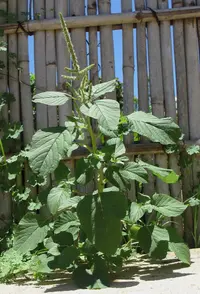
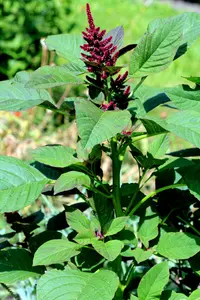
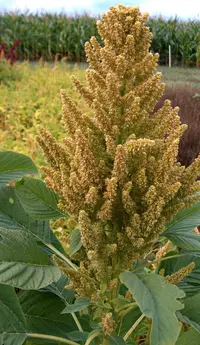
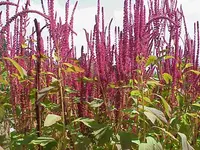
Purple amaranth (Amaranthus blitum) is a fast-growing annual herb, often cultivated as a leafy vegetable and sometimes seen as a garden self-seeder or weed. It forms upright, branching stems with soft, oval leaves that may show reddish or purplish tones, and small clustered flowers along the stems.
This species is native to the Mediterranean region and parts of Asia but now grows widely in warm and temperate climates. It adapts well to disturbed soils and urban gardens, which makes it relatively easy to establish.
In general, it prefers full sun, regular moisture, and well-drained, moderately fertile soil. Gardeners who learn how to care for purple amaranth usually find it a straightforward plant to grow from seed.

Care Difficulty
Easy Care

Light Preference
Full Sun

Water Requirements
Moderate Water

Temperature Preference
Tropical / Frost Sensitive

Hardiness Zone
9–11

Soil Texture
Sandy, Loamy, Organic-rich

Soil pH
Acidic (5.5–6.5), Slightly acidic (6.5–7.0)

Soil Drainage
Moist but well-drained

Fertilization
Light (every 4–6 weeks)
Scan your plant to receive care tips personalized for your specific plant
Available on iOS and Android
Amaranthus blitum grows best with strong, consistent sun exposure during the growing season.
Amaranthus blitum prefers evenly moist, well-draining soil that never stays waterlogged.
This warm-season annual needs stable warmth to grow strongly and produce tender leaves.
This species grows well in average outdoor humidity and rarely needs special humidity control.
Amaranthus blitum prefers loose, fertile, well-drained soil that stays evenly moist without becoming waterlogged.
This species grows reliably in containers when the pot size and drainage are managed carefully.
Amaranthus blitum responds well to light, consistent feeding during its active growing season.
Pruning Amaranthus blitum focuses on keeping plants compact, productive, and free of damaged growth.
This annual species is usually transplanted outdoors rather than repotted long term.
Amaranthus blitum is most commonly propagated from seed, which germinates quickly in warm conditions.
As a warm-season annual, Amaranthus blitum does not overwinter and needs only basic end-of-season handling.

Plant Health Check
Not sure what's wrong with your plant? Check your plant's health inside the app.
This species can show green, reddish, or purplish leaves on different plants or even the same plant, depending on light intensity and soil nutrients that influence pigment production such as betalains.
It commonly establishes in disturbed, nitrogen-rich soils such as vegetable beds, compost edges, and field margins, where frequent soil turnover reduces competition from perennial plants.
In parts of the Mediterranean, South Asia, and Africa, its young leaves and tender stems are used as a leafy vegetable, typically cooked to reduce oxalate content and improve texture.

Genetic studies show that Amaranthus blitum belongs to a complex group of closely related amaranths, and its precise boundaries with some local forms and subspecies have been debated, which has led to repeated reclassification in botanical literature.
Yellowing leaves usually come from nutrient deficiency, especially nitrogen, or from stress after waterlogging or cold nights. Check drainage, avoid soggy soil, and consider a balanced fertilizer. Older, lower leaves naturally yellow and drop as plants mature.
Keep your plants happy and healthy with plant identification, disease detection, and easy care guidance.