Sand-bed establishment
Direct sow into a weed-free strip of loose sand or sandy loam 5–10 cm deep, which mimics its natural habitat and reduces competition during early establishment.

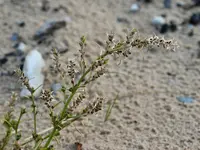
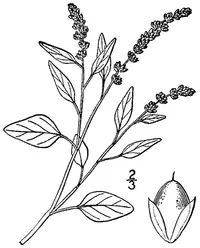
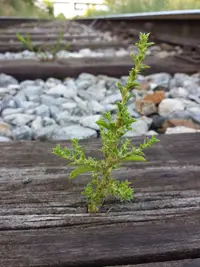
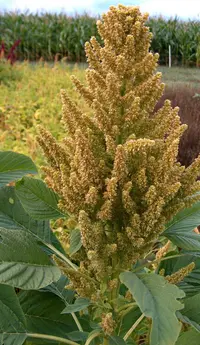
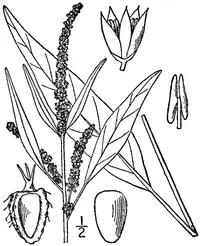
American bugseed, Corispermum americanum, is an annual herb in the amaranth family, often found in open, sandy habitats. It has slender, branching stems with narrow leaves and small, inconspicuous flowers that turn into dry, winged seeds.
This species is native to North America and typically appears along riverbanks, dunes, roadsides, and disturbed sites. It is adapted to dry, nutrient-poor soils and tends to form loose, airy clumps rather than dense foliage.
Because it tolerates drought, poor soils, and full sun, it is generally not difficult to maintain in suitable outdoor conditions. Gardeners who care for American bugseed usually focus on providing well-drained, sandy soil and avoiding excessive moisture.

Care Difficulty
Easy Care

Light Preference
Full Sun

Water Requirements
Low Water

Temperature Preference
Cold Hardy

Hardiness Zone
3–8

Soil Texture
Sandy, Loamy, Rocky

Soil pH
Slightly acidic (6.5–7.0), Neutral (7.0)

Soil Drainage
Well-drained

Fertilization
Minimal (feed rarely)
Scan your plant to receive care tips personalized for your specific plant
Available on iOS and Android
This annual pioneer species prefers intense light in open, exposed habitats.
This drought-tolerant annual prefers dry, fast-draining substrates and infrequent watering.
This species thrives in warm, open sites and tolerates a broad temperature range once established.
Humidity has little impact on Corispermum americanum, which is adapted to dry, open habitats.
This species prefers loose, fast-draining, sandy substrates that mimic dry, disturbed sites.
This species can be grown in containers for short-term or seasonal display if its preference for dry, sandy conditions is met.
This annual species usually completes its life cycle without fertilizer, especially in lean, sandy soils.
Corispermum americanum needs almost no pruning because it is a short-lived annual.
This annual is rarely kept long-term in containers, so focus on light, low‑stress transplanting rather than ongoing repotting.
This species is typically propagated from seed rather than vegetative methods.
As an annual adapted to cold climates, American bugseed dies back naturally after frost and needs no special winter care.

Plant Health Check
Not sure what's wrong with your plant? Check your plant's health inside the app.
This annual species is strongly associated with active river sandbars and lakeshore dunes in North America, where its seedlings establish in shifting, nutrient-poor sand that many other plants cannot tolerate.
Its small fruits have thin, papery wings that help them travel by wind along open sandy corridors, aiding rapid colonization of freshly deposited sand.
Natural populations often peak where river flow or wave action keeps sand open and mobile, so botanists sometimes use it as an indicator that a dune or sandbar system is still experiencing regular, natural disturbance.

Genetic and morphological studies have shown that Corispermum americanum belongs to a complex of closely related sand-dune species that are difficult to separate, and as a result its exact taxonomic boundaries and distribution have been revised multiple times in modern floras.
This species behaves as a true annual. Each plant germinates, flowers, sets seed, and dies within a single growing season, so long-term presence in a site depends on successful reseeding each year.
Keep your plants happy and healthy with plant identification, disease detection, and easy care guidance.