Salt-tolerant placement
If growing near brackish or saline water, position plants where occasional tidal flooding can occur but prolonged submersion is avoided, which better mimics natural conditions and improves vigor.

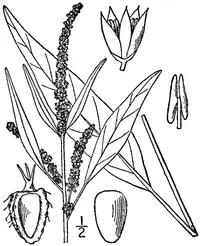
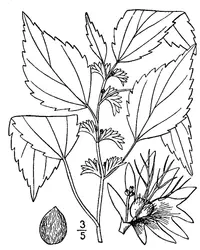
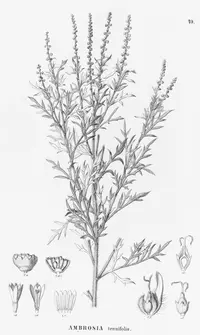
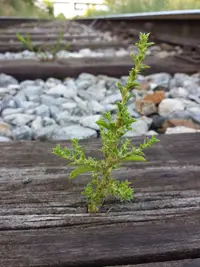
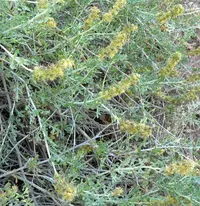
Tidalmarsh amaranth, Amaranthus cannabinus, is a tall, herbaceous perennial native to coastal salt marshes and brackish wetlands in eastern North America. It forms upright clumps with reddish, often branching stems and narrow leaves, creating a loose, open habit.
This species is adapted to periodically flooded, salty conditions and is valued in habitat restoration for stabilizing shorelines and supporting wildlife. In cultivation it prefers full sun, consistently moist soil, and tolerance of some salinity, which can make it challenging outside suitable sites.
Gardeners who want to care for tidalmarsh amaranth should provide a wet, sunny spot that does not dry out for long periods.

Care Difficulty
Moderate Care

Light Preference
Full Sun

Water Requirements
Aquatic

Temperature Preference
Warm Climate

Hardiness Zone
5–9

Soil Texture
Sandy, Loamy, Silty

Soil pH
Slightly acidic (6.5–7.0), Neutral (7.0)

Soil Drainage
Waterlogged tolerant

Fertilization
Minimal (feed rarely)
Scan your plant to receive care tips personalized for your specific plant
Available on iOS and Android
This saltmarsh annual thrives in strong light but needs protection from extreme afternoon exposure in hotter regions.
This coastal species is adapted to consistently moist, even periodically flooded, conditions without long dry spells.
This warm-season annual grows best in mild to hot conditions and is damaged by frost.
This coastal species tolerates a wide humidity range and usually does not require special humidity management.
Amaranthus cannabinus thrives in consistently moist, nutrient-rich, alluvial or marshy substrates.
This tall, moisture-loving species is generally unsuited to long-term container growing except for short-term display or research use.
This native wetland perennial usually grows well in nutrient-rich soils and needs only light feeding in cultivation.
Pruning Amaranthus cannabinus is mainly used to manage height and remove weak growth in landscape settings.
This species is usually grown in the ground, so focus on careful transplanting rather than frequent repotting.
Amaranthus cannabinus is most commonly propagated by seed under warm, consistently moist conditions.
In much of its native range this perennial dies back above ground and needs only modest winter care.

Plant Health Check
Not sure what's wrong with your plant? Check your plant's health inside the app.
This species is naturally restricted to low, brackish tidal marshes along the Atlantic Coast of the eastern United States, where it tolerates regular flooding and fluctuating salinity better than many competing plants.
Its dense, fibrous root system and clumping growth help bind soft, silty soils in estuaries, reducing erosion and creating structure that other marsh organisms use for shelter.
Because it depends on intact, undisturbed high and mid brackish marsh zones, its presence often signals a relatively healthy and uncommon coastal wetland community.

This species is listed as threatened or endangered in several U.S. states, not because it is inherently rare everywhere, but because the specialized tidal marsh habitats it depends on have been heavily lost or fragmented along much of the Atlantic Coast.
Young leaves and shoots are technically edible but this species is not commonly used as a food crop. It grows in brackish, often polluted marshes, so there is a high risk of salt and contaminant accumulation in tissues.
Keep your plants happy and healthy with plant identification, disease detection, and easy care guidance.