salmon gum mushroom Care (Phlebopus marginatus)

salmon gum mushroom

About salmon gum mushroom

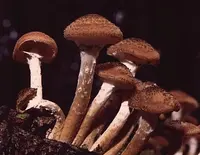
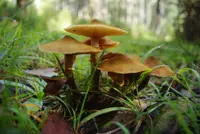
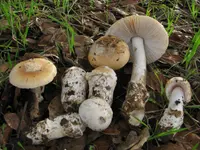
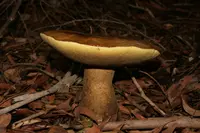
Salmon gum mushroom, Phlebopus marginatus, is a large, ground-dwelling fungus rather than a leafy plant. It forms broad, thick caps with sturdy stems, often partly buried in soil or leaf litter. Mature specimens can become quite massive and sometimes grow in loose groups.

This species occurs mainly in Australia, especially in association with eucalyptus forests and parklands. It forms mycorrhizal relationships, meaning it lives in close partnership with tree roots, which makes it difficult to cultivate at home. Those who want to learn how to care for salmon gum mushroom should understand that it favors stable moisture, shade to dappled light, and undisturbed, organically rich soil.

Main Plant Requirements

Care Difficulty

Hard Care

Light Preference

Partial Shade

Water Requirements

Keep Soil Moist

Temperature Preference

Warm Climate

Hardiness Zone

Unknown

Soil Texture

Loamy, Sandy, Organic-rich

Soil pH

Acidic (5.5–6.5)

Soil Drainage

Moist but well-drained

Fertilization

Minimal (feed rarely)

Get Personalized Care Plan

Scan your plant to receive care tips personalized for your specific plant

Available on iOS and Android

How to Care for the salmon gum mushroom

This large ectomycorrhizal fungus prefers bright, gentle light rather than harsh, direct sun.

  • Provide dappled or filtered light with 2–4 hours of soft morning sun; avoid strong midday and afternoon sun that can dry the substrate surface too fast.
  • Allow partial shade, especially under trees, which mimics the natural woodland edge habitat of salmon gum mushroom and stabilizes moisture and temperature.
  • In hot summers, increase shade cover; in cooler seasons, permit slightly more indirect light so the substrate warms gradually without direct scorching.

Moist, not waterlogged, soil is essential for reliable fruiting of this fungus.

  • Keep the substrate evenly moist, letting only the top 2–3 cm begin to lose surface sheen before irrigating again to avoid full drying.
  • Use deep, slow watering on well-drained, organic-rich soil so excess water moves away, preventing standing puddles and sour, anaerobic conditions around fine roots.
  • Reduce watering in cooler seasons when evaporation slows, but never let the substrate bake hard or crack; caps that stay small and dry-edged often indicate underwatering.

Stable, mild temperatures support the best development of Phlebopus marginatus fruiting bodies.

  • Aim for a general range of 60–77°F (16–25°C), which favors steady mycelial activity and reduces stress on forming mushrooms.
  • Protect from frost; growth typically slows sharply below about 41°F (5°C), and repeated freezing can damage mycelium and reduce future fruiting.
  • In hot weather above 86°F (30°C), increase shade and surface moisture, as prolonged heat and dry conditions can halt fruiting and cause caps to crack.

This species benefits from moderately moist air but copes with a fairly wide humidity range when the substrate stays evenly damp.

  • Aim for 50–70% humidity around the fungal bed, especially during active growth and fruiting.
  • Tolerates brief drops to 30–40% if the substrate does not dry out; caps may crack and margins curl under prolonged dry air.
  • Humidity stress shows as smaller, tougher caps and rapid drying; increase moisture by misting the surrounding area or using a humid tent over the salmon gum mushroom bed.

This ectomycorrhizal fungus relies on a consistently moist, organic-rich substrate rather than conventional potting soil.

  • Use a loose, wood-based mix such as partially decomposed hardwood chips, leaf litter, and coarse sand to mimic forest floor texture.
  • Ensure free drainage so water moves through but the substrate remains evenly damp; avoid compacted or heavy clay that stays waterlogged.
  • Target a slightly acidic to neutral reaction (pH 5.5–7.0) by combining composted bark, leaf mold, and a small portion of garden loam.
  • Improve aeration by mixing in coarse particles (5–15 mm) and avoiding fine peat-heavy blends that can collapse and exclude oxygen.

This species is generally unsuitable for long-term container growing, as it depends on extensive association with host tree roots in natural soil.

Phlebopus marginatus forms mycorrhizal partnerships with tree roots and usually needs minimal direct fertilization.

  • Avoid applying high-nitrogen synthetic fertilizers directly to the salmon gum mushroom zone, as they can upset soil biology.
  • If soil is poor, top-dress once a year in spring with a thin layer of well-rotted compost around the host tree drip line.
  • Use low-strength, balanced organic amendments rather than liquid feed, keeping all inputs mild and well-diluted into the surrounding soil.
  • Maintain an undisturbed leaf-litter layer to recycle nutrients naturally, which better matches this fungus’s ecological needs.

Phlebopus marginatus is a fungus, so structural pruning is not applicable; only fruiting bodies may occasionally be tidied.

  • If needed, cut spent or decaying mushrooms at the base using a clean, sharp knife or scissors to keep the area neat.
  • Remove only clearly damaged, pest-infested, or rotting caps; excessive removal may reduce future spore production and spread.
  • Avoid disturbing surrounding soil and tree roots when trimming, as the living fungal network exists below ground.
  • Discard diseased material in the trash rather than composting to lower the risk of spreading pathogens.

This species is not suited to typical container culture, so focus on minimizing disturbance rather than routine repotting.

  • Transplant only if the host tree or shrub must be moved, since the fungus depends on its mycorrhizal association to survive.
  • Plan any transplant for cool, mild weather in fall or early spring to reduce stress on both roots and fungal partners.
  • Lift the root ball with as much surrounding soil as possible, keeping fine roots intact to preserve the underground mycelium.
  • Water gently after replanting and maintain stable moisture, avoiding soil compaction so the fungal network can re-establish.

Propagation of Phlebopus marginatus is specialized and rarely attempted in home settings, as it depends on complex root–fungus relationships.

In its native mild climates, this fungus usually needs little dedicated winter care if the host tree is healthy and soil is not waterlogged.

  • In colder areas, maintain a 5–8 cm layer of leaf litter or mulch over the root zone to buffer temperature swings.
  • Avoid saturated soil in winter by ensuring good drainage, since prolonged waterlogging can damage the underground mycelium.
  • Container-grown host trees in marginal climates can be moved to a sheltered, frost-free area to stabilize root conditions.

Care Tips

Host tree pairing

Select and maintain compatible host trees such as eucalyptus or acacia nearby, since this ectomycorrhizal fungus depends on healthy tree roots for nutrient exchange and regular fruiting.

Shaded mulch zone

Apply a loose, woody mulch layer 5–8 cm thick around the root zone of the host tree to keep the fungal habitat cool and moist while still allowing air movement through the substrate.

Minimal soil disturbance

Avoid digging, raking, or compacting soil in the area where fruiting bodies appear, since disturbance damages the fungal mycelium network and can reduce future mushroom production.

Gentle harvest technique

Twist mature mushrooms gently at the base rather than cutting deep into the substrate, then backfill the small hole with surrounding soil or mulch to protect exposed mycelium.

Seasonal moisture mapping

Monitor which areas of the planting site stay evenly moist but not waterlogged across the wet and dry seasons, and focus caring for salmon gum mushroom in these microzones to support more reliable fruiting.

Common Pests and Diseases

Fungus gnats

These insects are attracted to the consistently moist, organic-rich substrate used for Phlebopus marginatus cultivation and their larvae feed in the upper layer of the growing medium. Symptoms include small mosquito-like flies around trays and reduced mycelial vigor where larvae are dense.

Solution

Allow the top layer of the substrate or casing to dry slightly between waterings where possible, use fine sand or a thin dry layer on the surface to discourage egg laying, and place yellow sticky traps near the culture area to capture adults. For heavier infestations, apply a Bacillus thuringiensis israelensis (BTI) biological control drench according to label directions to target larvae without harming the fungus.

Mite infestations

These insects (actually arachnids) such as mushroom mites thrive in warm, humid growing rooms and can graze on mycelium and developing fruiting bodies. Symptoms include slow colonization, scarring on caps, and a fine, moving dust-like layer on surfaces.

Solution

Reduce the introduction of mites by screening vents, filtering incoming air, and avoiding bringing in unsterilized organic material near cultures. If mites appear, remove and discard heavily infested blocks, clean shelves and surrounding structures thoroughly, and consider introducing predatory mites from commercial suppliers as a targeted biological control.

Green mold (Trichoderma)

This disease is caused by competitive Trichoderma fungi that colonize Phlebopus marginatus substrate, forming bright white mycelium that quickly turns green with spores. Symptoms include stalled mycelial growth, patchy colonization, and dusty green areas on the substrate or casing layer.

Solution

Discard heavily contaminated substrates to prevent spore spread, then clean and disinfect all tools, trays, and surfaces in the grow area. Improve substrate sterilization or pasteurization, lower spore loads by good hygiene, and reduce excess moisture and stagnant air to help the desired mycelium remain competitive when growing salmon gum mushroom.

Bacterial blotch

This disease, often caused by Pseudomonas species, develops in conditions of high humidity and persistent surface moisture on caps. Symptoms include greasy yellow to brown spots on the mushroom surface that can become sunken and slimy.

Solution

Lower relative humidity slightly, increase gentle air movement, and avoid water droplets standing on caps by adjusting misting frequency and direction. Remove and discard affected fruiting bodies and clean nearby surfaces with a mild disinfectant to reduce bacterial populations before the next flush.

Interesting Facts

Giant bolete size

This species is one of the largest known boletes, with individual fruiting bodies that can reach dinner-plate size and form dense clusters on the ground. The thick, cushion-like cap and very stout stem make it conspicuous in suitable habitats.

Eucalypt-associated fungus

Phlebopus marginatus typically fruits in association with eucalypt trees, especially in southern Australia and parts of New Zealand. It is often found in parks, gardens, and remnant bushland where mature eucalypts provide suitable root partners and habitat conditions.

Persistent fruiting sites

The fungus often reappears in the same locations for many years, indicating long-lived underground mycelium. Gardeners and mycologists sometimes monitor the same patches season after season to follow its fruiting patterns.

Botan icon

Did you know?

Some mycologists consider Phlebopus marginatus to be among the heaviest fleshy mushrooms, with single clusters reportedly weighing several kilograms when many large caps develop together in one fruiting event.

FAQs about salmon gum mushroom

This fungus grows relatively quickly once mycelium is established, but visible fruiting bodies may appear only seasonally. Growth rate depends heavily on soil moisture, organic matter, temperature, and the presence of suitable tree partners.

Grow Healthy Plants with Botan Care

Keep your plants happy and healthy with plant identification, disease detection, and easy care guidance.

Botan plant care app — identify plants on mobile

Explore More Plants