Spore retention
When harvesting, cut the mushroom at the base rather than pulling it up, so the mycelium and remaining mycorrhizal network stay intact and continue producing fruiting bodies in future seasons.

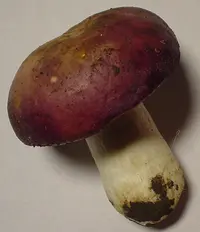
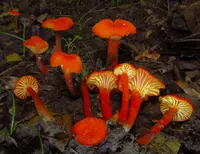
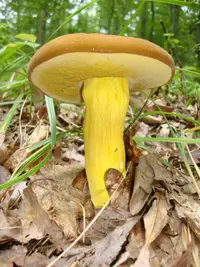
Shellfish-scented Russula (Russula xerampelina) is a mycorrhizal mushroom, not a leafy houseplant. It forms a partnership with tree roots, helping them absorb water and nutrients. Caps range from reddish to brownish tones with pale, brittle gills and a stout white to cream stem.
This species is typically found in coniferous and mixed forests in temperate regions, often fruiting on the forest floor in late summer and autumn. It can be challenging to cultivate because it depends on living host trees and specific soil fungi communities.
Those interested in how to care for Shellfish-scented Russula should know it prefers cool, moist, shaded woodland conditions with undisturbed, well-drained, organically rich soil.

Care Difficulty
Hard Care

Light Preference
Partial Shade

Water Requirements
Regular Water

Temperature Preference
Cool Climate

Hardiness Zone
Unknown

Soil Texture
Loamy, Sandy, Organic-rich

Soil pH
Acidic (5.5–6.5)

Soil Drainage
Moist but well-drained

Fertilization
Minimal (feed rarely)
Scan your plant to receive care tips personalized for your specific plant
Available on iOS and Android
This ectomycorrhizal mushroom prefers dappled woodland light rather than open, direct sun.
This forest fungus depends on consistently moist, not saturated, soil around its tree partners.
This species performs best in cool to mild conditions typical of temperate forests.
Humidity is not a meaningful care factor for Russula xerampelina, which is a wild ectomycorrhizal mushroom rather than a cultivated houseplant.
Russula xerampelina grows in natural forest soils rather than conventional potting media, but understanding its substrate helps interpret where it appears.
This wild ectomycorrhizal mushroom is not suitable for container growing because it depends on complex root and soil partnerships that pots cannot realistically replicate.
This wild ectomycorrhizal mushroom forms nutrient-sharing partnerships with trees and normally does not need direct fertilization.
As a wild, short-lived mushroom, Russula xerampelina does not require pruning in the horticultural sense.
This species is not suited to conventional container culture, so focus on establishing suitable host trees and soil rather than repotting.
Propagation of this ectomycorrhizal fungus is specialized and not a routine home-gardening task.
This wild mushroom is naturally cold hardy in its native range and needs no special winter care when left in the ground.

Plant Health Check
Not sure what's wrong with your plant? Check your plant's health inside the app.
When the fresh flesh is rubbed or cut, this mushroom often develops a distinct odor reminiscent of cooked shellfish or crab, especially as it ages or dries slightly.
The white flesh typically stains wine-red to brownish when bruised or exposed to air, a reaction that helps distinguish it from many other russulas in the field.
This species forms ectomycorrhizal partnerships with conifer trees such as spruce and pine, exchanging mineral nutrients and water from the soil for sugars produced by the host tree.

In parts of northern and central Europe, this species has a long history of being collected as an edible mushroom, where experienced foragers use both the crab-like smell and the color of the mature gills and stem base as key features to separate it from inedible or acrid russulas.
This mushroom is considered edible and is eaten in some regions after thorough cooking. Accurate identification is critical, since many Russula species are inedible or cause gastrointestinal upset. Never eat wild fungi without expert confirmation.
Keep your plants happy and healthy with plant identification, disease detection, and easy care guidance.