


saffron milkcap Identification (Lactarius deliciosus)

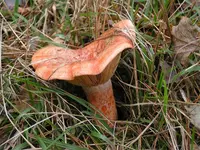
Recognize saffron milkcap by its orange cap with distinct concentric rings, crowded orange gills, and carrot-orange milk that appears when the gills or flesh are cut.

The cap is usually 2 to 6 inches (5 to 15 cm) across and often develops a shallow central depression, with a stout orange stem beneath.

Lactarius deliciosus Identification

Check Your Plant ID

Upload a clear image to check whether your plant ID is correct.

Clear images work best. Avoid photos taken too close or too far away

Check the cap, gills, stem, and milk of Lactarius deliciosus.

  • Cap is shallowly funnel-shaped to depressed, usually 2-6 inches (5-15 cm) wide, with clear orange concentric rings.
  • Gills are crowded and run slightly down the stem rather than stopping cleanly at the cap edge.
  • Stem is short and stout, orange, often with small darker pits on the surface.
  • When cut or broken, it releases carrot-orange milk; bruised areas often turn greenish.

Use several of these features together before deciding.

Lactarius deliciosus shows useful visual changes mainly as the mushroom cap and gills expand.

  • Young plant: Buttonlike fruiting bodies have a convex cap with the margin strongly inrolled, crowded orange gills mostly hidden, and a short thick stem.
  • Mature plant: The cap broadens to about 2-6 inches (5-15 cm), becoming flatter then funnel-shaped, with concentric orange zones more visible and gills exposed beneath.
  • Fruiting stage: When fully developed, damaged gills and flesh exude bright carrot-orange latex, and older caps often show green staining, especially on bruised areas.

Lactarius deliciosus is most noticeable in fall, when fresh mushrooms emerge and the orange cap and stem are easiest to spot. At this stage, damaged areas release carrot-orange milk, a key field mark. As the fruiting bodies age through the season, orange surfaces often develop green staining or blotches, especially where handled or bruised. Outside the fruiting period, there is usually no visible above-ground structure to identify.

Several orange milkcaps can be mistaken for saffron milkcap.

false saffron milkcap(Lactarius deterrimus)

Similar orange cap and concentric rings. Check the bruising and habitat: damaged areas and older gills turn green more strongly, and it is usually found with spruce rather than pine.

salmon milkcap(Lactarius salmonicolor)

Also orange and zoned, with orange milk. It is usually more uniformly salmon-orange, with less obvious green staining, and is most often associated with fir.

woolly milkcap(Lactarius torminosus)

Young caps can be orange-pink and ringed. The cap margin is distinctly woolly or hairy, unlike the smooth margin of Lactarius deliciosus.

Native to Europe, Lactarius deliciosus is most reliably associated with conifer forests, especially pine woodland, from lowland sites to mountain forests in the Mediterranean region and farther north. It is also native in parts of Asia. Habitat is a strong identification clue because this species forms a mycorrhizal partnership with pines. Finding it on the ground in pine woods or mixed conifer forest helps narrow the ID, while records from broadleaf woodland call for extra caution.

  • Misidentification risk: This is a mushroom, so wrong identification is the main safety concern for humans. Some orange milkcaps are similar, and confusion can lead to eating the wrong species.
  • Key dangerous look-alike: The jack-o'-lantern mushroom, Omphalotus olearius, is poisonous if eaten by humans. Unlike Lactarius deliciosus, it has no orange milk when cut or bruised and grows in dense clusters from wood or buried roots.

Confirm It from a Photo

Upload a clear image to Botan to help verify the species and reduce confusion with similar-looking finds.

FAQ

Look for an orange cap with darker concentric rings, crowded orange gills, and carrot-orange milk that appears when cut. Older areas often stain green. For identifying saffron milkcap, these combined traits are the quickest check.

More Plant Identification Guides

Identify Your Plant and Learn More

Use Botan to identify it from a photo, then view species details, care information, and safety notes tailored to the result.

Botan app identifying a plant from a photo
Plants That Repel Bugs – 20 Effective Options

12 min read · 16 Jul 2026

Plants That Repel Bugs – 20 Effective Options

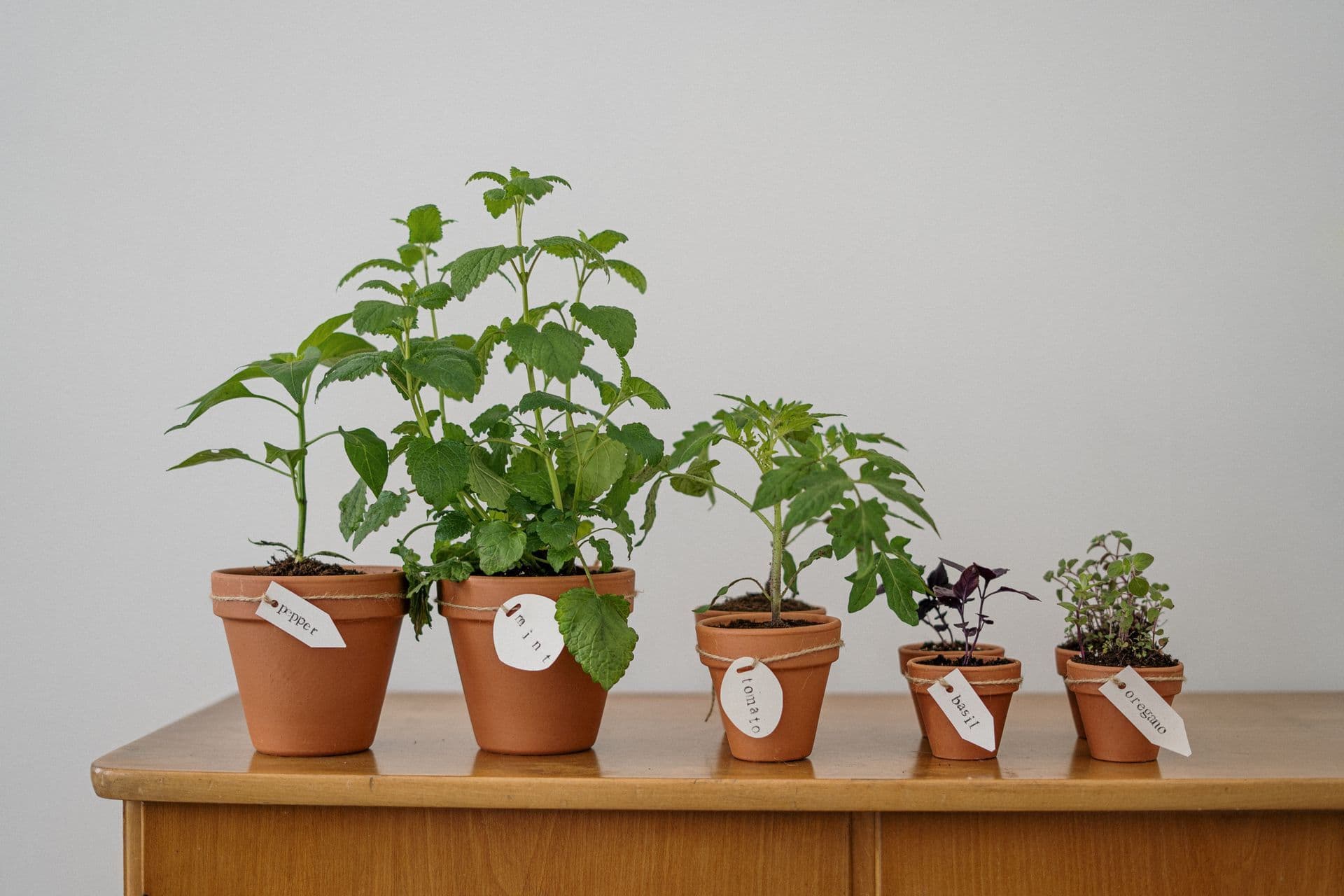
Mosquitoes on the patio? Gnats in the kitchen? Some plants keep them away with the scent of their own leaves. Here are 20 that deal with mosquitoes, flies, aphids, and more, plus where to put them so they help.

Plant Recommendations
Plants That Repel Bugs – 20 Effective Options
Plant Pot Sizes: How to Choose the Right Plant Container

7 min read · 20 Aug 2026

Plant Pot Sizes: How to Choose the Right Plant Container

Plant pot sizes can be confusing because the number on the label only tells you part of the required information. A container may look spacious but actually be too shallow. So, how to choose pot size for plant species?

Beginner Guides
Plant Pot Sizes: How to Choose the Right Plant Container
Best Fertilizer for Vegetable Gardens – What to Use for Each Plant

11 min read · 20 Jul 2026

Best Fertilizer for Vegetable Gardens – What to Use for Each Plant

Here, you’ll find the right fertilizer formula for vegetables in your garden. Learn how to adjust feeding correctly throughout the growing cycle, spot nutrient deficiencies by their symptoms, and keep your plants healthy and prolific.

Plant Recommendations
Best Fertilizer for Vegetable Gardens – What to Use for Each Plant