Limber Pine Identification (Pinus flexilis)

To recognize Limber Pine, check for needles in bundles of five, each about 1 to 3 inches (2.5 to 7.5 cm) long, and long, narrow cones with thin scales.

Its twigs are notably flexible, and older trees often show broad, irregular crowns with widely spaced branches.

Pinus flexilis Identification

Identify a Plant by Photo

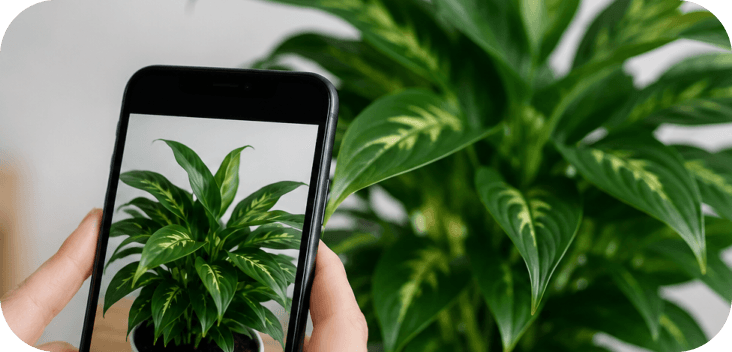
Not sure about your plant ID? Upload a photo and check it with Botan.

Clear images work best. Avoid photos taken too close or too far away

Use these quick visual traits to check Pinus flexilis by eye.

  • Needles grow in bundles of five, usually 1 1/2 to 3 inches (4 to 8 cm) long, slender and slightly curved.
  • Twigs are notably flexible and bend easily without snapping, giving branch tips a loose, pliant look.
  • Cones are egg-shaped to cylindrical, about 3 to 8 inches (8 to 20 cm) long, hanging from the branches.
  • The crown often looks open and irregular, with broad, spreading branches rather than a dense, tight outline.

Check several branches and cones, since the open form can vary from tree to tree.

Pinus flexilis shows useful visual shifts from seedling form to cone-bearing mature trees.

  • Seedling: Early plants show a slim upright stem with a tuft of juvenile needles near the tip, giving a sparse, simple outline.
  • Young plant: Branching becomes whorled and more irregular, while needle bundles clearly show five flexible needles, usually about 1.5-3 inches (4-8 cm) long.
  • Mature plant: Older trees develop a broad, uneven crown and thick trunk; limbs often sweep outward or droop, creating the loose, open silhouette typical of limber pine.
  • Fruiting stage: Cone-bearing trees display long, pale brown cones hanging from branches, commonly 3-8 inches (8-20 cm) long, adding a prominent identifying feature.

Pinus flexilis stays green year-round, so seasonal clues are subtle but useful. New needle growth appears softer and paler in spring, then darkens by summer, while older needles remain on the tree. In late spring to early summer, pollen cones and small seed cones become visible at branch tips. By late summer into fall, seed cones enlarge and turn tan to light brown, adding a noticeable seasonal cue.

Several five-needle pines can be mistaken for Pinus flexilis.

whitebark pine(Pinus albicaulis)

Often confused because both have bundles of five needles and irregular crowns. Whitebark pine usually has shorter, stiffer needles and egg-shaped cones that stay mostly closed; limber pine has more flexible needles and longer cones with spreading scales.

southwestern white pine(Pinus strobiformis)

Similar in needle count and cone shape. Southwestern white pine typically has longer needles, often 2.5 to 4 inches (6 to 10 cm), and larger cones, while limber pine is usually more compact in both needle and cone size.

Pinus flexilis is native to the Rocky Mountains and nearby ranges of the western United States, from Alberta and British Columbia south to New Mexico, Arizona, and Nevada. It is most often found on dry, rocky mountain slopes, ridges, and open subalpine woodland, commonly around 5,000 to 12,000 feet (1,500 to 3,700 m). In the field, a high-elevation western mountain setting helps narrow the ID.

Confirm the Species with Botan

Upload a photo to help identify the plant or verify your ID before you label it or compare similar species.

FAQ

In winter, this plant stays evergreen. Needles remain in bundles of five, usually 1.5 to 3 inches (4 to 8 cm) long, with pale blue-green to dark green color and a flexible, often open-branched crown.

More Plant Identification Guides

Identify First. Learn What Comes Next.

Use Botan to identify a plant from a photo, then get species-specific plant details, care information, and common problems.

Botan app identifying a plant from a photo
Plants That Repel Bugs – 20 Effective Options

12 min read · 16 Jul 2026

Plants That Repel Bugs – 20 Effective Options

Mosquitoes on the patio? Gnats in the kitchen? Some plants keep them away with the scent of their own leaves. Here are 20 that deal with mosquitoes, flies, aphids, and more, plus where to put them so they help.

Plant Recommendations
Plants That Repel Bugs – 20 Effective Options
How Often to Water Fruit Trees

7 min read · 11 Aug 2026

How Often to Water Fruit Trees

Irrigation needs change as roots establish and weather shifts. This guide gives practical starting intervals, explains how soil and tree type change them, and shows how to recognize both excess moisture and drought stress.

Plant Care
How Often to Water Fruit Trees
Best Bedroom Plants – Top 10 to Grow in Your Space

8 min read · 8 Jul 2026

Best Bedroom Plants – Top 10 to Grow in Your Space

Discover the top 10 houseplants that are suitable for growing in your bedroom. Compare their light and water needs, pet safety, and benefits. Find out where best to place greenery in your relaxation space and what species to avoid.

Plant Recommendations
Best Bedroom Plants – Top 10 to Grow in Your Space