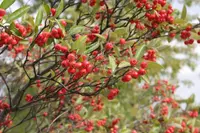
Midgen Berry Care (Austromyrtus dulcis)

Midgen Berry

About Midgen Berry

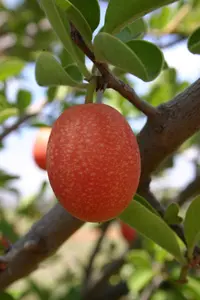
Midgen berry, Austromyrtus dulcis, is a compact evergreen shrub native to coastal eastern Australia. It is grown for its small glossy leaves and sweet, edible berries.

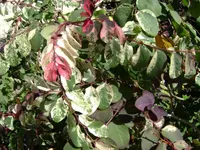
Plants usually form a low, dense mound and can be used as a groundcover, low hedge, or in containers. New foliage often has a soft bronze tint before maturing to deep green.

This species prefers mild, frost-free climates, well-drained soil, and regular moisture. It tolerates light pruning and can adapt to either full sun or light shade.

Its resilience, moderate growth rate, and edible fruit make it a practical choice for home gardens and containers, especially for those wanting to learn how to care for Midgen Berry with relatively low difficulty.

Main Plant Requirements

Care Difficulty

Moderate Care

Light Preference

Full Sun

Water Requirements

Moderate Water

Temperature Preference

Warm Climate

Hardiness Zone

9–11

Soil Texture

Sandy, Loamy, Organic-rich

Soil pH

Acidic (5.5–6.5)

Soil Drainage

Moist but well-drained

Fertilization

Minimal (feed rarely)

Get Personalized Care Plan

Scan your plant to receive care tips personalized for your specific plant

Available on iOS and Android

How to Care for the Midgen Berry

This shrub prefers bright conditions that balance sun exposure with protection from intense heat.

  • Provide 4–6 hours of direct morning sun with light afternoon shade; coastal sites tolerate a little more exposure than inland gardens.
  • Accepts partial shade, but flowering and fruiting of Midgen Berry decline if it receives less than 3–4 hours of direct or strong filtered light daily.
  • In hot summers, protect from harsh afternoon sun to prevent leaf scorch; in winter, choose a spot with maximum light to support compact growth.

This species prefers evenly moist, well-drained soil rather than repeated cycles of saturation and drought.

  • Water when the top 3–5 cm of soil feels dry, applying enough to moisten the root zone without leaving water pooling around the base.
  • During hot, dry periods increase frequency, while in cool or rainy seasons reduce watering to avoid staying soggy, which encourages root rot in Austromyrtus dulcis.
  • Watch for dull, wilting leaves and dry, brittle tips as signs of underwatering, and yellowing leaves or a sour soil smell as indicators of overwatering.

This plant grows best in mild, frost-free climates with moderate seasonal variation.

  • Aim for an optimal range of 60–80°F (16–27°C), where growth and berry production are most consistent.
  • Plants tolerate brief drops to about 28–30°F (-2 to -1°C), but repeated frosts damage young shoots and can kill tender plants.
  • In hot regions, plants handle up to 95°F (35°C) if soil moisture is maintained and roots are mulched; avoid planting in heat-reflective spots near walls or paving.

This species prefers moderate humidity but adapts to typical indoor levels if not too dry.

  • Aim for 40–60% humidity to keep foliage lush on Midgen Berry shrubs.
  • In air below 30%, leaf tips may brown and new growth can distort, indicating humidity stress rather than underwatering.
  • Raise humidity by grouping plants, placing pots on pebble trays with water below pot bases, or running a nearby humidifier.

This shrub prefers light, well‑drained, slightly acidic soil that stays evenly moist without becoming waterlogged.

  • Use a sandy loam base with 30–40% compost to provide organic matter and moderate moisture retention for Austromyrtus dulcis.
  • Keep pH around 5.5–6.5; mix in peat or fine pine bark to acidify alkaline substrates and support nutrient uptake.
  • Improve drainage and aeration by adding coarse sand and 10–20% perlite, avoiding dense clay or heavy, compacted mixes.
  • Avoid soil that stays soggy after watering, which encourages root rot and can quickly damage this shallow‑rooted shrub.

This species is suitable for container growing when the pot and substrate balance moisture retention with rapid drainage.

  • Choose a wide, relatively deep pot to accommodate its fibrous root system and spreading canopy without crowding the root zone.
  • Use a slightly heavier material such as ceramic to stabilize the shrub against wind and reduce tipping as the plant becomes bushy.
  • Set the container on pot feet or bricks so drainage holes stay clear, allowing water to exit freely and preventing a saturated lower root layer.

This Australian native shrub benefits from light feeding but grows acceptably in lean soils.

  • Apply a balanced slow-release fertilizer (e.g., 8-8-8 or 10-10-10) at half strength in early spring for caring for Midgen Berry.
  • Top-dress with a thin layer of compost once per year to support soil biology and steady growth.
  • During the main growing season, avoid additional high-nitrogen products that encourage weak, leafy growth.
  • Stop feeding in late summer; do not fertilize in winter or dormancy to prevent soft, frost-prone shoots.

Pruning helps Austromyrtus dulcis maintain a dense, neat form and encourages flowering wood.

  • Carry out light shaping and thinning after main flowering, usually late spring to early summer.
  • Remove dead, diseased, crossing, or crowded stems first to improve air flow and light penetration.
  • Shorten overly long shoots by up to one-third to keep a compact hedge or shrub outline.
  • Use clean, sharp hand pruners and make cuts just above a leaf node for tidy regrowth.

This species is most often grown in the ground but adapts to containers for several years.

  • Transplant or up-pot in late winter to early spring, before strong new growth begins.
  • Check for roots circling the pot, congested drainage holes, or slowed growth as signs it needs a larger container or garden position.
  • Plan on repotting container plants every 2–3 years into a slightly larger pot with free-draining, slightly acidic mix.
  • Gently tease circling roots, keep as much root ball intact as possible, water thoroughly, and shade for a few days to limit transplant stress.

Austromyrtus dulcis is commonly propagated from semi-hardwood cuttings or fresh seed.

  • Take semi-hardwood tip cuttings in late summer, 7–10 cm long, and remove lower leaves.
  • Dip bases in a general-purpose rooting hormone and insert into a moist, free-draining mix under high humidity and bright, indirect light.
  • Sow fresh seed in spring in a sandy mix, barely covered, and keep consistently moist but not waterlogged.
  • Maintain temperatures around 68–75°F for both seeds and cuttings to support reliable rooting and germination.

This shrub is mildly frost sensitive and benefits from simple winter precautions in cooler regions.

  • In climates below about 25°F, grow in containers so plants can be moved into a bright, frost-free space over winter.
  • Apply 5–8 cm of organic mulch around the root zone, keeping it slightly away from the stem base.
  • In-ground plants in marginal zones can be wrapped with frost cloth during predicted hard freezes.

Care Tips

Encourage Bushy Form

Lightly tip-prune new shoots after flowering to maintain a dense, compact shrub and increase the number of fruiting stems the following season.

Mulch For Root Coolness

Apply a 5–8 cm layer of fine organic mulch around the drip line, keeping it a few cm away from the stem, to keep shallow roots cool and reduce moisture stress in hot, dry periods.

Salt And Wind Protection

In coastal gardens, plant in a slightly sheltered position behind a windbreak or taller shrubs to reduce leaf scorch from strong, salty winds.

Netting To Protect Fruit

Use fine bird-safe netting supported on a simple frame during the main fruiting period to prevent birds from stripping the berries while still allowing light and air movement.

Companion Underplanting

Underplant with low, non-competitive groundcovers rather than bare soil or lawn to help stabilize moisture levels around the root zone, which supports more reliable cropping when growing Midgen Berry.

Common Pests and Diseases

Myrtle rust

This disease causes bright yellow powdery spots on young leaves, shoots, and sometimes fruit, which later turn dark and may distort or kill new growth.

Solution

Prune out and bag affected shoots as soon as symptoms appear, disinfecting tools after use, and avoid overhead watering to keep new foliage dry. In regions where myrtle rust is established, monitor plants regularly and, if allowed locally, use a labeled systemic fungicide for myrtaceae at the first sign of infection, following all regional biosecurity guidelines for Austromyrtus dulcis care instructions.

Scale insects

These insects appear as small, dome-shaped or flat bumps on stems and leaf undersides, often accompanied by sticky honeydew and sooty black mold on foliage.

Solution

Wipe or gently scrub stems and leaves with a cloth or soft brush dipped in diluted insecticidal soap or horticultural oil, repeating every 7–10 days until no new scale is seen. Improve airflow around the plant and avoid excessive nitrogen fertiliser, which can encourage soft, scale-prone growth.

Psyllids

This pest causes cupped, distorted new leaves and tiny bumps or pimple-like swellings, with fine sticky residues or sugary deposits under infested foliage.

Solution

Prune and dispose of badly deformed shoot tips, then hose down remaining foliage with a firm spray of water to dislodge nymphs. For persistent infestations on young plants, apply a low-toxicity horticultural oil or insecticidal soap to new flushes of growth, ensuring thorough coverage of leaf undersides.

Sooty mold

This disease presents as a black, soot-like coating on leaves and stems, growing on the sugary honeydew excreted by sap-sucking insects such as scale and psyllids.

Solution

First control the underlying honeydew-producing insects, then gently wash affected leaves with lukewarm water and a mild soap solution to remove the fungal coating. Improve light and air movement around the plant so new growth stays clean and photosynthesis is not impaired.

Interesting Facts

Edible myrtle berries

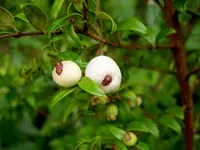
This species produces small speckled berries that are sweet with a mild eucalyptus-like or spicy undertone and are eaten fresh or used in jams and desserts by coastal Indigenous communities in eastern Australia.

Fragrant, oil-rich foliage

The leaves contain aromatic essential oils typical of the myrtle family, releasing a distinct scent when crushed that may deter some herbivores and insects.

Coastal heathland specialist

In the wild, this shrub naturally occurs in sandy, nutrient-poor soils of coastal heaths and woodlands in New South Wales and Queensland, showing good adaptation to salt-laden winds and periodic drought.

Botan icon

Did you know?

The white to pink-tinged flowers and speckled white berries of this species are an important seasonal food resource for local birds and insects in eastern Australian coastal ecosystems, helping support pollinator communities and seed-dispersing birds in relatively harsh, low-nutrient habitats.

FAQs about Midgen Berry

Yes, the small berries are edible and pleasantly sweet, often compared to blueberry with a hint of spice. They can be eaten fresh, or used in jams, desserts, and flavouring for drinks or sauces.

Grow Healthy Plants with Botan Care

Keep your plants happy and healthy with plant identification, disease detection, and easy care guidance.

Botan plant care app — identify plants on mobile

Explore More Plants