


Use hardwood blocks
For stable, repeatable fruiting, inoculate clean, freshly cut hardwood logs or blocks instead of loose wood chips, as these hold moisture and nutrients more consistently for the fungus.

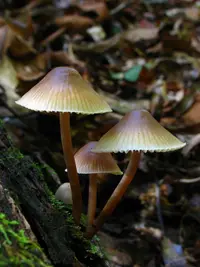
Common bonnet, Mycena galericulata, is a small saprotrophic mushroom that breaks down dead wood in forests and wooded parks. It is not a houseplant but may appear in outdoor garden beds with buried wood or old stumps. Caps are typically pale gray to brown, bell-shaped when young, and carried on thin, fragile stems in loose clusters. This species prefers cool, moist, shaded habitats with plenty of decaying hardwood. It is not considered easy or practical to cultivate intentionally, so most guidance focuses on identification rather than how to care for common bonnet.

Care Difficulty
Hard Care

Light Preference
Shade

Water Requirements
Keep Soil Moist

Temperature Preference
Cool Climate

Hardiness Zone
Unknown

Soil Texture
Loamy, Peaty, Organic-rich

Soil pH
Acidic (5.5–6.5), Slightly acidic (6.5–7.0)

Soil Drainage
Moist but well-drained

Fertilization
Minimal (feed rarely)
Scan your plant to receive care tips personalized for your specific plant
Available on iOS and Android
This woodland fungus prefers low light conditions that mimic a shaded forest floor.
This species needs consistently damp, not waterlogged, substrate to fruit well.
This fungus thrives in cool, mild conditions typical of temperate woodlands.
This wood-decaying mushroom requires consistently high humidity to fruit well.
This fungus grows on wood rather than typical garden soil, but its substrate should mimic moist, humus-rich forest conditions.
This species can be grown in containers only in specialized, moist wood-based setups, not as a typical houseplant.
Mycena galericulata is a saprophytic woodland fungus that gains nutrients from decaying wood and does not benefit from conventional fertilizing.
Pruning is not part of normal care for Mycena galericulata, as each mushroom is a short‑lived fruiting body rather than a long-term plant structure.
This fungus is best left undisturbed on its natural deadwood substrate rather than repotted or transplanted.
Deliberate propagation of Mycena galericulata is uncommon and technically demanding for most home growers.
Outdoor populations of common bonnet are naturally cold hardy and require no dedicated winter care under normal woodland conditions.

Plant Health Check
Not sure what's wrong with your plant? Check your plant's health inside the app.
This species is strongly associated with decaying hardwood, especially beech, and often fruits in dense clusters on buried logs or deeply decomposed stumps where the wood is no longer easily visible at the surface.
It produces a white spore print and smooth, elliptical spores, a combination mycologists use to separate it from similar small gray-brown bonnet mushrooms in the field and under the microscope.
The cap is hygrophanous, meaning it changes appearance as it loses water, showing darker, translucent radial streaks when moist and becoming much paler and more opaque as it dries.

Genetic and microscopic studies have shown that material once lumped under this single name actually represents a complex of closely related lineages, so some collections historically identified as Mycena galericulata in different regions are now understood to be distinct but similar species.
This species is generally classified as inedible. It is small, insubstantial, and easily confused with potentially harmful look-alikes. It is not recommended for culinary use, and any wild mushroom should be left unpicked unless identified by an expert.
Keep your plants happy and healthy with plant identification, disease detection, and easy care guidance.

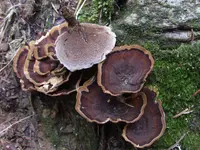
Brown Funnel Polypore
Coltricia perennis
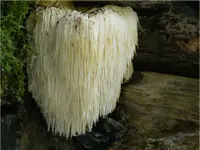
bearded tooth
Hericium erinaceus
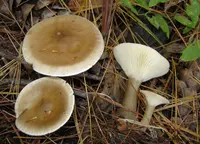
Club Foot
Ampulloclitocybe clavipes
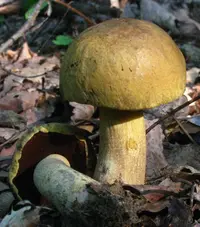
Boletus vermiculosoides
Boletus vermiculosoides
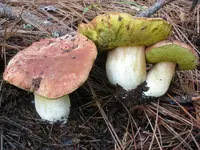
Spring King Bolete
Boletus rex-veris
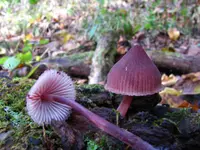
Bleeding Fairy Helmet
Mycena haematopus
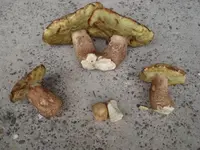
Boletus subcaerulescens
Boletus subcaerulescens
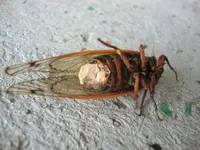
Massospora cicadina
Massospora cicadina