Use sturdy staking
Install a single strong stake per plant when stems reach 20–30 cm, tying loosely with soft ties so tall plants stay upright and pods develop straight and easy to harvest.

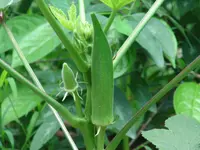
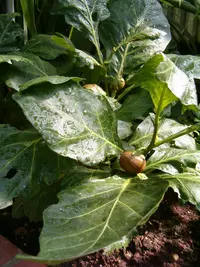
Okra, Abelmoschus esculentus, is a fast-growing warm-season vegetable grown for its tender green pods. It is an annual plant with a sturdy, upright stem and large, lobed leaves. Showy hibiscus-like flowers appear before the pods develop.
The plant likely originated in Africa and is now widely cultivated in warm regions worldwide. It suits home gardens in hot summers and can also grow in large containers.
Okra prefers full sun, warmth, and well-drained, fertile soil. Once established, it tolerates short dry spells, which makes it relatively simple for gardeners who want to learn how to care for okra.

Care Difficulty
Moderate Care

Light Preference
Full Sun

Water Requirements
Regular Water

Temperature Preference
Tropical / Frost Sensitive

Hardiness Zone
9–11

Soil Texture
Sandy, Loamy, Organic-rich

Soil pH
Acidic (5.5–6.5), Slightly acidic (6.5–7.0)

Soil Drainage
Moist but well-drained

Fertilization
Moderate (every 2–4 weeks)
Scan your plant to receive care tips personalized for your specific plant
Available on iOS and Android
Abelmoschus esculentus needs strong, consistent sun to produce healthy foliage and pods.
This warm-season annual prefers evenly moist, well-drained soil rather than frequent shallow watering.
This species thrives in consistently warm conditions and reacts poorly to cold snaps or frost.
Humidity is a minor factor for Abelmoschus esculentus, which copes well with typical outdoor air in warm climates.
Abelmoschus esculentus grows best in loose, deep, well-drained soil with consistent moisture retention.
This species can perform reliably in containers when given enough depth and stable moisture.
Abelmoschus esculentus responds well to moderate feeding during its warm growing season.
Pruning Abelmoschus esculentus is mainly about cleanliness and directing energy to pods.
This species is usually grown as an annual in the ground, so focus on careful transplanting rather than frequent repotting.
Most Abelmoschus esculentus plants are propagated from seed for consistent performance each growing season.
Abelmoschus esculentus is a frost-sensitive warm-season annual, so it does not overwinter outdoors in cold climates.

Plant Health Check
Not sure what's wrong with your plant? Check your plant's health inside the app.
The pods and seeds contain a high amount of mucilage, a gel-like polysaccharide that thickens soups and stews such as gumbo by increasing viscosity when heated and stirred.
Okra uses C4 photosynthesis, a pathway that is especially efficient in hot, sunny environments, which helps explain its strong performance and high productivity in warm climates with intense light.
The large yellow flowers are primarily self-pollinating but are also frequently visited by bees, which can increase pod set and genetic mixing among plants.

The crop was carried and maintained by enslaved Africans across the Atlantic, and historical records show that okra seeds were deliberately saved and traded within African diaspora communities in the Americas, making it an important living link in culinary and agricultural history.
Container culture works well if the pot is at least 25–30 cm wide and deep, with drainage holes. Use a loose, fertile mix, thin seedlings to one strong plant per pot, and fertilize modestly during the season.
Keep your plants happy and healthy with plant identification, disease detection, and easy care guidance.