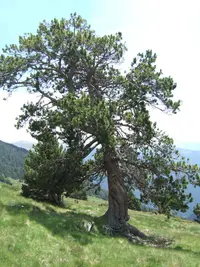
Caucasian alder Care (Alnus subcordata)

Caucasian alder

About Caucasian alder

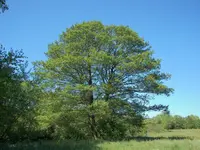
Caucasian alder, Alnus subcordata, is a fast-growing deciduous tree from the birch family, valued for its dense canopy and straight trunk. It often reaches medium to large tree size in suitable conditions.

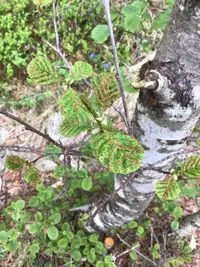
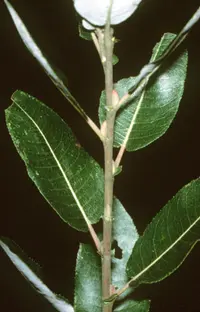
This species is native to the Caucasus and northern Iran, where it grows along rivers, lakes, and moist mountain slopes. Its rounded, heart-shaped leaves give it a distinct appearance compared with other alders.

Caucasian alder is generally robust and adaptable, especially in cool to mild climates. It tolerates wet soils, improves soil fertility through nitrogen-fixing roots, and can handle urban conditions reasonably well.

To care for Caucasian alder, provide full sun, consistent moisture, and reasonably fertile, well-drained to moist soil, especially during its establishment period.

Main Plant Requirements

Care Difficulty

Easy Care

Light Preference

Full Sun

Water Requirements

Regular Water

Temperature Preference

Cold Hardy

Hardiness Zone

5–7

Soil Texture

Loamy, Clay, Silty

Soil pH

Acidic (5.5–6.5), Slightly acidic (6.5–7.0)

Soil Drainage

Moist but well-drained

Fertilization

Minimal (feed rarely)

Get Personalized Care Plan

Scan your plant to receive care tips personalized for your specific plant

Available on iOS and Android

How to Care for the Caucasian alder

This fast-growing tree prefers full sun but adapts to light shade in many landscapes.

  • Provide 6–8 hours of direct sun daily; Caucasian alder performs best in open, unshaded positions such as stream banks or large yards.
  • Tolerates partial shade, especially light morning sun with dappled afternoon light, but dense shade leads to slower growth and thinner canopies.
  • In hot summers, protect young trees from intense late-afternoon sun to reduce leaf scorch and moisture stress, especially on exposed, dry sites.

This species is naturally adapted to moist sites and benefits from consistently damp but not stagnant soil.

  • Keep soil evenly moist, especially the top 5–8 cm; do not allow long periods of bone-dry soil, which cause leaf dulling, edge browning, and slowed growth.
  • In the first 2–3 years after planting Alnus subcordata, water deeply when the upper soil starts to lose surface sheen but before leaves wilt.
  • Mature trees near watercourses may need little supplemental irrigation, but on freely draining or sloped sites, increase watering during prolonged summer droughts.

This hardy tree tolerates a wide temperature range but grows best in cool to mild conditions.

  • Optimal active growth occurs around 60–75°F (16–24°C), with strongest performance in regions that have cool, moist summers.
  • Dormant trees tolerate winter lows near 0°F (−18°C) once established, but young saplings benefit from protection from sudden hard freezes and drying winds.
  • In hot climates with summer highs above 90°F (32°C), growth can slow; provide adequate soil moisture and avoid exposed, heat-reflective sites to limit stress.

Humidity is not a significant factor for Alnus subcordata, which is adapted to outdoor temperate conditions.

Alnus subcordata prefers moist, deep, structured soil that still allows air to reach the roots.

  • Use a loamy mix with a high mineral fraction, such as garden loam blended with well-rotted compost.
  • Maintain slightly acidic to neutral pH around 6.0–7.5 for best nutrient availability.
  • Ensure steady moisture with slow drainage but avoid stagnant water by providing a gentle slope or raised planting zone.
  • Avoid compacted, heavy clay where water sits for long periods, and break up subsoil to improve aeration depth.

This fast-growing tree is generally unsuitable for long-term container culture due to its vigorous root system and size.

This nitrogen-fixing tree usually needs minimal feeding in the ground, but light fertilization can support young or container-grown Caucasian alder.

  • Use a balanced slow-release fertilizer (for example 10-10-10) or well-rotted compost in early spring for young trees or potted specimens.
  • Apply once at the start of the growing season; avoid repeated applications in fertile soil.
  • For container plants, use half-strength balanced liquid feed every 4–6 weeks from spring to midsummer only.
  • Stop feeding by late summer and do not fertilize in winter dormancy to prevent weak, frost-tender growth.

Pruning Alnus subcordata is mainly done to manage structure and remove problem wood rather than to stimulate flowering.

  • Carry out structural pruning in late winter or very early spring before bud break.
  • Remove dead, diseased, crossing, or storm-damaged branches with clean, sharp bypass pruners or a pruning saw.
  • Thin crowded interior branches to improve light penetration and air movement while preserving the natural form.
  • Avoid heavy topping; instead shorten or remove entire branches at their origin to maintain a stable framework.

This fast-growing tree is usually field-grown, so focus on timely transplanting from nursery containers into the landscape.

  • Transplant when roots circle the container, growth slows, or the tree becomes top-heavy, typically after 1–3 years in a pot.
  • Choose early spring or early autumn for moving Alnus subcordata, when soil is workable and temperatures are mild.
  • Dig a wide planting hole, gently loosen circling roots, and set the root flare at soil level to reduce stress.
  • Water deeply after planting, then keep soil evenly moist and apply a 5–8 cm mulch ring, keeping mulch off the trunk.

Propagation of Alnus subcordata is most reliable from seed, with some use of hardwood cuttings in nursery settings.

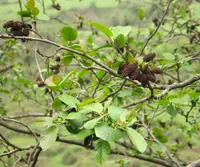
  • Collect ripe seed cones in late summer to autumn, then dry and extract seeds.
  • Sow seeds in late winter to early spring in a free-draining, moist seed mix, barely covering the seed.
  • Provide cool conditions and consistent moisture; light stratification at 34–41°F for 4–6 weeks can improve germination.
  • For hardwood cuttings, take dormant pencil-thick shoots in late winter, treat bases with rooting hormone, and insert into a sandy medium.

Established Alnus subcordata is cold hardy in most temperate regions and usually needs little specific winter care in the ground.

  • Young or newly planted trees benefit from a 5–8 cm mulch layer over the root zone to moderate freeze–thaw cycles.
  • In very cold or exposed sites, use a breathable trunk wrap to limit sunscald and frost cracking on young stems.
  • Container-grown trees should be moved to a sheltered, unheated but frost-moderated spot and watered lightly through winter.

Care Tips

Site for Wind

Position young trees where they receive some wind exposure so trunks develop strong taper and flexible wood, reducing breakage risk as they mature.

Encourage Deep Roots

During the first 2–3 years, water less frequently but more deeply to encourage roots to grow down rather than stay near the surface, which improves drought resilience and anchorage.

Manage Root Suckers

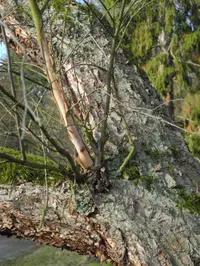
Inspect the base and nearby soil 2–3 times per year and promptly cut off root suckers at ground level to prevent unwanted thickets and competition with the main trunk.

Support in Wet Soils

In very soft or periodically flooded ground, install 2–3 sturdy stakes outside the root ball and use flexible ties for the first 1–2 years to keep the tree upright while roots anchor securely.

Plan for Nitrogen Fixing

When caring for Caucasian alder in mixed plantings, place it slightly upslope or upwind of more nutrient-demanding trees so its nitrogen-enriched leaf litter benefits nearby plants over time.

Common Pests and Diseases

Alder aphids

This pest forms dense colonies on young shoots and leaf undersides, sucking sap and causing leaf curling, distortion, and sticky honeydew that can lead to sooty mold. Symptoms include reduced vigor and heavy ant activity around affected growth.

Solution

Prune and dispose of heavily infested shoots, then hose down remaining foliage with a strong stream of water to dislodge colonies. If needed, use insecticidal soap or a light horticultural oil, repeating applications according to label directions while monitoring new growth for reinfestation.

Alder leaf beetles

These insects feed on foliage as adults and larvae, producing characteristic shot-hole damage and, in severe cases, near-skeletonization of leaves. Symptoms include ragged leaf edges, brown patches, and premature leaf drop on heavily infested trees.

Solution

Inspect foliage regularly and remove early infestations by hand-picking adults and larvae into soapy water. Encourage natural predators, and if defoliation becomes severe, consider a targeted treatment with a foliar insecticide labeled for beetles, applied after leaf-out and timed to larval activity.

Alder leaf miner

This pest causes winding, pale tunnels within leaves where larvae feed between the upper and lower surfaces. Symptoms include blotchy, translucent patches that can merge and cause partial leaf dieback on stressed or young trees.

Solution

Collect and destroy affected leaves as soon as mines appear to reduce the next generation of larvae. For recurring problems, time a systemic insecticide or a contact spray labeled for leaf miners to coincide with adult emergence and egg-laying, and maintain good tree vigor to tolerate minor damage.

Phytophthora collar and root disease

This disease affects trees in poorly drained or waterlogged sites, with symptoms including thinning foliage, small yellowing leaves, dieback of branches, and dark, sunken lesions at the root collar. Decline is often gradual but can progress more quickly under chronic soil saturation.

Solution

Improve drainage by redirecting water, avoiding planting in compacted or standing-water areas, and raising planting sites when possible. Remove and destroy severely affected young trees, avoid trunk wounding, and in high-value plantings consider preventive use of phosphonate-based fungicides as part of broader Alnus subcordata care instructions.

Alder canker

This disease produces sunken, often elongated lesions on stems or branches, which may ooze dark exudate and cause dieback beyond the infected area. Symptoms include wilting and death of shoots above the canker, with rough, cracked bark around older infections.

Solution

Prune out affected branches 15–20 cm below visible symptoms during dry weather, disinfecting tools between cuts with alcohol or a bleach solution. Improve tree vigor through proper watering and mulching, avoid mechanical damage to trunks and branches, and remove heavily infected young trees to reduce inoculum in the planting area.

Interesting Facts

Nitrogen-fixing pioneer

This species forms root nodules with actinomycete bacteria of the genus Frankia, allowing it to fix atmospheric nitrogen and rapidly improve poor or disturbed soils in its native range from the Caucasus to northern Iran.

Tolerance of heavy, wet soils

Unlike many trees, it naturally thrives along riverbanks and in periodically waterlogged, clay-rich soils, helping stabilize stream edges and reduce erosion in flood-prone valleys.

Fast growth in youth

In favorable conditions with ample moisture, young trees show notably rapid height growth, which makes the species valuable in short-rotation forestry and shelterbelt planting in temperate climates.

Botan icon

Did you know?

In parts of its native range, this alder is one of the few broadleaf trees that naturally colonizes landslides and freshly deposited river sediments, often forming near-monodominant stands that set the stage for later forest succession.

FAQs about Caucasian alder

This species is fast-growing, often adding 60–90 cm in height per year in favorable conditions. Young trees establish quickly, forming a medium to large tree within 10–15 years if moisture and soil fertility are adequate.

Grow Healthy Plants with Botan Care

Keep your plants happy and healthy with plant identification, disease detection, and easy care guidance.

Botan plant care app — identify plants on mobile

Explore More Plants