Stool management
Allow the plant to form a multi-stemmed stool, then every 2–4 years cut 1⁄3–1⁄2 of the oldest stems to near ground level in late winter to maintain vigorous young shoots with large, showy catkins.

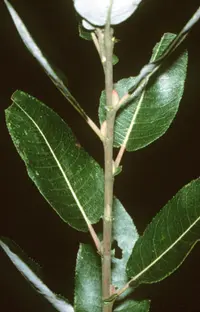
Pussy willow, Salix discolor, is a hardy deciduous shrub or small tree known for its soft, silvery catkins that appear in late winter to early spring. It has an upright, multi-stemmed habit and can form a dense thicket over time.
This species is native to moist areas of North America, often growing along streams, wetlands, and pond edges. It is generally easy to grow if given enough light and consistent moisture.
Understanding how to care for pussy willow starts with knowing it prefers full sun, damp but not stagnant soil, and space for its roots and branches to spread.

Care Difficulty
Easy Care

Light Preference
Full Sun

Water Requirements
Keep Soil Moist

Temperature Preference
Cold Hardy

Hardiness Zone
4–8

Soil Texture
Loamy, Clay, Organic-rich

Soil pH
Acidic (5.5–6.5), Slightly acidic (6.5–7.0)

Soil Drainage
Moist but well-drained

Fertilization
Minimal (feed rarely)
Scan your plant to receive care tips personalized for your specific plant
Available on iOS and Android
This shrub thrives in open sites with strong light across the growing season.
This species prefers consistently moist soil and does not tolerate prolonged drying.
This cold-hardy shrub is adapted to cool to temperate climates with pronounced winters.
Humidity is not a major concern for Salix discolor, which is adapted to outdoor conditions across wide climates.
Salix discolor prefers consistently moist, deep, loamy soil with strong structure to support rapid root growth.
This species can be grown in large outdoor containers if moisture and stability are carefully managed.
Salix discolor is a tough native shrub that benefits from modest feeding in poorer soils but usually needs no heavy fertilization.
Pruning Salix discolor maintains its shape, encourages vigorous catkin display, and removes weak growth.
This shrub is usually grown in the ground, so focus on thoughtful transplanting rather than frequent repotting.
Salix discolor is commonly propagated from cuttings, which root reliably under simple conditions.
This cold-hardy shrub generally requires little special winter care once established in the landscape.

Plant Health Check
Not sure what's wrong with your plant? Check your plant's health inside the app.
The catkins of this species open very early in spring and provide one of the first rich nectar and pollen sources for native bees, hoverflies, and early-emerging butterflies in cold-temperate North America.
Its dense, fibrous root system is well adapted to saturated soils and is used in ecological restoration to stabilize stream banks, control erosion, and improve riparian habitat structure.
This willow is dioecious, meaning male and female flowers grow on separate plants, and the showy, fuzzy catkins that are often collected for decoration are typically from male plants with abundant pollen.

Pussy willow catkins were traditionally used in parts of North America as a spring phenological marker, with the timing of their opening helping farmers and naturalists track the progression of the season and the likely return of migratory birds.
Poor flowering usually comes from pruning at the wrong time, insufficient winter chill, or plants kept too shaded or dry in late winter. Avoid heavy pruning after mid-summer and ensure strong, healthy growth the previous season for better catkins.
Keep your plants happy and healthy with plant identification, disease detection, and easy care guidance.