Early form training
In the first 3–5 years, select a single strong leader and remove competing upright shoots in late winter to build a stable trunk structure and reduce future storm damage.

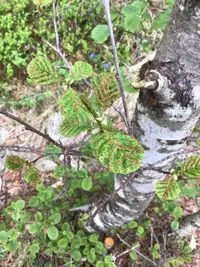
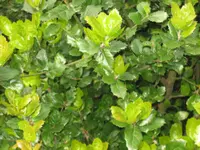
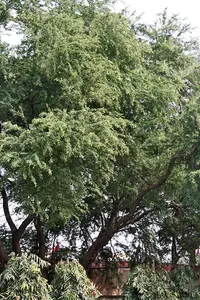
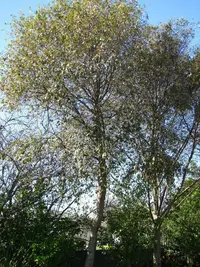
Hybrid alder, Alnus × pubescens, is a deciduous shrub or small tree formed by natural crossing between related alder species. It typically has smooth gray bark, rounded serrated leaves, and forms light, airy crowns.
This plant is usually found in cool, moist regions of Europe, especially along riversides, wet meadows, and forest edges. It grows fast, fixes nitrogen in the soil, and tolerates poor, damp substrates, which makes it useful in restoration plantings.
For gardeners who want to care for hybrid alder, it generally prefers full sun to light shade, consistent moisture, and cool, well-drained but not dry soil.

Care Difficulty
Easy Care

Light Preference
Full Sun

Water Requirements
Regular Water

Temperature Preference
Cold Hardy

Hardiness Zone
3–7

Soil Texture
Loamy, Silty, Organic-rich

Soil pH
Acidic (5.5–6.5), Slightly acidic (6.5–7.0)

Soil Drainage
Moist but well-drained

Fertilization
Minimal (feed rarely)
Scan your plant to receive care tips personalized for your specific plant
Available on iOS and Android
This alder hybrid performs best with consistent sun exposure suited to cool-temperate climates.
This species prefers evenly moist, not waterlogged, soil, especially during establishment years.
This hardy tree is well adapted to cool and cold climates with significant seasonal change.
This species is typically grown outdoors and does not have special humidity requirements beyond normal temperate outdoor conditions.
This alder hybrid prefers moist, structured mineral soil that never stays waterlogged for long periods.
This large, fast-growing tree is generally unsuitable for long-term container culture beyond temporary nursery or training stages.
This nitrogen-fixing tree usually grows well in average soil, so feeding is modest and focused on establishment or poor sites.
Alnus × pubescens responds well to light structural pruning aimed at safety, form, and plant health.
This alder hybrid is typically grown in the ground, so guidance focuses on field transplanting rather than container repotting.
Propagation of Alnus × pubescens is usually done by seed or hardwood cuttings in managed settings.
Established plants are cold hardy in most temperate climates and usually need only minimal winter care.

Plant Health Check
Not sure what's wrong with your plant? Check your plant's health inside the app.
This alder is a naturally occurring hybrid, typically arising where the ranges of Alnus incana and Alnus viridis overlap, and it shows intermediate traits such as leaf hairiness and growth form.
Like its parent species, this hybrid forms root nodules with the actinobacterium Frankia, which allows it to fix atmospheric nitrogen and enrich surrounding soils in nutrient-poor, cool mountain environments.
Populations often establish along cold, fast-flowing mountain streams and on unstable slopes, where their dense root systems help stabilize banks and reduce erosion in high-rainfall or snowmelt zones.

This hybrid alder can backcross with its parent species, creating a genetic gradient in mixed stands and making precise identification in the field challenging even for experienced botanists.
This tree is typically fast-growing, often adding 30–60 cm of height each year in suitable conditions. Growth is quicker in deep, moist, fertile soil and full light, and slows in compacted, dry, or nutrient-poor sites.
Keep your plants happy and healthy with plant identification, disease detection, and easy care guidance.