Renewal pruning cycle
Every 3–4 years, remove one-third of the oldest stems at ground level in late winter to keep the shrub dense, flowering well, and less prone to winter dieback.

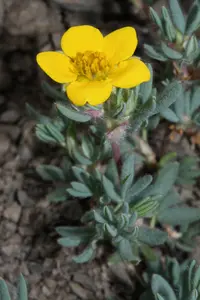
Shrubby cinquefoil, Dasiphora fruticosa, is a compact, deciduous shrub valued for its long-lasting, butter-yellow flowers and fine, small, divided leaves. It forms a dense, rounded mound that fits well in borders, foundation plantings, and low hedges.
This species is native to cool and temperate regions of the Northern Hemisphere, often found in rocky slopes, open meadows, and stream edges. It is widely used in landscapes for its high tolerance of cold, wind, and urban conditions.
The plant is generally easy to grow, adapting to a range of soils as long as drainage is good. Full sun and moderate moisture support the best flowering, and these tough traits simplify how to care for shrubby cinquefoil.

Care Difficulty
Easy Care

Light Preference
Full Sun

Water Requirements
Moderate Water

Temperature Preference
Cold Hardy

Hardiness Zone
2–7

Soil Texture
Sandy, Loamy, Rocky

Soil pH
Slightly acidic (6.5–7.0), Slightly alkaline (7.0–7.5)

Soil Drainage
Well-drained

Fertilization
Minimal (feed rarely)
Scan your plant to receive care tips personalized for your specific plant
Available on iOS and Android
Dasiphora fruticosa thrives in bright outdoor conditions with plenty of direct sun.
Dasiphora fruticosa prefers evenly moist but well-drained soil and tolerates short dry spells once established.
This hardy shrub tolerates a wide temperature range and is well suited to cold-winter climates.
This species is tolerant of a wide humidity range and usually needs no special humidity management outdoors.
Dasiphora fruticosa prefers mineral, well-drained soil and resents waterlogged conditions.
This shrub is suitable for container growing, especially on patios and small spaces.
This hardy shrub needs only light feeding to maintain healthy growth and flowering.
Pruning Dasiphora fruticosa maintains compact shape and encourages abundant flowering.
This shrub is usually grown in the ground and only occasionally kept long term in containers.
Dasiphora fruticosa is commonly propagated by cuttings, layering, or seed.
This cold-hardy shrub generally needs minimal winter care in most temperate climates.

Plant Health Check
Not sure what's wrong with your plant? Check your plant's health inside the app.
This shrub naturally occurs in subarctic and alpine regions across the Northern Hemisphere and tolerates temperatures far below freezing, which is unusual for a long-blooming ornamental species.
Individual plants can produce new flowers continuously from late spring into early fall, giving it one of the longest flowering periods of commonly grown cold-hardy shrubs.
The species has been repeatedly investigated for possible nitrogen-fixing root nodules, and while it often grows on poor soils, current evidence suggests it benefits more from mycorrhizal fungi than from true nitrogen fixation.

In several high-latitude and high-altitude ecosystems, dense stands of this shrub act as a keystone structural species, stabilizing thin, erosion-prone soils and creating sheltered microhabitats that allow less hardy plants and invertebrates to persist in otherwise harsh, exposed ground.
Poor flowering usually comes from insufficient light, heavy pruning at the wrong time, or excess nitrogen fertilizer. Old, woody stems also flower less. Light renewal pruning after blooming and balanced fertilization typically restores better bud and flower production.
Keep your plants happy and healthy with plant identification, disease detection, and easy care guidance.