Chinese parasoltree Care (Firmiana simplex)

Chinese parasoltree

About Chinese parasoltree

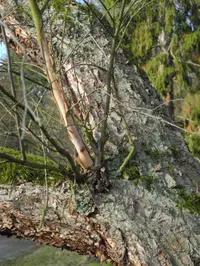
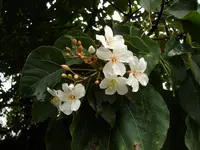
The Chinese parasoltree, Firmiana simplex, is a fast-growing deciduous tree valued for its large, umbrella-like leaves and broad, rounded crown. It often creates light, dappled shade and a distinctly tropical look, even in temperate yards.

This species is native to East Asia but is now planted in many warm and mild regions as an ornamental tree. It is generally easy to establish because it tolerates heat, urban conditions, and poorer soils, which guides how to care for Chinese parasoltree in managed landscapes.

The tree prefers full sun, moderately moist but well-drained soil, and some space to develop its canopy and root system.

Main Plant Requirements

Care Difficulty

Moderate Care

Light Preference

Full Sun

Water Requirements

Moderate Water

Temperature Preference

Warm Climate

Hardiness Zone

7–10

Soil Texture

Loamy, Sandy, Organic-rich

Soil pH

Slightly acidic (6.5–7.0), Neutral (7.0)

Soil Drainage

Well-drained

Fertilization

Minimal (feed rarely)

Get Personalized Care Plan

Scan your plant to receive care tips personalized for your specific plant

Available on iOS and Android

How to Care for the Chinese parasoltree

Firmiana simplex grows best in bright, open sites with ample direct sun and some protection from extreme afternoon heat.

  • Provide 6–8 hours of direct sun daily; morning sun with light afternoon shade suits hot summer climates best.
  • Tolerates light or dappled shade, but dense shade leads to sparse branching, slower growth, and smaller leaves on a Chinese parasoltree.
  • Young trees may scorch in intense, all-day sun; use temporary shade cloth in the first 1–2 summers, then gradually expose to more sun.

Firmiana simplex prefers evenly moist, well-drained soil, especially while establishing in the first few years.

  • Water deeply when the top 5–8 cm of soil feels dry, allowing water to soak down 20–30 cm into the root zone, then let excess drain away.
  • Reduce watering frequency in cool seasons when growth slows, but avoid letting the soil stay bone-dry for long periods during active summer growth.
  • Watch for yellowing leaves and soft stems as signs of overwatering, and for drooping, crisp leaf edges as signs of underwatering or drought stress.

This species is a warm-temperate tree that grows fastest in mild to hot conditions and is sensitive to hard frost.

  • Optimal growth occurs around 70–85°F (21–29°C), with good tolerance up to about 90°F (32°C) if soil moisture is adequate.
  • Mature trees may survive brief drops to about 15–20°F (-9 to -6°C), but young plants are damaged below 25°F (-4°C) and need protection.
  • In regions with cold winters, plant in a spot sheltered from freezing winds and late spring frosts, which can kill new shoots and delay leaf-out.

This species handles typical outdoor humidity across much of its range but benefits from moderate moisture in the air in very hot sites.

  • Aim for 40–60% humidity when growing Chinese parasoltree in especially hot, exposed positions.
  • Leaves may brown at edges, curl, or drop early if heat combines with very dry air.
  • Increase humidity locally by underplanting with groundcovers, using mulch over the root zone, or grouping plants near other shrubs and trees.

Firmiana simplex prefers deep, well-drained, moderately fertile soil that stays evenly moist but not waterlogged.

  • Use a loamy or sandy-loam soil with some organic matter so roots have both moisture and air spaces.
  • Ensure rapid drainage; avoid heavy, compacted clay or sites where water puddles for more than 1–2 hours after rain.
  • Aim for slightly acidic to neutral pH around 6.0–7.5, which supports balanced nutrient availability.
  • For planting, blend native soil with 20–30% compost and, in heavier soils, 10–20% coarse sand or fine gravel to improve aeration and drainage.

This species can be grown in large containers for a limited number of years, especially in mild or warm climates.

  • Choose a very heavy, wide-based pot to counter the top-heavy canopy and reduce tipping in wind.
  • Use a deep container at least 45–60 cm tall to allow the strong taproot and woody roots to develop without circling too tightly.
  • Select thicker-walled terracotta or concrete if the site is windy, as the extra weight stabilizes the plant and moderates rapid moisture swings.

This fast-growing tree benefits from moderate feeding during its active season, especially in poorer soils.

  • Apply a balanced slow-release fertilizer (for example 10-10-10) once in early spring as new growth begins on Chinese parasoltree.
  • In mid-summer, supplement with a light application of compost or a mild liquid balanced NPK at 1/2 strength.
  • Avoid feeding in late fall and winter when the tree is dormant to prevent soft, frost-susceptible growth.
  • Water thoroughly after each fertilizer application to help nutrients reach the root zone and reduce salt buildup.

Pruning Firmiana simplex focuses on structural training and removal of damaged wood rather than heavy shaping.

  • Carry out main pruning in late winter or very early spring before bud break.
  • Remove dead, diseased, crossing, or inward-growing branches using clean, sharp bypass pruners or loppers.
  • Thin crowded interior branches to improve light penetration and airflow, maintaining a single strong central leader where possible.
  • Limit cuts to smaller branches to avoid large wounds, which heal slowly and may invite decay.

This species is usually grown in the ground, so management focuses on timely transplanting of young trees.

  • Transplant container-grown or nursery stock in early spring or early fall, when temperatures are mild and soil is workable.
  • Look for signs such as roots circling the pot drainage holes, very quick drying soil, or slowed growth indicating it has outgrown its container.
  • Gently tease apart circling roots, trim any dead or broken ones, and set the tree in a wider hole with the root flare at soil level.
  • Water deeply after planting, then keep soil evenly moist for the first growing season to reduce transplant shock and support establishment.

Firmiana simplex is most commonly propagated from seed, though semi-ripe cuttings are also possible for experienced growers.

  • Collect ripe seeds in late summer or fall, clean them, and sow in late winter to early spring.
  • Pre-soak or lightly scarify the hard seed coat, then sow in a free-draining mix kept at 68–77°F with consistent moisture.
  • Provide bright, indirect light and good air circulation to prevent damping-off, a fungal disease that kills seedlings at soil level.
  • For cuttings, take semi-ripe shoots in midsummer, use rooting hormone, and place in a warm, humid environment until roots form.

Mature trees are moderately cold hardy but young Firmiana simplex plants benefit from some winter protection in colder regions.

  • In zones near the species hardiness limit, apply a 5–8 cm mulch layer around the root zone, keeping it away from the trunk.
  • Use burlap or a breathable wrap around young trunks and lower branches where severe freezes or drying winds are common.
  • Grow container specimens in large, insulated pots and move them into a bright, frost-free garage or porch before hard frost.

Care Tips

Root zone protection

Apply a wide mulch ring 5–8 cm deep, kept 5–8 cm away from the trunk, to buffer soil temperature, maintain moisture, and reduce competition from turf around young trees.


Single-leader training

In the first 3–5 years, select one strong central stem and remove competing uprights during late winter so the tree develops a stable, wind-resistant framework.

Wind-stability staking

On exposed sites, install 2–3 low stakes with flexible ties positioned outside the root ball for the first 1–2 years, then remove them once the tree stands firm to encourage strong trunk taper.

Shoot thinning management

Each spring, thin out crowded interior shoots and suckers at the base rather than just shortening them, which improves airflow, reduces pest habitat, and keeps the canopy structure open.

Urban site adaptation

In compacted or recently developed soils, loosen a broad area around the planting hole and top-dress annually with compost instead of deep cultivation, which supports long-term root spread when growing Chinese parasoltree.

Common Pests and Diseases

Leaf spot

This disease causes irregular brown to dark purplish spots on the large leaves, often with yellow halos and premature leaf drop in wet, warm weather.

Solution

Remove and discard heavily spotted leaves, keep the canopy as open as possible with light pruning for better air flow, avoid overhead watering, and clear fallen leaves from under the tree; in severe, recurring cases, a copper- or chlorothalonil-based fungicide labeled for ornamental trees can be applied during extended wet periods following local label directions.

Powdery mildew

This disease shows as white, powdery patches on the upper leaf surface and young shoots, leading to distorted growth and reduced vigor in shaded or crowded conditions.

Solution

Prune nearby vegetation to increase sun and air movement, remove heavily infected leaves, avoid high nitrogen fertilization that pushes very soft growth, and if needed use a horticultural oil or potassium bicarbonate product labeled for powdery mildew, applied thoroughly to both leaf surfaces.

Scale insects

These insects appear as small, immobile bumps on stems and leaf veins, sucking sap and causing yellowing foliage, sticky honeydew, and sometimes sooty black mold on the large leaves.

Solution

Prune out and dispose of heavily infested twigs, physically scrape or wipe small colonies with a cloth dipped in diluted soapy water, encourage natural predators such as lady beetles, and use a labeled horticultural oil or systemic insecticide during the crawler stage if infestations remain high.

Aphids

These insects cluster on tender shoots and the undersides of leaves, feeding on sap and causing curling leaves, stunted new growth, and honeydew that can support sooty mold on the broad canopy.

Solution

Dislodge colonies by spraying foliage with a firm stream of water, pinch back heavily infested shoot tips, support beneficial insects by avoiding broad-spectrum insecticides, and when needed apply insecticidal soap or a light horticultural oil to thoroughly cover the aphids, repeating as label directions specify.

Interesting Facts

Unusual family placement

Firmiana simplex belongs to the mallow family Malvaceae, so it is more closely related to hibiscus, cacao, and linden than to most other commonly planted shade trees, which explains its soft wood and large, thin leaves.

Distinctive seed capsules

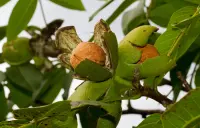
The tree produces green, paddle-shaped pods that split open and curl back to reveal shiny black seeds, an arrangement that makes the seeds highly visible to birds that help disperse them.

Urban heat tolerance

This species tolerates high summer temperatures, air pollution, and compacted urban soils, which has contributed to its spread and, in some regions, its classification as an invasive tree when planted outside its native range.

Botan icon

Did you know?

In parts of East Asia, the very light but relatively strong wood of Firmiana simplex has been used traditionally for musical instruments such as the soundboards of guqin and other zithers, where its resonance and low density are valued.

FAQs about Chinese parasoltree

This species is fast-growing, often adding 30–90 cm in height each year once established. Growth is quickest in warm climates with regular moisture and fertile, well-drained soil, but slows noticeably in poor or compacted ground.

Grow Healthy Plants with Botan Care

Keep your plants happy and healthy with plant identification, disease detection, and easy care guidance.

Botan plant care app — identify plants on mobile

Explore More Plants