Coral tooth fungus Care (Hericium coralloides)

Coral tooth fungus

About Coral tooth fungus

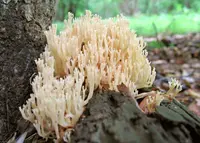
Hericium coralloides, known as coral tooth fungus, is a toothed mushroom rather than a traditional leafy plant. It forms branched, coral-like clusters with many soft hanging spines. The fruiting body is usually white to cream and grows on dead or decaying hardwood, especially beech and other broadleaf trees in temperate forests.

This fungus appears in late summer to autumn, and it relies on stable wood moisture and shaded, humid conditions. It is considered edible when correctly identified, but it is not easy to cultivate at home compared with common mushrooms. Those who want to learn how to care for Coral tooth fungus mainly need to replicate cool, shaded woodland conditions with consistently moist but not waterlogged wood.

Main Plant Requirements

Care Difficulty

Hard Care

Light Preference

Shade

Water Requirements

Keep Soil Moist

Temperature Preference

Cool Climate

Hardiness Zone

Unknown

Soil Texture

Loamy, Organic-rich

Soil pH

Acidic (5.5–6.5), Slightly acidic (6.5–7.0)

Soil Drainage

Moist but well-drained

Fertilization

Minimal (feed rarely)

Get Personalized Care Plan

Scan your plant to receive care tips personalized for your specific plant

Available on iOS and Android

How to Care for the Coral tooth fungus

This wood-decaying fungus prefers shaded forest conditions and does not tolerate direct, strong sun.

  • Aim for bright shade or dappled woodland light, similar to a north-facing forest edge, avoiding direct midday sun entirely.
  • Provide 1–3 hours of weak morning sun at most; prolonged afternoon sun quickly dries the substrate and damages Coral tooth fungus.
  • In summer, increase shade with leaf litter or canopy cover, while in late autumn more open light is acceptable as ambient intensity is lower.

This fungus needs consistently moist, not waterlogged, wood or substrate to fruit reliably.

  • Maintain moisture so the surface feels damp but not soggy; allow only the top 0.5–1 cm of substrate or log surface to begin drying before rewetting.
  • During warm, windy, or indoor heated conditions, mist or hydrate more often, watching for shrinking, toughened spines as a sign of underwatering.
  • Reduce heavy soaking in cool seasons to prevent standing water and rot; yellowing, mushy tissue often indicates overwatering or poor drainage.

This species prefers cool to mild conditions and declines under prolonged heat or hard frost.

  • Target an active growth range of 55–70°F (13–21°C), which supports steady mycelial activity and quality fruiting bodies.
  • Tolerates short drops to about 32°F (0°C), but repeated freezing damages tissue; protect fruiting logs from hard frost where possible.
  • Above 77–80°F (25–27°C), fruiting often stalls and drying risk increases, so provide shade, airflow, and moisture buffering in hot periods.

This wood-decay fungus needs consistently high humidity to form and maintain healthy fruiting bodies.

  • Aim for 85–95% humidity around developing clusters using a tented or bagged setup with air gaps for ventilation.
  • Tissue shriveling, yellowing tips, and tough, rubbery texture signal humidity stress from air that is too dry.
  • Increase humidity by misting the enclosure walls, using a humidifier nearby, or placing the substrate block above, not in, a shallow water tray.

In cultivation, this wood-inhabiting fungus is grown on lignin-rich substrates rather than true soil.

  • Use a substrate based on hardwood sawdust or fine hardwood chips blended with 10–30% wheat or rice bran for nutrition and structure.
  • Keep the substrate evenly moist but never waterlogged; free water pockets reduce oxygen and favor bacterial contamination.
  • Maintain a slightly acidic reaction, roughly pH 5.5–6.5, by using non-limed hardwood materials and avoiding garden soil additives.
  • Pack the substrate firmly but not densely so internal pores remain for gas exchange, and avoid adding clay or loam, which collapse airflow.

This species is suitable for container-style cultivation on supplemented sawdust blocks or bags rather than traditional pots with soil.

  • Choose a rigid tub or bucket that allows side or lid holes to be drilled where fruiting clusters can emerge without being crushed.
  • Elevate the block inside the container on a mesh or spacer so excess moisture drains away from the base of the substrate.
  • Use opaque or shaded containers to limit light on the substrate surface, which helps stabilize moisture and slows unwanted green algae growth.

Hericium coralloides cultivated on logs or sterilized substrate usually requires minimal added fertilizer beyond the nutrients in the growth medium.

Hericium coralloides is not pruned in the horticultural sense; management focuses on hygienic harvesting rather than shaping.

  • Harvest clusters with a clean, sharp knife, cutting at the base without disturbing underlying substrate or wood.
  • Remove and discard any discolored, slimy, or insect-damaged tissue to limit contamination and spore spread.
  • Avoid tearing or scraping the colonized log or block, which can slow regrowth and invite competing fungi.

Transplanting for Hericium coralloides mainly means moving colonized logs or substrate blocks rather than handling roots like a typical plant.

  • Shift colonized blocks or logs only when growth slows due to substrate exhaustion, contamination risk, or poor ventilation.
  • Time moves for cool, stable conditions with indirect light and moderate humidity to reduce stress on the fungal mycelium.
  • Handle substrates gently, keeping colonized surfaces intact and avoiding drops, crushing, or scraping.
  • After moving, maintain steady moisture and airflow so the organism can recover and resume fruiting.

Propagation of Hericium coralloides is typically handled by growers using controlled culture methods rather than casual home techniques.

  • Use commercial spawn or culture prepared on sterile grain or agar for reliable establishment and genetic purity.
  • Inoculate freshly cut, hardwood logs or sterilized blocks during cool, stable weather to favor mycelial colonization.
  • Maintain 60–70°F, high humidity, and low light while the mycelium knits through the substrate before fruiting conditions.
  • Keep tools and work surfaces clean to reduce contamination from competing molds and bacteria during inoculation.

Outdoor Hericium coralloides on hardy logs usually tolerates normal winters in temperate climates with little intervention.

  • In cold regions, position logs in a shaded, wind-sheltered area to limit freeze–thaw stress on wood and mycelium.
  • If needed, apply a light mulch around log bases to moderate soil temperature without burying fruiting surfaces.
  • For indoor blocks, maintain cool (45–60°F), evenly moist conditions and avoid strong, drying airflow from heaters.

Care Tips

Use clean substrate

Always prepare fresh, debarked hardwood blocks or logs and sterilize or pasteurize them to reduce contamination from competing fungi and bacteria when growing Coral tooth fungus.

Drill-pattern log inoculation

When using logs, drill holes in a staggered diamond pattern 10–15 cm apart along the log, then fill tightly with spawn and seal with cheese wax to give the mycelium an even, reliable colonization pattern.

Controlled airflow management

Provide gentle, indirect air movement during fruiting by using a small fan on a low setting pointed away from the substrate, which helps prevent bacterial blotch while avoiding dehydration of the developing teeth.

Staggered flush scheduling

After a harvest, allow the block or log to rest and partially dry at the surface for several days, then rehydrate by soaking or heavy misting to trigger a new flush and extend the overall production period.

Sanitary harvest technique

Use a clean, sharp knife to cut clusters at the base without disturbing nearby young formations, and remove spent tissue and debris so future fruit bodies develop from healthy, uncontaminated surfaces during caring for Coral tooth fungus.

Common Pests and Diseases

Green mold

This disease appears as fast-spreading green patches on the mushroom surface or substrate, usually caused by Trichoderma species competing with the fungus. Symptoms include stalled growth, deformed coral branches, and a powdery or felt-like green coating.

Solution

Remove and discard heavily contaminated blocks or logs, and avoid harvesting from green areas. Improve hygiene by sterilizing or properly pasteurizing substrate, cleaning tools and surfaces, lowering excess humidity, and increasing fresh air exchange to reduce spore buildup and prevent future outbreaks as part of careful Hericium coralloides care instructions.

Bacterial blotch

This disease causes wet, slimy, translucent spots that may turn yellow or brown on the fruiting bodies. Symptoms include soft, water-soaked tissue and unpleasant odor under very wet, stagnant conditions.

Solution

Reduce surface moisture by avoiding direct spraying on the mushrooms, improve airflow, and keep humidity in a moderate, stable range. Remove and discard affected fruiting bodies, sanitize nearby surfaces, and ensure good ventilation to dry caps gently between misting or fogging cycles.

Sciarid fungus gnats

These insects are small dark flies whose larvae feed in the substrate and around the developing mycelium, sometimes tunneling into young fruiting bodies. This pest thrives in very moist, organic grow media and can introduce pathogens through feeding wounds.

Solution

Use fine mesh screens and sticky traps to reduce adult numbers, and keep grow areas clean and free of decaying debris. Allow the upper layer of substrate or casing to drain between waterings, improve airflow, and consider biological controls such as Bacillus thuringiensis israelensis (Bti) in non-edible areas of the system if infestations are persistent.

Mites

These insects appear as tiny moving dots on the substrate or coral clusters and may graze on mycelium, spores, or decaying material. Symptoms include slowed colonization, deformed fruiting bodies, and fine specks or dust-like movement on close inspection.

Solution

Discard heavily infested blocks, sterilize or thoroughly clean growing equipment, and maintain strict hygiene during spawning and handling. Reduce mite access by sealing gaps, using clean filters on air intakes, and quarantining any new substrate or logs before placing them near established cultures.

Interesting Facts

Branching coral morphology

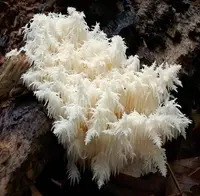
This fungus forms repeatedly branched, coral-like clusters with many fine, downward-pointing spines, unlike the single cascading teeth of closely related Hericium species.

Dead hardwood specialist

It grows almost exclusively on well-decayed dead hardwood, especially beech and oak in temperate forests, acting as a late-stage decomposer that helps break down complex wood components like lignin.

Fine spine identification

Its spines are typically short and densely packed, often only a few millimeters long at the tips of branches, which helps distinguish it from similar species with longer, shaggier teeth.

Botan icon

Did you know?

Mature fruiting bodies of this fungus can appear during cool, moist periods from late summer into autumn and may reappear on the same fallen log in multiple years, as long as suitable wood remains for the underlying mycelium to digest.

FAQs about Coral tooth fungus

Growth is relatively slow. From colonized substrate to harvestable fruiting bodies often takes 3–6 months under controlled conditions. In nature, it may take a season or more to fully develop on suitable dead hardwood.

Grow Healthy Plants with Botan Care

Keep your plants happy and healthy with plant identification, disease detection, and easy care guidance.

Botan plant care app — identify plants on mobile

Explore More Plants