


Mycelium-Friendly Substrate
Use a mix of well-decayed conifer litter and native forest soil from beneath compatible pine or spruce trees to promote stable mycelium establishment when growing pine pelargonium webcap.

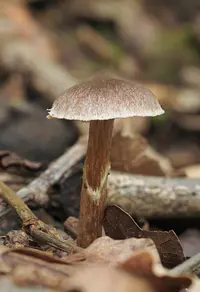
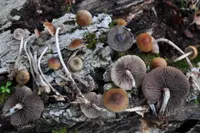
Pine pelargonium webcap is not a plant but a small forest mushroom. Cortinarius flexipes forms slender, pale brown caps with a powdery surface and a thin, brittle stem. It grows on the ground in coniferous and mixed woodlands, often near pines, across parts of Europe, North America, and Asia. This species associates with tree roots in a mycorrhizal partnership, which makes it impossible to cultivate in normal garden or indoor conditions. For those studying fungi rather than trying to care for pine pelargonium webcap, it is mainly of interest for identification and ecological value, not for home growing.

Care Difficulty
Moderate Care

Light Preference
Partial Shade

Water Requirements
Regular Water

Temperature Preference
Cool Climate

Hardiness Zone
Unknown

Soil Texture
Loamy, Sandy, Organic-rich

Soil pH
Acidic (5.5–6.5)

Soil Drainage
Moist but well-drained

Fertilization
Minimal (feed rarely)
Scan your plant to receive care tips personalized for your specific plant
Available on iOS and Android
This woodland fungus prefers low to moderate light levels typical of shaded conifer forests.
This mycorrhizal fungus relies on consistently moist, not saturated, forest soil.
This species develops best in cool to mild conditions typical of temperate conifer woods.
Humidity is not a meaningful control factor for this naturally occurring fungus and is managed by broader site moisture rather than indoor-style humidity adjustment when caring for pine pelargonium webcap.
This mycorrhizal fungus grows in natural forest soil rather than prepared potting mixes.
This woodland fungus is not suitable for conventional container growing, because it depends on living tree roots and complex forest soil conditions that containers cannot reliably reproduce.
Cortinarius flexipes is a mycorrhizal fungus that does not use conventional fertilizers, so soil and host-tree health matter more than added nutrients.
Cortinarius flexipes does not require or benefit from pruning because it is a wild mycorrhizal fungus, not a managed ornamental plant.
This fungus grows in symbiosis with tree roots in soil and is not suited to normal container culture, so repotting Cortinarius flexipes is generally not practical.
Propagation of Cortinarius flexipes is specialized and rarely attempted by general growers, as it depends on complex mycorrhizal relationships with host trees.
Cortinarius flexipes is naturally cold hardy in its native range and needs no special winter care beyond maintaining a stable woodland-style habitat.

Plant Health Check
Not sure what's wrong with your plant? Check your plant's health inside the app.
Fresh fruitbodies often release a noticeable resinous smell that many mycologists describe as similar to pine or cedar wood, which helps separate it from similar brown Cortinarius species that lack this scent.
This species has a cobweb-like partial veil (the cortina) that can leave faint, fibrous remnants on the stem, but these are often sparse and ephemeral, so careful observation is needed in young specimens to confirm identification.
It forms ectomycorrhizae with trees such as spruce and pine, creating a mutualistic association where the fungus helps roots absorb water and mineral nutrients in exchange for sugars produced by the host tree.
This species is not recommended for consumption. It is considered inedible and easily confused with dangerously toxic webcaps. Foraging mistakes can cause severe poisoning, so it is safest to treat it strictly as non-edible.
Keep your plants happy and healthy with plant identification, disease detection, and easy care guidance.

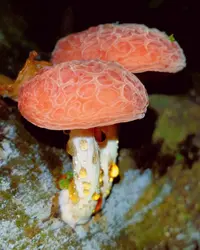
Wrinkled Peach
Rhodotus palmatus
Anthoporia
Anthoporia albobrunnea
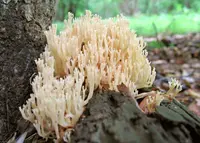
crown-tipped coral fungus
Artomyces pyxidatus
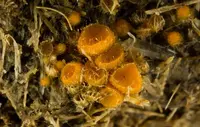
Cheilymenia stercorea
Cheilymenia stercorea
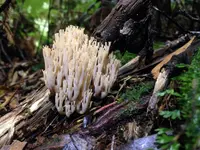
Artomyces austropiperatus
Artomyces austropiperatus
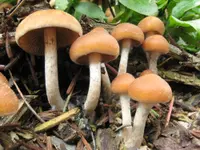
Psilocybe allenii
Psilocybe allenii
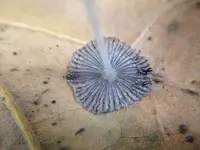
Coprinopsis stercorea
Coprinopsis stercorea
Blue-foot
Psilocybe caerulipes