Establish safe spacing
Plant far from paths, play areas, and buildings, and plan for a wide canopy and aggressive root system by allowing at least 6–8 m of clearance in all directions.

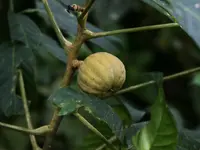
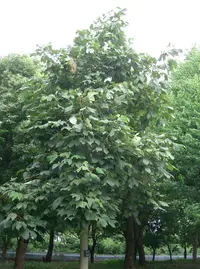
The sandbox tree, Hura crepitans, is a large, fast-growing tropical tree known for its thick trunk covered in sharp, conical spines. It produces distinctive pumpkin-shaped seed capsules that can burst open forcefully when mature.
This species is native to tropical regions of Central and South America and thrives in hot, humid, frost-free climates. It is not suitable as a typical garden or indoor plant due to its size, explosive fruits, and toxic sap, which makes care for sandbox tree challenging and best left to specialists or botanical collections.

Care Difficulty
Hard Care

Light Preference
Full Sun

Water Requirements
Regular Water

Temperature Preference
Tropical / Frost Sensitive

Hardiness Zone
11–12

Soil Texture
Sandy, Loamy, Organic-rich

Soil pH
Acidic (5.5–6.5), Slightly acidic (6.5–7.0)

Soil Drainage
Moist but well-drained

Fertilization
Minimal (feed rarely)
Scan your plant to receive care tips personalized for your specific plant
Available on iOS and Android
This tropical tree needs strong, consistent light to support its fast growth and dense canopy.
This species prefers steadily moist, well-drained soil rather than alternating extremes of drought and saturation.
This lowland tropical tree thrives in consistently warm, frost-free conditions.
Hura crepitans prefers moderately high humidity but usually adapts to typical outdoor conditions in warm climates.
This species favors deep, moist, well-aerated soil that drains freely and does not stay waterlogged.
This species is generally unsuitable for long-term container growing due to its eventual large size and aggressive roots, though short-term container culture of seedlings is possible.
In cultivation, sandbox tree benefits from light, controlled feeding rather than heavy fertilization.
Pruning Hura crepitans is mainly structural and sanitary, as the species naturally forms a strong central trunk.
Transplanting Hura crepitans focuses on moving young trees from nursery containers into a permanent outdoor site with minimal root disturbance.
Propagation of Hura crepitans is usually done from seeds and is considered specialized rather than routine home practice.
Hura crepitans is a strictly tropical tree that has very low frost tolerance and needs active winter management in cooler climates.

Plant Health Check
Not sure what's wrong with your plant? Check your plant's health inside the app.
The woody fruits dry and split with a loud crack, catapulting seeds several meters away in an explosive dispersal mechanism driven by built-up tension in the fruit wall tissues.
All parts of the tree contain a milky latex rich in diterpene esters, which can cause severe skin irritation, conjunctivitis if it contacts eyes, and toxicity if ingested by humans or livestock.
The trunk and larger branches are densely covered with conical spines, which function as mechanical protection against herbivores in its native Neotropical forests.

In parts of its native range, Indigenous communities have historically used the poisonous sap of this species as a component of arrow poisons, carefully processing it to harness its strong biological activity while avoiding self-intoxication.
Growth is very rapid in warm, wet climates, often 1–2 m per year when young, then slowing with age. In cooler or drier areas it grows more slowly and may remain much smaller than in native forests.
Keep your plants happy and healthy with plant identification, disease detection, and easy care guidance.