Cucurbita pepo var. giromontiina Care

Cucurbita pepo var. giromontiina

About Cucurbita pepo var. giromontiina

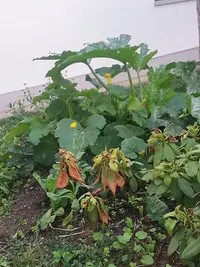
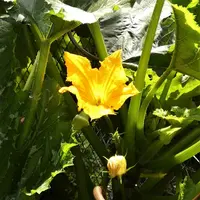
Cucurbita pepo var. giromontiina is a type of summer squash, closely related to zucchini, grown mainly for its tender, edible fruits. It is an annual vine or semi-bushy plant with broad, rough leaves and large yellow flowers that develop into elongated, pale to medium green squash.

This variety originates from cultivated forms of Cucurbita in the Americas but is now widely grown in home gardens and small farms in many temperate regions. Plants grow quickly in warm weather and can be productive if given enough space and consistent moisture.

To care for Cucurbita pepo var. giromontiina, gardeners usually provide full sun, fertile, well-drained soil, and regular watering, especially during flowering and fruiting, to support steady growth and good yields.

Main Plant Requirements

Care Difficulty

Moderate Care

Light Preference

Full Sun

Water Requirements

Regular Water

Temperature Preference

Tropical / Frost Sensitive

Hardiness Zone

3–10

Soil Texture

Loamy, Sandy, Organic-rich

Soil pH

Acidic (5.5–6.5), Slightly acidic (6.5–7.0)

Soil Drainage

Moist but well-drained

Fertilization

Moderate (every 2–4 weeks)

Get Personalized Care Plan

Scan your plant to receive care tips personalized for your specific plant

Available on iOS and Android

How to Care for the Cucurbita pepo var. giromontiina

This summer squash thrives in strong, direct sun when grown outdoors.

  • Provide 6–8 hours of direct sun daily, with at least 4 hours of gentle morning sun for best flowering and fruiting.
  • Allow light afternoon shade in hot regions to limit leaf scorch and reduce moisture stress during heat waves.
  • In spring and fall, choose an open, unshaded site; if buildings or trees cast shade, ensure the vines of Cucurbita pepo var. giromontiina still get mostly unobstructed midday light.

This plant prefers consistently moist but not waterlogged soil during active growth.

  • Water when the top 3–5 cm of soil feels dry, soaking the root zone deeply rather than giving light splashes.
  • Increase watering frequency in hot, windy weather and reduce it in cool or rainy periods, always using well-drained soil or raised beds to prevent root rot.
  • Watch for dull, wilting leaves in dry soil as a sign to water, and for yellowing, soft stems as a sign of overwatering in Cucurbita pepo var. giromontiina.

This warm-season crop grows best in stable, mild to warm conditions without frost.

  • Aim for daytime temperatures of 70–85°F (21–29°C) and nights above 60°F (16°C) for strong vegetative growth and flowering.
  • Avoid planting outdoors until soil and air are reliably above 60°F (16°C), since cold stress below 55°F (13°C) slows growth and can cause yellowing.
  • Protect plants from frost at all stages; temperatures near 32°F (0°C) can kill vines, while extended periods above 95°F (35°C) may reduce flowering and fruit set.

Humidity is not a major concern for Cucurbita pepo var. giromontiina grown outdoors in typical garden conditions.

This squash prefers deep, loose, well-draining loam with high organic content to support fast growth and heavy fruiting.

  • Aim for a loamy or sandy-loam structure enriched with compost or well-rotted manure to hold nutrients yet drain freely.
  • Keep pH around 6.0–7.0; slightly acidic to neutral conditions optimize nutrient uptake and reduce micronutrient lockout.
  • Improve drainage and aeration in heavy ground by incorporating coarse sand and fine bark or perlite into the top 20–30 cm.
  • Avoid compacted clay, waterlogged spots, or very shallow soil, which restrict roots and promote root rot and poor fruit set.

This species can be grown in large containers if ample root volume and stable support are provided.

  • Use a very large, heavy container (at least 20–25 gal) so the spreading vine does not tip the pot in wind or under fruit weight.
  • Position the container where trailing stems can spill over an edge or climb a sturdy support to avoid overcrowding the root zone surface.
  • Raise the pot slightly on feet or bricks so drainage holes stay clear and excess water leaves quickly after heavy watering or rain.

This fast-growing squash benefits from moderate feeding during the warm growing season.

  • Use a balanced NPK fertilizer (such as 10-10-10) or well-rotted compost incorporated into the soil before planting Cucurbita pepo var. giromontiina.
  • Side-dress with compost or apply a diluted balanced liquid feed at 2–4 week intervals while vines are actively growing and setting fruit.
  • Dilute liquid fertilizers to half the label strength to avoid leaf burn and excessive soft growth.
  • Stop feeding in late season and avoid fertilizing in winter or when plants have died back, as they are annuals.

Pruning is useful mainly to manage vine spread and remove unhealthy tissue.

  • In mid to late season, remove dead, yellowing, or diseased leaves using clean, sharp pruners to maintain airflow and reduce fungal problems.
  • Trim overly long or crowded non-fruiting stems to keep plants within space limits and direct energy to fruit production on Cucurbita pepo var. giromontiina.
  • Cut just above a leaf node, avoiding removal of too many healthy leaves at once to maintain photosynthesis and plant vigor.
  • Disinfect tools with alcohol between plants to limit the spread of viral and fungal diseases.

This squash is usually transplanted once from seedling stage into its final outdoor position rather than repotted repeatedly.

  • Transplant when seedlings have 2–3 true leaves and roots just fill the plug or small pot, but are not circling heavily.
  • Plant outdoors after frost risk has passed and soil has warmed to about 60°F, as Cucurbita pepo var. giromontiina dislikes cold soil.
  • Water seedlings well before and after transplanting, and handle the root ball gently to limit root damage and transplant shock.
  • Provide a shallow watering basin and light shade for 2–3 days in hot weather to help roots establish in the new site.

This plant is almost always propagated from seed, as it is an annual squash.

  • Sow seeds indoors 2–4 weeks before the last frost or directly outside once soil reaches about 60°F.
  • Use fresh seed from a reliable source, as saved seed may not come true if plants were cross-pollinated near other squash types.
  • Plant seeds 2–3 cm deep in loose, well-drained, warm soil and keep evenly moist, not waterlogged, for fast germination.
  • Provide bright light and good airflow for seedlings, then harden off gradually outdoors over 7–10 days before planting Cucurbita pepo var. giromontiina in the garden.

As a warm-season annual, this squash does not overwinter; plants die with hard frost and do not regrow the next year.

  • Expect vines to collapse after the first hard frost, as Cucurbita pepo var. giromontiina has low frost tolerance.
  • Harvest all mature fruit before freezing nights, then remove and compost healthy plant debris.
  • Mulch the cleared bed to protect soil structure and prepare the site for future crops rather than to preserve the squash plants.

Care Tips

Efficient vine training

Train vines along trellises or low fences and gently reposition them every few days so fruits develop off the soil surface, which improves airflow and reduces rot and slug damage.

Targeted fruit thinning

Once several young fruits set, remove the smallest or misshapen ones so the plant can direct resources into fewer fruits, resulting in better size and uniformity for harvest.

Preventive powdery mildew

Begin weekly applications of a labeled sulfur or potassium bicarbonate product at the first sign of powdery mildew and water at soil level only, to keep foliage dry and slow disease spread.

Mulch for clean fruit

Place straw, dried grass clippings without herbicide, or woven ground cover under developing fruits to keep them clean, reduce soil splash, and limit contact with soil-borne pathogens.

Timed harvest scouting

Check plants daily once fruits reach 10–15 cm and harvest while skins are still tender and glossy, as frequent picking encourages continuous production when growing Cucurbita pepo var. giromontiina.

Common Pests and Diseases

Squash vine borer

This pest is a clearwing moth larva that tunnels inside stems, causing sudden wilting and collapse of otherwise healthy plants.

Solution

Inspect stems near the base for small entry holes with frass, slit infested stems lengthwise to remove larvae, then mound soil over the damaged area to encourage new rooting; use fine mesh row covers before adult moths are active, and rotate planting sites yearly to reduce overwintering populations.

Squash bugs

These insects feed on leaves and stems, causing yellow spots that turn brown and crispy, and can lead to plant decline and fruit loss.

Solution

Hand-pick adults and nymphs, crush bronze-colored egg clusters on leaf undersides, remove plant debris where bugs hide, and use floating row covers early in the season; if needed, target nymphs with insecticidal soap or neem oil sprayed thoroughly on leaf undersides in the evening.

Powdery mildew

This disease produces white, powdery patches on older leaves, which can spread and reduce photosynthesis and fruit yield, especially in late summer.

Solution

Remove heavily infected leaves, improve spacing and airflow, water at soil level rather than overhead, and apply sulfur- or potassium bicarbonate-based fungicides at the first sign of spots as part of general Cucurbita pepo var. giromontiina care instructions.

Cucumber beetles

These beetles chew on leaves, flowers, and young fruits and can transmit bacterial wilt, which causes rapid vine collapse.

Solution

Use yellow sticky traps and fine mesh row covers over young plants, hand-pick beetles in early morning, and keep the area free of cucurbit weeds; if populations are high, apply targeted insecticidal soap or neem oil to foliage, repeating as needed according to label directions.

Downy mildew

This disease causes yellow angular spots on upper leaf surfaces and gray-purple fuzzy growth underneath, leading to rapid leaf blight in humid or rainy periods.

Solution

Remove and dispose of infected leaves, avoid overhead watering, increase spacing and airflow, and apply appropriate copper-based or phosphonate fungicides at the first symptoms, rotating products to slow resistance and protecting new growth during extended wet weather.

Interesting Facts

Immature fruit harvest

This zucchini-type squash is harvested while the fruit is still physiologically immature, which keeps the rind tender and the seeds soft compared with fully ripened C. pepo squashes.

Monoecious flowering habit

Individual plants produce separate male and female flowers on the same vine, relying on insect pollinators such as bees to transfer pollen before the daily-opening flowers wither.

Italian selection origin

The giromontiina group represents traditional Italian selections of C. pepo developed specifically for elongated, fast-growing summer squash with high yields under warm, long-day conditions.

FAQs about Cucurbita pepo var. giromontiina

Yes, this is an edible type of summer squash. Both the immature fruits and male blossoms are commonly eaten. Fruits are best harvested young for tender texture and mild flavor, similar to zucchini or other soft-skinned squash.

Grow Healthy Plants with Botan Care

Keep your plants happy and healthy with plant identification, disease detection, and easy care guidance.


Botan plant care app — identify plants on mobile

Explore More Plants