Encourage Early Branching
Pinch the main vine tip once it has 5–7 true leaves to promote side shoots, which increases female flower sites and improves yield when growing Butternut Squash.


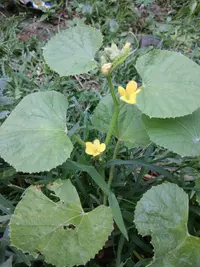
Cucurbita moschata 'Butternut 661' is a warm-season squash cultivar grown as an annual vegetable, valued for its reliable yields and uniform fruits. Plants have a vigorous, trailing vine habit with broad, rough leaves and creamy-tan, bottle-shaped squash with deep orange, dense flesh.
This cultivar was selected from C. moschata, a species originally domesticated in the Americas and now cultivated widely in home gardens and commercial fields. It is considered relatively easy to grow where summers are warm and frost-free.
Good air circulation, full sun, and well-drained, fertile soil support healthy growth and help reduce disease pressure, which are key points in how to care for Butternut Squash.

Care Difficulty
Moderate Care

Light Preference
Full Sun

Water Requirements
Regular Water

Temperature Preference
Tropical / Frost Sensitive

Hardiness Zone
3–10

Soil Texture
Loamy, Sandy, Organic-rich

Soil pH
Acidic (5.5–6.5), Slightly acidic (6.5–7.0)

Soil Drainage
Moist but well-drained

Fertilization
Moderate (every 2–4 weeks)
Scan your plant to receive care tips personalized for your specific plant
Available on iOS and Android
This squash cultivar needs strong, direct light for high yields and healthy vines.
This plant prefers consistently moist but never saturated soil throughout the growing season.
This warm-season squash requires stable heat and is highly sensitive to cold and frost.
This squash tolerates a broad humidity range and rarely needs special adjustment outdoors.
This cultivar performs best in deep, loose, well‑drained, organic‑rich soil.
This vining squash can be grown in large containers if space and support are well managed.
This vigorous vine benefits from steady nutrition through the main growing season for strong vines and fruit set in Butternut Squash.
Pruning focuses on managing vine length and plant health for Cucurbita moschata 'Butternut 661'.
This squash is usually transplanted from seedling trays into open ground rather than repotted long term.
New plants are produced from seed, which is the standard method for this cultivar.
This warm-season annual dies back with hard frost, so winter care focuses on soil and stored fruit rather than the vine.

Plant Health Check
Not sure what's wrong with your plant? Check your plant's health inside the app.
This squash was bred as a hybrid butternut specifically for uniform fruit shape, strong vine vigor, and high yields under commercial field conditions, rather than as a home-garden selection.
Compared with many open-pollinated butternut types, it is known among growers for maintaining good eating quality after extended storage when cured and kept in proper cool, dry conditions.
Seed companies describe this cultivar as producing fruits with a reliably small seed cavity and dense, fine-textured flesh, which helps processors and growers predict cooking quality from harvest to harvest.
Yellowing leaves often result from nutrient deficiency (especially nitrogen or magnesium), root stress from waterlogging, natural aging of older foliage, or pests like squash bugs. Check soil drainage, fertilization schedule, and inspect leaf undersides for insects or eggs.
Keep your plants happy and healthy with plant identification, disease detection, and easy care guidance.