Aeschynanthus hookeri Care

Aeschynanthus hookeri

About Aeschynanthus hookeri

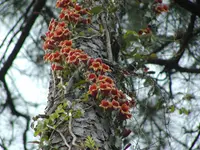
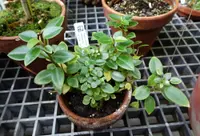
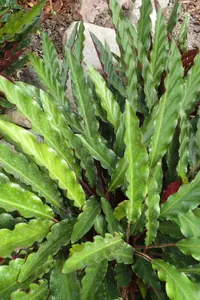
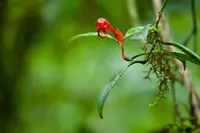
Aeschynanthus hookeri is an epiphytic flowering plant from humid tropical forests in Southeast Asia, often found growing on trees rather than in the ground. It belongs to the gesneriad group, related to African violets. This species usually forms trailing or arching stems with fleshy green leaves and tubular flowers that attract pollinators in nature. Its cascading habit makes it suitable for hanging baskets or high shelves indoors. It generally prefers bright, filtered light, stable warmth, and evenly moist but well-drained substrate. With these conditions, many growers find it moderately easy to care for Aeschynanthus hookeri.

Main Plant Requirements

Care Difficulty

Moderate Care

Light Preference

Bright Indirect Light

Water Requirements

Moderate Water

Temperature Preference

Tropical / Frost Sensitive

Hardiness Zone

11–12

Soil Texture

Loamy, Peaty, Organic-rich

Soil pH

Acidic (5.5–6.5), Slightly acidic (6.5–7.0)

Soil Drainage

Moist but well-drained

Fertilization

Light (every 4–6 weeks)

Get Personalized Care Plan

Scan your plant to receive care tips personalized for your specific plant

Available on iOS and Android

How to Care for the Aeschynanthus hookeri

This epiphytic flowering plant prefers bright, indirect light that mimics high tree canopy conditions.

  • Provide 6–8 hours of bright, filtered light each day, such as near an east or bright north-facing window or under light shade outdoors.
  • Tolerates light morning sun but avoid harsh midday or afternoon sun, which can scorch leaves and cause pale, dry patches.
  • In winter, move Aeschynanthus hookeri closer to bright windows or supplement with grow lights to prevent leggy, weak growth from low light levels.

Watering should maintain lightly moist but never waterlogged soil around the roots.

  • Water when the top 2–3 cm of soil feels dry, using enough water to moisten the root zone, then let excess drain fully.
  • In spring and summer, expect more frequent watering as growth is active; in autumn and winter, extend the interval as growth slows.
  • Watch for yellow, soft leaves as a sign of overwatering and dry, curling leaves or wilt as signs that Aeschynanthus hookeri is too dry.

This species grows best in consistently warm, frost-free conditions similar to a humid, tropical understory.

  • Aim for 65–80°F (18–27°C) for active growth, avoiding sudden swings that stress the plant and reduce flowering.
  • Protect from cold; growth slows below 60°F (16°C) and tissue damage can occur near 40°F (4°C), with frost causing rapid leaf loss.
  • In hot spells above 85°F (29°C), increase shade and airflow, and avoid placing the plant near heat-reflective surfaces that can overheat foliage.

This species benefits from moderate to high air humidity for stable growth.

  • Aim for 50–70% humidity, as consistently dry air slows growth and can reduce flowering.
  • Watch for brown, crisp leaf edges and buds dropping before opening as signs of low humidity stress.
  • Increase humidity with a pebble tray under the pot, grouping plants, or a small humidifier placed nearby.

This epiphytic vine prefers a loose, airy, fast-draining mix that still holds some moisture.

  • Use a peat- or coco-based mix amended with fine bark and perlite to create a light, open structure.
  • Ensure rapid drainage; water should flow through within seconds and not leave the potting mix waterlogged.
  • Aim for slightly acidic to neutral pH around 5.8–6.8, similar to many tropical houseplants.
  • Avoid dense garden soil or heavy clay components that compact, limit aeration, and promote root rot.

This species is well suited to container culture, including hanging baskets and elevated pots.

  • Choose a wide, shallow pot that matches the fibrous, surface-leaning root system and prevents deep, soggy soil zones.
  • Select a slightly heavier container or add weight in the base to counterbalance trailing growth and keep the pot stable.
  • Prefer breathable materials like terra-cotta only if you can compensate with more frequent watering to prevent excessive drying.

Nutrient inputs support compact growth and flowering in Aeschynanthus hookeri grown in containers.

  • Use a balanced liquid fertilizer (for example 10-10-10 or 20-20-20) diluted to 1/4–1/2 strength.
  • Feed every 3–4 weeks during the active growing season, after watering the plant first.
  • In winter or when growth slows, reduce feeding to once in 6–8 weeks or pause entirely.
  • Avoid heavy compost or slow-release pellets that keep the mix wet; free-draining media are essential.

Thoughtful pruning helps maintain shape, vigor, and flowering on Aeschynanthus hookeri.

  • Best time is late winter to early spring, just before active growth resumes.
  • Remove dead, damaged, or weak stems with clean, sharp scissors or small pruning shears.
  • Thin crowded interior shoots to improve light penetration and air movement.
  • Tip back long, straggly stems to encourage branching and a fuller, cascading form.

Container-grown plants appreciate occasional repotting to refresh the mix and support healthy roots.

  • Repot every 2–3 years or when roots circle the pot, drainage slows, or growth stalls.
  • Choose late winter to early spring so Aeschynanthus hookeri can recover during the growing season.
  • Move into a pot only 2–3 cm wider, using airy, well-drained mix to limit waterlogging stress.
  • Water lightly after repotting, keep in bright but indirect light, and avoid heavy feeding for 2–3 weeks.

This species is most commonly propagated from stem cuttings taken from healthy, non-flowering shoots.

  • Take 8–12 cm cuttings in late spring or summer, just below a node, and remove lower leaves.
  • Root in moist, well-drained medium such as perlite and peat or coco coir under bright, indirect light.
  • Maintain warm conditions around 70–75°F and high humidity until roots form in a few weeks.
  • Optional rooting hormone on cut ends can improve success and speed root initiation.

This tropical plant is frost-sensitive and needs mild, protected conditions in winter.

  • Keep temperatures above 55°F; prolonged exposure near freezing can damage foliage and stems.
  • For containers outdoors, move plants indoors or into a heated greenhouse before first frost.
  • Provide bright, indirect light indoors and slightly drier soil, allowing the top layer to dry between waterings.
  • Avoid cold drafts and sudden temperature swings that can stress the plant and reduce spring growth.

Care Tips

Encourage Compact Growth

Pinch back very long, soft shoot tips just above a leaf pair to promote bushier vines and more flowering sites instead of letting stems become thin and bare.

Rotate Hanging Baskets

Turn the pot 90° every 1–2 weeks so all sides receive similar light, which keeps the plant evenly full instead of lopsided toward the window.

Support Flowering Stems

Use a lightweight hoop, trellis, or discreet hooks to guide stems upward before they arch, which exposes more foliage to light and increases potential flower production.

Seasonal Rest Adjustment

In late fall and winter, give the plant slightly cooler conditions and reduce handling or repotting, as this mild rest period often improves the following season’s bud formation when growing Aeschynanthus hookeri.

Inspect Hidden Folds

Regularly check the undersides of leaves and the tight leaf-stem junctions for early signs of mealybugs or scale, and remove any pests promptly with a cotton swab dipped in 70% isopropyl alcohol.

Common Pests and Diseases

Mealybugs

This pest often hides in leaf axils and along stems, feeding on sap and causing yellowing, distortion, and sticky honeydew on leaves. Symptoms include slow growth and a general decline, especially on dense, hanging stems.

Solution

Remove visible insects with a cotton swab dipped in 70% isopropyl alcohol, then rinse foliage with lukewarm water and mild insecticidal soap. Isolate the plant, repeat treatments weekly until no new insects appear, and improve light and air movement to make conditions less favorable for reinfestation while caring for Aeschynanthus hookeri.

Aphids

These insects cluster on new shoots and flower buds, sucking sap and causing curling, misshapen leaves, and reduced flowering. Sticky honeydew and sooty mold can develop on affected areas.

Solution

Shower the plant with a gentle stream of lukewarm water to dislodge colonies, then use insecticidal soap or a neem oil spray on all soft tissue, especially shoot tips and the underside of leaves. Repeat every 5–7 days until no aphids remain and avoid high nitrogen fertilization, which encourages lush, aphid-prone growth.

Botrytis blight

This disease appears as soft, water-soaked spots on leaves, stems, or spent flowers that develop fuzzy gray mold in humid, stagnant air. Symptoms include rapid collapse of affected tissue and spotting on nearby leaves.

Solution

Remove and discard all infected parts, then increase airflow, space trailing stems, and avoid wetting foliage when watering. In severe or persistent cases, apply a fungicide labeled for ornamental houseplants and keep humidity moderate rather than excessively high to prevent recurrence.

Powdery mildew

This disease causes a white to gray, powdery coating on leaves and sometimes stems, often starting on older foliage in still, humid conditions with limited air movement. Symptoms include dull, yellowing leaves and reduced vigor if untreated.

Solution

Prune and discard heavily covered leaves, then improve air circulation and avoid overcrowding or shading the plant excessively. Treat remaining foliage with a suitable fungicide or a labeled sulfur or potassium bicarbonate product, and keep the plant in bright, indirect light with stable, moderate humidity to limit further spread.

Cyclamen mites

These insects are microscopic pests that distort new growth, causing puckered, stunted leaves and deformed or aborted flower buds on this soft-stemmed species. Symptoms include a tight, bushy, unhealthy-looking center while older leaves may appear relatively normal.

Solution

Isolate the plant immediately and remove the most deformed growth, then treat with a miticide specifically effective against cyclamen mites, following label directions carefully. Maintain slightly cooler, less humid conditions during treatment, and consider discarding severely infested plants if new growth does not improve after several weeks.

Interesting Facts

Specialized bird pollination

In its native Himalayan range, this species is adapted for pollination by sunbirds, with long tubular flowers that match the bill shape and feeding behavior of these nectar-feeding birds.

Epiphytic cliff dweller

It often grows as an epiphyte or lithophyte on mossy tree branches and shaded rock faces in montane forests, anchoring its roots in organic debris rather than deep soil.

Cool montane origins

The species is naturally found in cooler, moist subtropical to temperate montane zones of Nepal and adjacent Himalayan regions, where cloud cover and frequent mist provide constant high humidity.

FAQs about Aeschynanthus hookeri

Lack of blooms usually comes from insufficient light, no slight temperature drop between day and night, or overfertilizing with high nitrogen. Slightly cooler, drier conditions for a few weeks can help trigger flowering in this species.

Grow Healthy Plants with Botan Care

Keep your plants happy and healthy with plant identification, disease detection, and easy care guidance.


Botan plant care app — identify plants on mobile

Explore More Plants