calathea vittata Care (Goeppertia elliptica)

calathea vittata

About calathea vittata

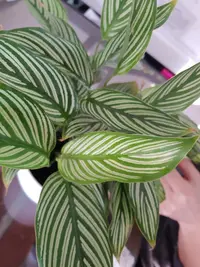
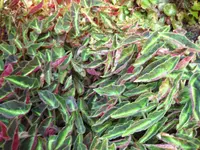
Calathea vittata, currently classified as Goeppertia elliptica, is a compact tropical understory plant grown mainly for its patterned foliage. It forms low clumps of narrow, elliptic leaves with pale, linear stripes on a rich green background. The leaves often move slightly between day and night, a response to light changes.

This species is native to tropical regions of South America, where it grows in warm, shaded, and humid forest habitats. Indoors it prefers soft, filtered light, evenly moist but airy soil, and stable conditions, which can make how to care for calathea vittata a bit more demanding for beginners.

When conditions are suitable, it is a long-lived foliage plant that offers strong visual impact without needing rapid growth or frequent pruning.

Main Plant Requirements

Care Difficulty

Moderate Care

Light Preference

Bright Indirect Light

Water Requirements

Keep Soil Moist

Temperature Preference

Tropical / Frost Sensitive

Hardiness Zone

11–12

Soil Texture

Loamy, Peaty, Organic-rich

Soil pH

Acidic (5.5–6.5)

Soil Drainage

Moist but well-drained

Fertilization

Light (every 4–6 weeks)

Get Personalized Care Plan

Scan your plant to receive care tips personalized for your specific plant

Available on iOS and Android

How to Care for the calathea vittata

Goeppertia elliptica prefers soft, filtered light that mimics the understory of tropical forests.

  • Provide bright, indirect light for 8–10 hours a day, such as near an east- or north-facing window with sheer curtains or under a tree canopy outdoors.
  • Allow gentle early morning sun but avoid harsh midday and afternoon sun, which can cause leaf curl, faded patterns, and brown, crispy patches, similar to calathea vittata.
  • In winter, move the plant closer to bright windows or supplement with a weak grow light to prevent stretched, pale growth from low light levels.

Watering for this species should keep the root zone consistently slightly moist, never soggy or fully dry.

  • Water when the top 2–3 cm of soil feels dry, using enough water to moisten the root zone, then let excess drain away completely to prevent root rot.
  • In spring and summer, expect to water more often as growth and evaporation increase; reduce frequency in fall and winter while still avoiding total drying.
  • Signs of thirst include light, dry soil, slight leaf droop, and crisp edges, while yellowing lower leaves, a sour smell, or mushy stems indicate overwatering in Goeppertia elliptica.

Stable, warm temperatures support healthy growth and leaf patterning for this tropical species.

  • Aim for 65–80°F (18–27°C) for best growth, keeping day and night temperatures as steady as possible to limit stress and curling leaves.
  • Protect the plant from temperatures below 60°F (16°C); growth slows below this point and brief drops near 50°F (10°C) can cause leaf damage, especially with drafts.
  • During hot spells above 85°F (29°C), increase humidity and airflow, keep the plant out of direct afternoon sun, and avoid placing it near heaters or air conditioners.

This species needs consistently high humidity to maintain healthy foliage.

  • Aim for 60–75% humidity; prolonged levels below 50% often cause leaf-edge browning and curling.
  • Dry indoor air leads to crispy tips, dull leaves, and slower growth, similar to calathea vittata humidity stress.
  • Increase humidity with a room humidifier, grouping plants, and placing the pot on a pebble tray, but avoid misting heavy, still air.

Goeppertia elliptica grows best in a loose, airy, organic-rich mix that stays lightly moist but never waterlogged.

  • Use a base of peat or coco coir with added compost for organic matter and steady moisture retention.
  • Improve drainage and aeration by mixing in 30–40% perlite and/or fine orchid bark so roots receive enough oxygen.
  • Target slightly acidic to neutral pH, around 6.0–7.0, which supports nutrient uptake without causing toxicity issues.
  • Avoid dense garden soil, heavy clay, or mixes that stay soggy, as these promote root rot and suffocation of fine feeder roots.

This species is well suited to container growing when moisture and root space are carefully managed.

  • Choose a pot only 2–4 cm wider than the root ball to reduce unused wet substrate that can sour between waterings.
  • Prefer a slightly heavier ceramic pot when grown tall, which stabilizes the plant and keeps the root zone evenly cool.
  • Use containers with multiple or wide drainage holes so excess water exits quickly rather than pooling at the base.

Goeppertia elliptica benefits from light, consistent feeding during active growth for steady foliage development.

  • Use a balanced liquid fertilizer (such as 10-10-10 or 20-20-20) diluted to 1/4–1/2 strength for calathea vittata indoor care.
  • Feed every 4–6 weeks in spring and summer when new leaves are forming.
  • Skip or reduce feeding to 1 very light application in fall, and avoid fertilizing in winter dormancy.
  • Flush the pot with plain water every few months to prevent fertilizer salt buildup around the roots.

Goeppertia elliptica needs only light pruning to maintain healthy, clean foliage.

  • Best timing is during active growth in spring and summer so the plant recovers quickly.
  • Remove yellowing, brown, or torn leaves by cutting the entire leaf and stalk at the soil line.
  • Thin out badly crowded or inward-facing stems to improve air flow and keep a balanced shape.
  • Use clean, sharp scissors or pruners disinfected with rubbing alcohol to reduce disease risk.

This species prefers stable conditions but benefits from periodic repotting to refresh soil and relieve root crowding.

  • Repot every 2–3 years or when roots emerge from drainage holes, circle the pot, or growth slows noticeably.
  • Plan repotting for late spring, after new growth starts and indoor conditions are warm and stable.
  • Choose a container only 2–5 cm wider with drainage holes and use a loose, airy, peat-free houseplant mix.
  • Gently tease circling roots apart, keep the root ball slightly moist, then shade and avoid heavy feeding for 2–3 weeks to reduce stress.

New Goeppertia elliptica plants are most reliably produced by division rather than by seed or cuttings.

  • Divide mature clumps in late spring when repotting, once the plant is actively growing.
  • Lift the root ball and separate sections with at least 2–3 healthy shoots and a good root portion each.
  • Plant divisions into small, well-drained pots with evenly moist, airy substrate.
  • Maintain high humidity, warm temperatures around 70–80°F, and gentle, indirect light until growth resumes.

Goeppertia elliptica is frost sensitive and needs warm, stable indoor conditions in winter.

  • Keep plants indoors above 60°F, ideally 65–75°F, away from drafts and cold windows.
  • Reduce watering, allowing the top 2–3 cm of soil to dry slightly while avoiding complete dryness.
  • Do not apply fertilizer in winter, as growth is slower and roots are more prone to burn.
  • In cooler homes, group plants and use a humidity tray to keep relative humidity around 40–60%.

Care Tips

Use stable sleeves

Place nursery pots inside slightly larger, heavier cachepots to keep the root zone insulated from rapid temperature swings and to reduce the risk of accidental knocks that can damage tender leaves.

Rotate for even pattern

Rotate the pot 90° every 1–2 weeks so new leaves receive light from different angles, which keeps the foliage patterning even and prevents the plant from leaning strongly to one side.

Protect leaf edges

Keep leaves from touching radiators, cold windows, or rough walls by giving the plant a small clearance zone around the pot, which reduces brown edges caused by contact stress and microclimate extremes.

Use bottom guarding trays

Set the pot on a slatted stand or inverted saucer inside a waterproof tray so excess water can drain freely while still being contained, which protects roots from standing in water and protects indoor surfaces.

Quarantine and inspect

Quarantine new tropical plants for 2–3 weeks and inspect leaf undersides and petiole joints weekly with a magnifying glass so any spider mites, thrips, or mealybugs are found early before they spread, which is especially helpful when caring for calathea vittata and related species.

Common Pests and Diseases

Spider mites

This pest thrives on Goeppertia elliptica in dry, warm indoor air and feeds on leaf sap, causing stippling, dulling of the leaf surface, and fine webbing on the undersides of leaves.

Solution

Rinse foliage thoroughly with lukewarm water, focusing on leaf undersides, then repeat every few days; for heavier infestations, use insecticidal soap or neem oil, and raise humidity to 60–70% while keeping good air movement to make conditions less favorable for mites.

Fungus gnats

These insects are attracted to consistently wet potting mix and their larvae feed on fine roots, which can cause yellowing, slowed growth, and surface mold on the soil.

Solution

Allow the top 2–3 cm of the potting mix to dry between waterings, use yellow sticky traps for adults, and treat the soil with a biological control such as Bacillus thuringiensis israelensis (BTI) or beneficial nematodes to reduce larvae populations while maintaining the evenly moist but not saturated conditions preferred for Goeppertia elliptica care instructions.

Calathea leaf spot

This disease appears as irregular brown or tan patches with darker edges on leaves, often starting along margins or where water sits, and can be worsened by prolonged leaf wetness and poor air circulation.

Solution

Remove and discard affected leaves, avoid splashing water on foliage, water at the soil level, and increase airflow around the plant; in persistent cases, a copper-based or chlorothalonil fungicide labeled for houseplants can be applied according to label directions while monitoring for new spots.

Bacterial leaf blight

Symptoms include translucent, water-soaked areas that turn brown and sometimes emit an unpleasant odor, often spreading rapidly in warm, very humid conditions with poor air movement.

Solution

Isolate the plant, remove all affected leaves with sterilized tools, avoid overhead watering, and keep foliage dry; if the spread continues, it is often safer to discard the plant and sterilize containers and tools to prevent transmission to other prayer plants.

Mealybugs

This pest forms white, cottony clusters in leaf axils and along midribs, sucking sap and leading to distorted new growth and sticky honeydew deposits on leaves and nearby surfaces.

Solution

Physically remove visible insects with a cotton swab dipped in isopropyl alcohol, then wash the plant with lukewarm water and apply insecticidal soap or neem oil to all leaf surfaces; repeat treatments weekly until no new mealybugs appear and inspect any new plants before placing them nearby.

Interesting Facts

Narrow elliptical leaves

This species is recognized by its relatively narrow, true elliptical leaves with tapered tips and clean, alternating light and dark green banding that follows the leaf veins rather than forming blotches or spots.

Lowland rainforest origin

Goeppertia elliptica occurs naturally in warm, shaded, humid lowland tropical forest habitats in northern South America, so it is adapted to consistently moist soil, filtered light, and high air humidity.

Nocturnal leaf movement

Like many marantaceae, this species raises and lowers its leaves in a daily rhythm driven by a joint-like structure at the base of the leaf, a movement known as nyctinasty that is controlled by light and an internal clock.

FAQs about calathea vittata

Brown, crispy edges usually result from low humidity, underwatering, or mineral buildup from hard tap water. Increase humidity to 50–60%, water before soil fully dries, and use filtered or distilled water to prevent further damage.

Grow Healthy Plants with Botan Care

Keep your plants happy and healthy with plant identification, disease detection, and easy care guidance.

Botan plant care app — identify plants on mobile

Explore More Plants