Unscented Dendrobium Care (Dendrobium anosmum)

Unscented Dendrobium

About Unscented Dendrobium

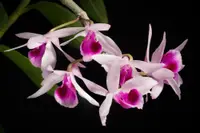
Dendrobium anosmum is a warm-growing epiphytic orchid that naturally clings to tree trunks and branches in Southeast Asia. It produces long, pendulous canes that can form graceful curtains of growth over time. In late winter or spring, leafless canes can be covered with large, fragrant flowers in shades of pink to lavender, often with a darker throat. The strong scent is a key reason this species is popular among orchid growers. It is considered moderately easy to grow for those who understand its seasonal rest, making it a good step up from beginner orchids. Learning how to care for Dendrobium anosmum mainly involves managing light, warmth, and a distinct dry period after growth matures.

Main Plant Requirements

Care Difficulty

Moderate Care

Light Preference

Partial Sun

Water Requirements

Moderate Water

Temperature Preference

Tropical / Frost Sensitive

Hardiness Zone

11–12

Soil Texture

Sandy, Rocky, Organic-rich

Soil pH

Acidic (5.5–6.5)

Soil Drainage

Well-drained

Fertilization

Moderate (every 2–4 weeks)

Get Personalized Care Plan

Scan your plant to receive care tips personalized for your specific plant

Available on iOS and Android

How to Care for the Unscented Dendrobium

This orchid prefers bright, indirect light that mimics dappled forest sun.

  • Provide 4–6 hours of bright, filtered light daily, such as under 30–50% shade cloth or beneath a lightly shaded patio roof.
  • Allow gentle early morning sun but protect Dendrobium anosmum from strong midday and afternoon sun, which can scorch leaves and yellow canes.
  • In winter, move plants to a brighter position to compensate for shorter days, but avoid sudden shifts from shade to high light to prevent leaf burn.

Watering should follow the plant’s growth cycle and drying pattern rather than a fixed schedule.

  • During active growth, water when the medium is almost dry, letting the top 2–3 cm feel dry but not bone-dry before soaking and draining thoroughly.
  • Ensure a very free-draining orchid mix; wrinkled, leathery canes suggest underwatering, while blackened roots or limp yellow leaves indicate overwatering.
  • In late autumn and winter rest, reduce watering significantly, allowing canes to stay firm while the medium dries more deeply between light waterings.

Temperature management is important for healthy growth and flowering.

  • Aim for days around 75–85°F (24–29°C) and nights near 60–65°F (16–18°C) during active growth for best cane development.
  • The plant tolerates short dips to about 50°F (10°C) but must be protected from frost, as freezing temperatures can kill canes and roots.
  • In hot weather above 90°F (32°C), increase shade and air movement to prevent heat stress, and avoid placing plants near hot reflective surfaces.

This species needs moderately high humidity to flower and grow well.

  • Aim for 50–70% humidity; growth slows and canes shrivel in much drier air.
  • Watch for wrinkled canes, dull leaves, and stalled buds as signs of humidity stress.
  • Increase humidity with a pebble tray, grouped plants, or a room humidifier, while keeping air gently moving to prevent rot.

This epiphytic orchid grows best in a very airy, fast-draining potting medium rather than standard potting soil.

  • Use a chunky mix such as medium orchid bark with some charcoal and a small amount of sphagnum moss to hold light moisture.
  • Ensure rapid drainage so roots never sit in water; excess moisture quickly causes root rot in Dendrobium anosmum.
  • Keep pH slightly acidic to neutral, roughly 5.5–7.0, which suits most orchid bark-based mixes.
  • Avoid dense, peat-heavy or garden soils that compact around roots; add extra bark or large perlite to improve aeration if drainage seems slow.

This species is well suited to container growing, especially in baskets or orchid pots that allow strong drainage and airflow.

  • Choose a relatively narrow but deep container so the long canes have support while roots stay slightly crowded.
  • Use slatted baskets or pots with side vents to increase airflow around roots and speed drying between waterings.
  • Secure the container or hang it from a stable hook, since mature canes can make the plant top-heavy and prone to tipping.

Nutrient support helps Dendrobium anosmum produce vigorous canes and abundant blooms in cultivation.

  • Use a balanced orchid fertilizer (for example 20-20-20) diluted to 1/4–1/2 strength for all routine feeding.
  • Apply every 1–2 weeks during active growth in spring and summer, on already-moist media to prevent root burn.
  • Reduce feeding sharply in fall, then stop during the leafless rest period, resuming only when new roots and shoots appear.
  • Avoid heavy compost or slow-release pellets in bark; they can break down media too fast and suffocate roots.

Pruning focuses on hygiene and light shaping rather than heavy cutting for this cane-type orchid.

  • After flowering, remove only dead, shriveled, or clearly diseased canes at the base with clean, sharp snips.
  • Keep healthy old canes, since Dendrobium anosmum often reblooms from mature, leafless canes along their length.
  • Trim spent flower spikes that have fully finished blooming, but do not cut into firm green cane tissue.
  • Disinfect cutting tools with alcohol between plants to limit spread of fungal or bacterial problems.

This orchid prefers tight quarters and should only be repotted when the root system clearly outgrows its container or mount.

  • Look for roots circling the pot, medium breaking down, or declining vigor as signs that repotting is needed.
  • Plan to repot every 2–3 years in late winter to early spring, just as new roots and shoots begin.
  • Use a snug pot or mount with fresh, airy orchid bark and handle roots gently to limit mechanical damage.
  • Water lightly for the first 7–10 days after repotting to let wounds seal and reduce risk of rot.

Multiplying this species is usually done vegetatively, focusing on divisions and keikis rather than seed.

  • Divide clumps only when there are at least 6–8 healthy canes, giving each division 3–4 strong canes and live roots.
  • Detach keikis, the small plantlets forming on canes, once they show several roots about 3–5 cm long.
  • Carry out division or keiki removal in late spring to early summer, when warmth and longer days support recovery.
  • Pot new pieces into fine-grade orchid bark, maintain bright filtered light, high humidity, and gentle air movement.

This species is not frost hardy and needs a cool, dry rest but above-freezing temperatures in winter.

  • For outdoor container plants, move indoors before temperatures drop below 50°F, keeping them bright and airy.
  • Aim for cool nights around 55–60°F and slightly warmer days to support flowering the following season.
  • During the leafless rest period, keep media almost dry, watering very lightly only if canes begin to shrivel noticeably.

Care Tips

Optimal mounting choice

Mount canes on hardwood slabs or in open baskets rather than tight pots so roots dry rapidly after watering and aerial roots can attach, which helps mimic their natural epiphytic habit.

Winter rest management

From late fall, gradually reduce water and stop nitrogen-heavy fertilizer until new spring buds swell, which supports proper dormancy and encourages stronger flowering rather than leafy growth only.

Canes orientation control

Hang or stake canes so they arch freely without rubbing against hard surfaces, since flower buds form along the full length of mature canes and damage at contact points often results in blind sections.

Buds and sheath protection

When buds or sheaths appear, avoid overhead spraying and strong fans directly on the canes to reduce bud blast and fungal spotting, and instead water early in the day at the root zone.

Airflow and spacing

Space plants so canes do not touch and ensure a gentle but constant air movement around foliage, which significantly lowers the risk of bacterial rot and fungal issues when caring for Dendrobium anosmum.

Common Pests and Diseases

Scale insects

This pest feeds on canes and leaf undersides, appearing as small, flat or dome-shaped bumps that excrete sticky honeydew. Symptoms include yellowing leaves, weak new growth, and sooty mold growing on the honeydew deposits.

Solution

Isolate the plant, then wipe canes and leaves with cotton pads dipped in isopropyl alcohol, targeting each scale. Follow with 2–3 applications of a light horticultural oil or insecticidal soap at 7–10 day intervals, and improve air movement and light to support recovery while caring for Dendrobium anosmum.

Spider mites

These insects are tiny sap feeders that thrive on mounted or high-light plants kept on the dry side, causing stippled, dull leaves and fine webbing at leaf bases and between canes. Symptoms include bronzing or silvery patches and premature leaf drop.

Solution

Shower the plant thoroughly with lukewarm water, focusing on leaf undersides and cane junctions, then use insecticidal soap or a miticide labeled for orchids every 5–7 days for several cycles. Raise humidity to 50–70%, avoid letting the plant stay extremely dry for long periods, and increase air circulation to reduce reinfestation risk.

Mealybugs

This pest appears as white, cottony clusters in leaf axils, along canes, and around roots, where it sucks plant sap and weakens new growth. Symptoms include distorted new leaves, sticky honeydew, and slow decline of canes.

Solution

Inspect all crevices, then remove visible mealybugs with cotton swabs dipped in isopropyl alcohol and rinse the plant well. Treat remaining insects with insecticidal soap or a systemic insecticide approved for orchids, repeat weekly until no new insects appear, and quarantine the plant away from other orchids during treatment.

Bacterial brown spot

This disease causes water-soaked, translucent lesions on leaves and sometimes on pseudobulbs that quickly turn brown or black and may ooze. Symptoms include rapidly expanding spots with yellow halos, often starting where water sits on the foliage.

Solution

Immediately remove affected leaves or sections with a sterile blade, cutting well into healthy tissue, and discard them. Keep the plant dry overhead, increase airflow, avoid water sitting on leaves, and apply a bactericide labeled for orchids to protect remaining tissue and nearby plants.

Fusarium wilt

This disease infects canes and rhizomes, often entering through old cuts or mechanical damage, leading to stunted growth, leaf yellowing, and canes that desiccate from the top down. Symptoms include a characteristic purple or pinkish ring visible in cross-sections of infected canes or rhizomes.

Solution

Cut away and discard all suspect canes and rhizome sections, sterilizing tools between each cut, and repot into fresh, sterile medium if the plant is potted. Reduce plant stress by providing strong but indirect light, a consistent water cycle with quick drying, and avoid reusing contaminated pots or tools to prevent reinfection.

Interesting Facts

Natural leafless habit

This species naturally drops its leaves during the dry rest period, leaving long, bare canes that can still flower abundantly from the old nodes.

Fragrance and timing

The large pale purple flowers are strongly and sweetly scented, and they typically open at the end of the dry season, often just after new growth begins.

Epiphytic lifestyle

In nature it grows mainly as an epiphyte on tree branches in warm, humid lowland forests across Southeast Asia, anchoring with thick roots while taking moisture and nutrients from rain, debris, and the surrounding air.
Botan icon

Did you know?

In parts of the Philippines and other areas of its native range, very long canes of this orchid are sometimes used decoratively when in full bloom, creating striking garland-like displays because dozens of flowers can line each pendant stem at once.

FAQs about Unscented Dendrobium

Lack of flowering usually comes from insufficient light, no cool dry winter rest, or overfertilizing with nitrogen. Provide bright, indirect light, a marked reduction in water and fertilizer in winter, and a slight temperature drop to trigger buds.

Grow Healthy Plants with Botan Care

Keep your plants happy and healthy with plant identification, disease detection, and easy care guidance.


Botan plant care app — identify plants on mobile

Explore More Plants