Rodriguezia bracteata Care

Rodriguezia bracteata

About Rodriguezia bracteata

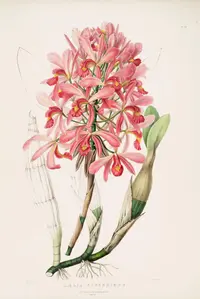
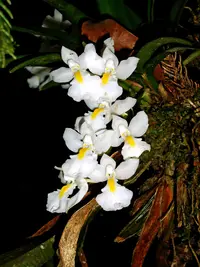
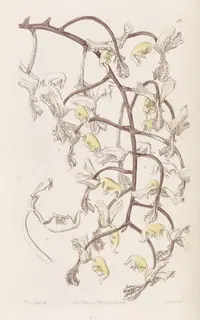
Rodriguezia bracteata is a small epiphytic orchid that usually grows on tree branches, forming compact clumps with slender, arching leaves. Its delicate flower spikes carry many small, often white to yellowish blooms that can appear in showy clusters compared with the plant’s size.

This species is native to tropical forests of South America, where it enjoys warm, humid air and good air movement. It is considered moderately challenging, as it reacts quickly to drought, stagnant air, or strong direct sun. For those who want to care for Rodriguezia bracteata successfully, it helps to provide bright filtered light, regular moisture, and a very free-draining orchid substrate or mount.

Main Plant Requirements

Care Difficulty

Hard Care

Light Preference

Bright Indirect Light

Water Requirements

Regular Water

Temperature Preference

Tropical / Frost Sensitive

Hardiness Zone

Unknown

Soil Texture

Peaty, Organic-rich, Rocky

Soil pH

Acidic (5.5–6.5)

Soil Drainage

Well-drained

Fertilization

Light (every 4–6 weeks)

Get Personalized Care Plan

Scan your plant to receive care tips personalized for your specific plant

Available on iOS and Android

How to Care for the Rodriguezia bracteata

This small epiphytic orchid prefers bright, filtered light similar to bright forest shade.

  • Provide 8–12 hours of bright, indirect light daily, with gentle morning sun and protection from harsh midday and afternoon rays.
  • Grow on a mount or in an open basket where light can reach all sides, but shield Rodriguezia bracteata from direct sun that causes yellowing or scorched patches on leaves.
  • In winter, move plants a little closer to the light source and reduce shading, but avoid sudden shifts from low light to strong light.

This orchid prefers frequent, light moisture with very rapid drainage around its roots.

  • Water when exposed roots look silvery and the mounting material or bark feels almost dry, typically every 1–3 days in warm, active growth periods.
  • Use a free-draining orchid mix or mount so water runs through in seconds; roots staying wet and dark with a sour smell indicate overwatering and poor aeration.
  • Reduce watering frequency in cooler seasons, watching for slight leaf wrinkling as a sign to water, but avoid letting roots stay bone dry for long periods.

This species grows best in intermediate to warm conditions with a mild day–night temperature drop.

  • Aim for 65–80°F (18–27°C) by day and 58–65°F (14–18°C) at night to support steady growth and flowering.
  • Protect plants from cold; growth slows below 55°F (13°C), and exposure near 40°F (4°C) or any frost can cause leaf and root damage.
  • In hot weather above 85°F (29°C), increase air movement and humidity and avoid direct sun to prevent heat stress and leaf scorch.

This orchid needs high, stable humidity to maintain healthy roots and foliage.

  • Aim for 60–80% humidity, as Rodriguezia bracteata naturally grows in moist, airy forest conditions.
  • Dry indoor air causes shriveled pseudobulbs, dull leaves, and slow root growth.
  • Use a room humidifier, humidity tray with pebbles, and group plants to increase local moisture around the plant.

This epiphytic orchid prefers a very airy, fast-draining medium rather than traditional potting soil.

  • Use a coarse mix of medium bark, perlite, and a little sphagnum moss to hold light moisture but keep large air gaps.
  • Ensure rapid drainage so roots never sit in water, which quickly leads to rot in this species.
  • Keep pH slightly acidic, around 5.5–6.5, which suits most orchid bark-based substrates.
  • Avoid dense peat, garden soil, or fine compost that compacts, blocks airflow, and suffocates the roots of Rodriguezia bracteata.

This species grows well in containers or mounted setups when moisture and air movement around the roots are controlled.

  • Choose a shallow orchid pot or basket that lets roots spread horizontally and receive maximum air circulation.
  • Use side-slotted or net pots so the medium dries evenly and does not stay wet in the center.
  • If hanging, secure the container firmly to prevent movement that can damage tender new roots as they anchor.

Light feeding supports healthy growth and flowering for Rodriguezia bracteata in cultivation.

  • Use a balanced orchid fertilizer (for example 20-20-20) diluted to 1/4–1/2 strength in low-mineral water.
  • Feed every 2–3 weeks during active growth in spring and summer, skipping applications if leaves look stressed.
  • Reduce feeding to once a month or stop entirely in fall and winter when growth slows.
  • Avoid slow-release pellets in tight mounts; use them sparingly only in very open bark-based media.

Pruning needs are minimal and focus on hygiene rather than shaping for Rodriguezia bracteata.

  • Perform light cleaning after flowering, preferably in late winter or early spring before new growth accelerates.
  • Remove only dead, dried pseudobulbs, spent flower spikes, and obviously damaged leaves with sterile scissors.
  • Do not cut healthy green pseudobulbs, as these store water and nutrients and support future flowering.
  • Disinfect tools with alcohol between plants to limit the spread of fungal or bacterial problems.

Repotting or remounting keeps this small epiphytic orchid healthy by maintaining airy roots and fresh media.

  • Look for crowded roots, decomposed or sour-smelling bark, or slowed growth as cues the plant needs repotting.
  • Plan to repot or remount every 2–3 years, ideally in early spring as new roots begin to emerge.
  • Use a very open orchid mix or mount on cork or hardwood, securing roots gently to limit mechanical damage.
  • After repotting, keep light moderate and watering slightly reduced for 1–2 weeks to reduce root stress and allow recovery.

Propagation of Rodriguezia bracteata is usually done by careful division of mature clumps.

  • Divide only well-established plants in late spring when active root growth is visible.
  • Use a sterile, sharp blade to separate sections with at least 3–4 healthy pseudobulbs and a good root mass.
  • Place divisions in fine, airy orchid mix or on mounts, keeping humidity high (60–80%) and light bright but indirect.
  • Maintain stable warmth, gentle air movement, and slightly moist media until new roots and growth are evident.

This orchid is frost sensitive and needs mild, protected conditions during winter in temperate climates.

  • Keep temperatures around 60–70°F and avoid exposure below 50°F to prevent cold injury to leaves and roots.
  • Grow Rodriguezia bracteata indoors or in a heated greenhouse where light is bright but filtered.
  • Reduce watering in winter, allowing the media or mount surface to dry slightly between waterings while avoiding complete desiccation.
  • Ensure good air circulation to limit fungal issues when light levels and evaporation are low.

Care Tips

Mounting strategy

Mount plants on cork or hardwood with a thin pad of long-fiber sphagnum only around the roots, leaving the pseudobulbs exposed so they dry quickly and resist rot.

Air movement control

Position a small fan to create a gentle, constant breeze across the plant and mounting surface, which helps prevent fungal spotting on the narrow leaves and keeps new roots healthy.

Targeted misting routine

Mist roots and mount in the early morning and again in the afternoon on hot, dry days but avoid soaking flower spikes, which are more prone to fungal problems if they stay wet for long periods.

Root inspection timing

Check roots closely just after new growth starts, and if you see bright green or white root tips, avoid disturbing or remounting the plant until those new roots mature to reduce setback.

Seasonal light shift

Move the plant slightly closer to the light source in late autumn and winter to compensate for shorter days, then shift it back a little in late spring to avoid leaf stress while growing Rodriguezia bracteata indoors or in a greenhouse.

Common Pests and Diseases

Scale insects

This pest often hides along the pseudobulbs and leaf bases, sucking sap and causing yellowing, weak growth, and sticky honeydew on the plant and mounting material.

Solution

Remove visible scales with a cotton swab dipped in isopropyl alcohol, then rinse the plant and mount under lukewarm water; improve air movement and avoid overfertilizing, and repeat spot treatments weekly until new growth is clean, which is essential for proper Rodriguezia bracteata care instructions in warm, humid setups.

Spider mites

These insects thrive in warm, dry air on mounted plants, causing stippled, dull leaves and fine webbing, especially on the undersides of foliage.

Solution

Shower the plant thoroughly, focusing on leaf undersides, then raise humidity to 60–80% and increase airflow; if needed, use a miticide or insecticidal soap labeled for orchids and repeat applications according to the product directions.

Mealybugs

This pest appears as white, cottony clusters in leaf axils, on new growth, and around roots, leading to distorted new leaves and sticky residue.

Solution

Isolate the plant, remove visible mealybugs with alcohol-dipped cotton swabs, then wash the foliage and mount; follow with 2–3 cycles of insecticidal soap or a systemic insecticide suitable for orchids, timed 7–10 days apart to break the life cycle.

Bacterial leaf rot

This disease causes rapidly spreading, water-soaked lesions on thin leaves that turn brown and emit a foul odor, often starting where water sits on the foliage.

Solution

Immediately cut away affected tissue with a sterile blade, treat cuts with a dusting of ground cinnamon or a bactericide, then adjust watering so foliage dries quickly, keep nights warm, and increase air movement to prevent standing moisture on leaves.

Fungal spotting

Symptoms include small, dark spots on leaves that enlarge slowly, often following prolonged high humidity and poor air circulation around tightly mounted plants.

Solution

Trim severely affected leaves, ensure strong but gentle airflow around the plant, water early in the day so the mount dries by night, and apply a broad-spectrum fungicide labeled for orchids if spotting continues to expand.

Interesting Facts

Miniature cloud-forest epiphyte

This species is a small epiphytic orchid native to humid cloud forests of southeastern Brazil, where it grows attached to tree branches in cool to mild, constantly moist air layers.

Distinctive bracted inflorescences

The species name bracteata refers to its prominent floral bracts, the small leaf-like structures that subtend each flower and give the inflorescence a layered, slightly overlapping appearance.

Specialized pollinator attraction

Its small white to pale flowers are arranged on arching racemes and are thought to be adapted for attraction of specific small insect pollinators, using visual contrast between the bracts and flowers rather than strong fragrance.

FAQs about Rodriguezia bracteata

Lack of blooms usually comes from insufficient light, too-warm nights, or no distinct temperature drop between day and night. Slightly cooler, drier rest after flowering and stable, bright filtered light are key for reliable spike production.

Grow Healthy Plants with Botan Care

Keep your plants happy and healthy with plant identification, disease detection, and easy care guidance.

Botan plant care app — identify plants on mobile

Explore More Plants