Gradual Acclimation
When moving plants from nursery shade to brighter conditions, increase light levels over 10–14 days to prevent leaf scorch and allow the waxy cuticle to thicken gradually.

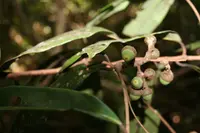
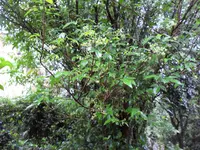
Aniba panurensis is a tropical tree species from the laurel family, native to lowland rainforests of the western Amazon in countries like Peru, Ecuador, and Colombia. It typically grows as a medium to tall evergreen tree with a straight trunk, smooth bark, and dense, glossy foliage.
The species thrives in warm, humid, shaded to semi-shaded forest conditions and usually prefers consistently moist, well-drained soils rich in organic matter. In cultivation, it is still uncommon and better suited to experienced growers who understand how to care for Aniba panurensis in controlled tropical or greenhouse environments.
Its need for stable warmth, high humidity, and protection from cold or drought makes it more challenging to maintain outside its natural climate zones.

Care Difficulty
Moderate Care

Light Preference
Partial Shade

Water Requirements
Moderate Water

Temperature Preference
Tropical / Frost Sensitive

Hardiness Zone
Unknown

Soil Texture
Loamy, Silty, Organic-rich

Soil pH
Acidic (5.5–6.5), Slightly acidic (6.5–7.0)

Soil Drainage
Moist but well-drained

Fertilization
Minimal (feed rarely)
Scan your plant to receive care tips personalized for your specific plant
Available on iOS and Android
This tropical canopy tree prefers bright, indirect light close to natural forest conditions.
This species prefers evenly moist, well-drained soil that never stays waterlogged.
This lowland tropical tree requires consistently warm, frost-free conditions for reliable growth.
This species prefers consistently humid air and reacts quickly to dry indoor conditions.
This tree favors deep, moist, well-aerated soil that drains freely yet never dries out completely.
This species can be grown in large containers when roots are given ample depth and excellent drainage.
Nutrient needs are moderate, so aim for steady, light feeding rather than heavy applications for Aniba panurensis.
Structural pruning helps maintain a stable canopy and sound framework in Aniba panurensis.
This tree is usually field-grown, so focus on careful transplanting rather than frequent repotting.
Propagation is usually done professionally, but small-scale efforts are possible with seed and semi-hardwood cuttings.
This tropical tree is frost-sensitive and needs protection in regions with cool or freezing winters.

Plant Health Check
Not sure what's wrong with your plant? Check your plant's health inside the app.
This species is a medium to large evergreen tree native to lowland Amazonian rainforests, where it commonly grows in terra firme (non-flooded) forests and contributes to the multi-layered canopy structure.
Its wood and bark contain aromatic essential oils typical of the Lauraceae family, and these volatile compounds play ecological roles such as deterring herbivores and possibly mediating interactions with microbes.
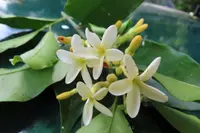
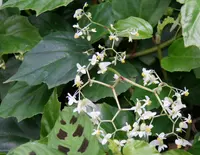
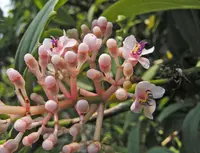
It shows characteristic Lauraceae features such as simple, aromatic leaves with oil cells and small, inconspicuous flowers adapted for pollination by small insects rather than by showy floral displays.
Growth is generally slow to moderate. Young trees may add about 20–40 cm per year under warm, consistently moist conditions. Poor soil, irregular watering, or cool temperatures can reduce growth noticeably. Patience is necessary with this species.
Keep your plants happy and healthy with plant identification, disease detection, and easy care guidance.