Provide sturdy trellis
Install a strong, 1.8–2.4 m tall trellis or wire system before planting so vines can be gently tied and trained upward, which improves airflow, light distribution, and long-term structural stability.

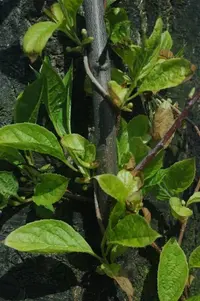
Chinese magnolia-vine, Schisandra chinensis, is a woody, deciduous climbing vine valued for its aromatic leaves and clusters of bright red berries. It typically twines up supports, fences, or small trees, forming a leafy screen in suitable conditions.
In the wild, it occurs in mixed forests of northern China, Korea, and parts of Russia, where summers are mild and soils stay consistently moist. It is generally hardy and long-lived, but needs support to climb and benefits from cool roots and moderate, not extreme, heat.
Once established, it is relatively low-maintenance, though young plants grow slowly at first. Understanding how to care for Chinese magnolia-vine starts with providing humus-rich, well-drained soil and light shade or gentle sun, similar to a woodland edge.

Care Difficulty
Moderate Care

Light Preference
Partial Shade

Water Requirements
Regular Water

Temperature Preference
Cold Hardy

Hardiness Zone
4–7

Soil Texture
Loamy, Silty, Organic-rich

Soil pH
Acidic (5.5–6.5), Slightly acidic (6.5–7.0)

Soil Drainage
Moist but well-drained

Fertilization
Minimal (feed rarely)
Scan your plant to receive care tips personalized for your specific plant
Available on iOS and Android
This deciduous vine prefers bright but gentle light similar to a woodland edge.
This vine prefers consistently moist, cool soil without becoming waterlogged.
This hardy climber performs best in cool to mild climates with cold winters.
This climber prefers moderately moist air but generally adapts to typical outdoor humidity in temperate climates.
Schisandra chinensis grows best in deep, loose, humus-rich soil that stays evenly moist yet drains freely.
This species can be grown in containers if the pot is large, deep, and stable enough to support its climbing habit.
Schisandra chinensis responds well to modest feeding that supports steady vine and fruit growth without excess vigor.
Thoughtful pruning helps Schisandra chinensis maintain a manageable framework and good fruiting wood.
This vine is usually grown in the ground, so management focuses more on careful transplanting than frequent repotting.
Schisandra chinensis is usually propagated by seed, semi-ripe cuttings, or layering, all of which need consistent moisture.
This vine is generally cold hardy in much of the northern US but benefits from basic winter preparation, especially when young or container-grown.

Plant Health Check
Not sure what's wrong with your plant? Check your plant's health inside the app.
The ripe fruits are traditionally described in Chinese as having five tastes at once: sour, sweet, bitter, pungent, and salty, which is why the plant is called wu wei zi, meaning five-flavor berry.
This woody vine naturally grows in cool-temperate forests of northeastern China, Korea, and parts of Russia and can tolerate very low winter temperatures compared to many other fruiting climbers.
Many wild populations are functionally dioecious, meaning individual plants bear mostly male or mostly female flowers, so successful fruiting in cultivation often depends on growing both sexes together.
The plant has been documented for more than 1,000 years in East Asian materia medica texts, where its fruits were classified as a superior tonic and traded over long distances, which has strongly influenced modern Schisandra chinensis care and cultivation research, especially in China and Russia.
This species is a twining woody vine that climbs by wrapping its stems around supports rather than by tendrils or adhesive pads. Without a structure, it will sprawl and tangle near the ground instead of forming vertical growth.
Keep your plants happy and healthy with plant identification, disease detection, and easy care guidance.