Creeping support management
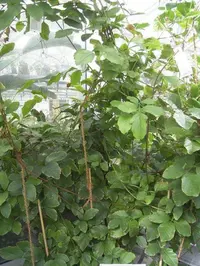
Allow stems to creep through low twigs or a simple branch lattice laid on the soil so the plant can spread without being crushed by foot traffic or smothered by mulch.

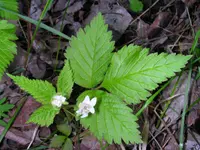
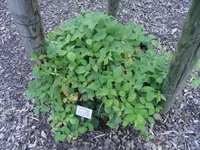
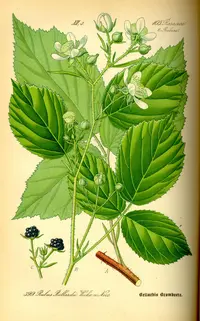
Dwarf red blackberry (Rubus pubescens) is a low, creeping bramble native to cool forests and moist woodlands in northern North America. It forms loose mats with slender, trailing stems and small, three-part leaves.
The plant produces delicate white flowers followed by small, bright red, edible berries that attract wildlife. Its shallow roots and ground-hugging habit make it useful as a light groundcover in suitable climates.
Rubus pubescens prefers cool conditions, partial shade, and consistently moist, humus-rich soil. Once its site needs are met, it is generally easy to manage, though slow spreading means patience is important when learning how to care for dwarf red blackberry.

Care Difficulty
Moderate Care

Light Preference
Partial Shade

Water Requirements
Regular Water

Temperature Preference
Cold Hardy

Hardiness Zone
2–6

Soil Texture
Loamy, Sandy, Organic-rich

Soil pH
Acidic (5.5–6.5), Slightly acidic (6.5–7.0)

Soil Drainage
Moist but well-drained

Fertilization
Minimal (feed rarely)
Scan your plant to receive care tips personalized for your specific plant
Available on iOS and Android
This low woodland bramble performs best with cool, filtered light that mimics forest conditions.
This creeping raspberry prefers consistently moist, cool soil without staying waterlogged.
This boreal woodland species is adapted to cool climates and tolerates substantial winter cold.
Humidity is not critical for Rubus pubescens, which is adapted to naturally fluctuating outdoor conditions.
Rubus pubescens prefers cool, moist, well-aerated soil with high organic content.
This species can be grown in containers outdoors, but it performs best when the pot setup mimics cool, moist woodland soil.
Rubus pubescens is a light feeder that benefits from modest nutrition in poor or depleted soils.
Pruning Rubus pubescens focuses on cleaning up stems and maintaining a low, healthy mat of growth.
This groundcover bramble is usually grown in the ground, so care focuses on thoughtful transplanting rather than frequent repotting.
Rubus pubescens spreads naturally, and propagation uses simple vegetative methods to create new patches.
This species is cold hardy in much of its native range and usually needs minimal winter care outdoors.

Plant Health Check
Not sure what's wrong with your plant? Check your plant's health inside the app.
This species forms low, creeping stems that root at the nodes, creating a loose groundcover in cool, moist northern forests rather than upright canes like common garden raspberries.
It is native to boreal and northern temperate regions of North America, where it thrives in coniferous and mixed woods, often under spruce, fir, or birch canopies in cool, acidic soils.
The leaves emerge early in spring and can take advantage of higher light levels on the forest floor before the tree canopy fully closes, a strategy that supports its growth in shaded habitats.

Native pollinators, especially small solitary bees and flies, are key visitors to its small white flowers, making this species a useful component in supporting early-season insect activity in northern forest understories.
This species spreads slowly by short, creeping stems and underground rhizomes. It usually forms loose, low patches rather than dense thickets. In typical gardens it is manageable and rarely becomes a nuisance if given moderate space.
Keep your plants happy and healthy with plant identification, disease detection, and easy care guidance.