Rhizome division timing
Divide clumps only when the plant is actively growing and night temperatures stay above 60°F, then replant rhizomes at the same depth and keep them evenly moist for 4–6 weeks to re-establish.

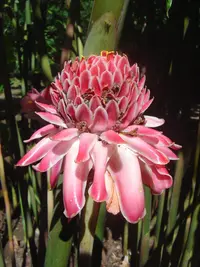
Torch-ginger, Etlingera elatior, is a tropical perennial from Southeast Asia, grown for its tall, striking flower spikes and lush, banana-like foliage. It belongs to the ginger family and forms dense clumps that can become large in warm, humid climates.
In tropical and subtropical regions it is often used as an ornamental landscape plant, and in some cuisines its flower buds and inflorescences are used as an aromatic ingredient. Gardeners who want to care for torch-ginger should know it prefers consistently moist, fertile, well-drained soil and protection from cold or drying winds.
The plant is moderately demanding, as it needs warmth, humidity, and space to thrive, which makes it easier outdoors in frost-free areas than as a long-term container specimen.

Care Difficulty
Hard Care

Light Preference
Partial Shade

Water Requirements
Keep Soil Moist

Temperature Preference
Tropical / Frost Sensitive

Hardiness Zone
10–12

Soil Texture
Loamy, Silty, Organic-rich

Soil pH
Acidic (5.5–6.5), Slightly acidic (6.5–7.0)

Soil Drainage
Moist but well-drained

Fertilization
Moderate (every 2–4 weeks)
Scan your plant to receive care tips personalized for your specific plant
Available on iOS and Android
This tropical species thrives in bright, warm conditions that mimic a lightly shaded rainforest edge.
This rhizomatous plant prefers evenly moist, not waterlogged, soil throughout the growing season.
Consistent warmth is essential for strong growth and flowering in this tropical ginger.
This species needs consistently high humidity to thrive and flower well.
This species prefers deep, loose, organic-rich soil that drains freely but never dries completely.
This species can be grown in large containers if its size and water needs are managed carefully.
Nutrient-rich soil supports strong flowering and foliage in torch-ginger, especially in warm climates with long growing seasons.
Thoughtful pruning keeps Etlingera elatior healthy, removes disease risk, and maintains a manageable clump.
Mature clumps benefit from transplanting or division when overcrowded, rootbound, or declining in vigor.
Division is the primary method for creating new plants, while seed propagation is slower and more variable.
Cold conditions require planning, as Etlingera elatior is tropical and highly sensitive to frost.

Plant Health Check
Not sure what's wrong with your plant? Check your plant's health inside the app.
In Southeast Asia, the young flower buds and fragrant inflorescences are widely used as a culinary herb, especially in Malaysian and Indonesian dishes such as laksa and certain sambals, where they add a distinct citrusy, resinous aroma.
This species forms a large network of rhizomes (underground stems) that can produce flowering shoots several meters away from the main clump, which is why the striking blooms often appear to emerge directly from the ground.
The large, waxy bracts and nectar-rich true flowers attract a range of pollinators, including nectar-feeding birds and insects in its native rainforest habitat, supporting local food webs in lowland tropical ecosystems.

In traditional markets of Malaysia, Indonesia, and Thailand, pink and red forms of torch-ginger are sold as a distinct aromatic vegetable, valued enough that they are sometimes cultivated specifically for flower harvest rather than for ornamental use.
Lack of flowering usually comes from insufficient plant maturity, inadequate warmth, or low nutrients. This species often needs several years, consistently warm conditions, and regular feeding with a balanced fertilizer before sending up reliable flower spikes.
Keep your plants happy and healthy with plant identification, disease detection, and easy care guidance.