Encourage Compact Growth
Shear back spent flower stems by about one-third immediately after the main flush to encourage a second, shorter wave of blooms that resists flopping, rather than waiting until stems are fully dry and woody.

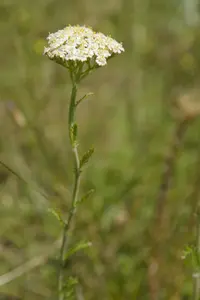
Cream-flowered sneezewort, Achillea odorata, is a compact, clumping perennial in the daisy family. It forms upright stems topped with flat clusters of small, creamy-white flowers. The finely divided, aromatic foliage gives it a soft, feathery texture that suits mixed borders and informal garden plantings. It is typically found in dry, open habitats in parts of Europe and western Asia. This species is generally undemanding and adapts well to sunny, well-drained sites, which makes it relatively easy to maintain. For those learning how to care for Cream-flowered Sneezewort, its tolerance of poor soils and dry conditions is a key advantage.

Care Difficulty
Easy Care

Light Preference
Full Sun

Water Requirements
Low Water

Temperature Preference
Cold Hardy

Hardiness Zone
4–9

Soil Texture
Sandy, Loamy, Rocky

Soil pH
Slightly acidic (6.5–7.0), Slightly alkaline (7.0–7.5)

Soil Drainage
Well-drained

Fertilization
Minimal (feed rarely)
Scan your plant to receive care tips personalized for your specific plant
Available on iOS and Android
This sun-loving perennial thrives in open, bright positions with long daily exposure.
This drought-tolerant species prefers infrequent, deep watering once established.
This hardy perennial tolerates a wide temperature range but grows best in moderate warmth.
This species prefers dry air and does not need elevated humidity.
This species prefers lean, well-drained, slightly dry soil.
This species can grow well in containers if excess moisture is controlled carefully.
Achillea odorata thrives in lean soil and usually needs only light feeding for consistent flowering.
Achillea odorata responds well to thoughtful pruning that maintains compact growth and strong flowering.
In most gardens, Achillea odorata is transplanted in beds rather than kept long term in containers.
Propagation of Achillea odorata is straightforward through division, cuttings, or seed in basic garden conditions.
This hardy perennial generally needs minimal winter care in typical temperate climates.

Plant Health Check
Not sure what's wrong with your plant? Check your plant's health inside the app.
Achillea odorata is noted for its strongly scented, finely divided leaves, which release a pronounced aroma when touched or bruised, more intense than that of many other yarrow species.
The plant produces flat-topped clusters of small, cream-colored flower heads, which distinguish it visually from the more common yellow or pink yarrows used in ornamental plantings.
Its dense flower clusters provide accessible nectar and pollen for a range of insects, especially small bees and hoverflies that prefer open, easily reached floral structures.
This species is highly attractive to pollinators. The flat flower clusters provide easy landing platforms for bees, hoverflies, and small butterflies, supporting garden biodiversity and improving pollination for nearby flowering plants in mixed borders or meadow-style plantings.
Keep your plants happy and healthy with plant identification, disease detection, and easy care guidance.