Shallow Water Trays
For container culture, stand pots in a shallow tray of clean water 1–2 cm deep to mimic the plant’s semi-aquatic habitat and keep roots consistently moist without fully submerging the crown.

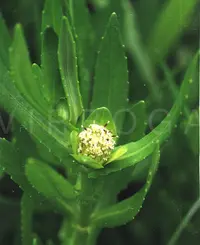
Buffalo spinach (Enydra fluctuans) is a semi-aquatic leafy herb grown mainly as a vegetable in warm, humid regions. It forms low, spreading mats of soft green stems and succulent leaves. Native to wetlands and marshy edges in South and Southeast Asia, it often grows along ditches, ponds, and flooded fields. The plant prefers consistently moist to wet soil and does best in warm conditions with good light. It grows quickly when given ample water and nutrients, which makes it relatively easy to manage for productive harvests. Understanding how to care for Buffalo Spinach helps maintain tender, healthy foliage and prevents decline in drier or cooler environments.

Care Difficulty
Easy Care

Light Preference
Full Sun

Water Requirements
Aquatic

Temperature Preference
Tropical / Frost Sensitive

Hardiness Zone
10–12

Soil Texture
Loamy, Silty, Organic-rich

Soil pH
Acidic (5.5–6.5), Slightly acidic (6.5–7.0)

Soil Drainage
Waterlogged tolerant

Fertilization
Minimal (feed rarely)
Scan your plant to receive care tips personalized for your specific plant
Available on iOS and Android
This semi-aquatic vegetable prefers bright, gentle light rather than harsh, direct sun.
This species naturally grows in wetlands and needs consistently moist to saturated conditions.
This warm-climate aquatic herb thrives in heat but is sensitive to cold and frost.
This semi-aquatic herb prefers consistently very humid conditions around the foliage.
This species prefers saturated, organic-rich soil that mimics slow-moving, shallow wetland edges.
This plant adapts well to container growing when the pot is managed to stay constantly wet or shallowly flooded.
Enydra fluctuans grows fast and benefits from light, consistent feeding during the warm growing season.
Pruning Enydra fluctuans helps keep plants compact, productive, and free of damaged growth.
Enydra fluctuans is usually grown in wet beds or ponds, so care focuses on transplanting rather than frequent repotting.
Enydra fluctuans is commonly propagated from soft stem cuttings and divisions in warm conditions.
In mild, frost-free climates, Enydra fluctuans usually needs little special winter care.

Plant Health Check
Not sure what's wrong with your plant? Check your plant's health inside the app.
This species is a semi‑aquatic herb that naturally grows along ditches, ponds, and paddy fields, where its stems root at the nodes in shallow water or saturated soil, forming dense edible mats.
The plant shows notable tolerance to both waterlogging and mild salinity, which allows it to grow in coastal lowlands and rice-based wetland systems where many common vegetables fail.
Its leaves are widely eaten in South and Southeast Asia as a soft, mild-tasting leafy vegetable that is reported in scientific analyses to contain appreciable levels of fiber, minerals, and antioxidant compounds.

In some traditional rice-farming regions, this species is intentionally grown in flooded paddies as an auxiliary crop, providing farmers with an additional leafy vegetable harvest from the same waterlogged fields used for rice.
Yes, this aquatic leafy vegetable is edible and widely eaten in South and Southeast Asia. Young, tender shoots and leaves are usually cooked or stir-fried. Harvest from clean, uncontaminated water only, as the plant can accumulate pollutants.
Keep your plants happy and healthy with plant identification, disease detection, and easy care guidance.