bigberry manzanita Care (Arctostaphylos glauca)

bigberry manzanita

About bigberry manzanita

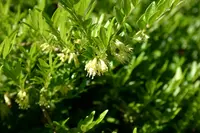
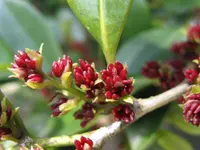
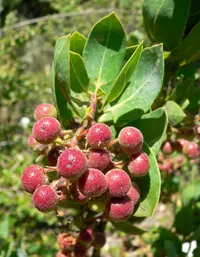
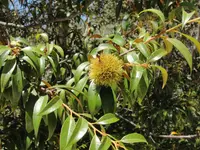
Bigberry manzanita (Arctostaphylos glauca) is a long-lived evergreen shrub to small tree, native to dry hillsides and chaparral in California and northern Baja California. It is known for its smooth red bark, twisting branches, leathery gray-green leaves, and clusters of urn-shaped white to pink flowers followed by large reddish berries.

This species forms a deep root system and is highly drought adapted once established, but it resents summer irrigation and poorly drained soil. It prefers full sun, lean mineral soil, and open, dry exposure.

Gardeners who want to care for bigberry manzanita need to respect its preference for low water, good air flow, and undisturbed roots to keep it healthy and long-lived.

Main Plant Requirements

Care Difficulty

Moderate Care

Light Preference

Full Sun

Water Requirements

Low Water

Temperature Preference

Warm Climate

Hardiness Zone

8–10

Soil Texture

Sandy, Loamy, Rocky

Soil pH

Acidic (5.5–6.5), Slightly acidic (6.5–7.0)

Soil Drainage

Well-drained

Fertilization

Minimal (feed rarely)

Get Personalized Care Plan

Scan your plant to receive care tips personalized for your specific plant

Available on iOS and Android

How to Care for the bigberry manzanita

This shrub prefers bright, open exposure that mimics its native dry slopes.

  • Provide full sun for 6–8 hours daily; bigberry manzanita develops denser growth and better flowering in unobstructed sun.
  • Tolerates light afternoon shade, especially in hotter inland areas, but too much shade causes leggy stems and sparse foliage over time.
  • In cool, coastal climates, accept all-day sun; in very hot regions, give morning sun with light filtered shade after 2–3 p.m. to reduce leaf scorch on young plants.

This is a drought-adapted shrub that needs careful, infrequent watering once established.

  • During the first 1–2 growing seasons, water only when the top 5–8 cm of soil are completely dry, then soak deeply and allow full drainage.
  • In summer, reduce watering frequency; established plants in the ground often need no supplemental water except during extended heat or drought.
  • Watch for yellowing, soft leaves and dieback as signs of overwatering, while dull, curling leaves and twig tip wilt suggest the soil stayed dry for too long around Arctostaphylos glauca.

This species is adapted to mild, dry climates with warm days and cool nights.

  • Ideal growth occurs around 60–80°F (16–27°C), with good tolerance of typical coastal or inland Mediterranean-type conditions.
  • Mature plants usually withstand short drops to about 15–20°F (-9 to -6°C); young plants are more vulnerable and benefit from protection during hard freezes.
  • Tolerates hot spells up to 95–100°F (35–38°C) if roots are mulched and soil is not overwatered; abrupt heat or frost can cause leaf browning but established shrubs often recover.

This shrub prefers dry air and usually performs well in 20–40% humidity.

  • Bigberry manzanita is adapted to arid conditions and does not need added humidity indoors or outdoors.
  • Prolonged humidity above 60% can encourage leaf spotting, fungal issues, and poor airflow stress.
  • If grown in a humid climate, increase air movement with spacing and light breezes rather than misting.

This species needs lean, sharply drained soil that mimics dry, rocky slopes.

  • Use a sandy or gravelly mix with low organic matter, such as 50–70% coarse sand or crushed granite with 30–50% native mineral topsoil.
  • Aim for slightly acidic to neutral pH around 6.0–7.2, which suits Arctostaphylos glauca roots and supports nutrient uptake.
  • Improve aeration and drainage by adding pumice or small gravel instead of peat-based materials that hold excess moisture.
  • Avoid heavy clay, fine compost, or water-retentive potting mixes that stay wet for more than 1 day after irrigation.

This species can be grown in containers, but long-term performance is better in the ground.

  • Choose a wide, heavy container to counter the shrub’s woody, branching canopy and reduce tipping in wind.
  • Use a very fast-draining, mineral-heavy mix so water runs through in seconds rather than pooling near the roots.
  • Select unglazed clay or concrete pots in hot climates to let the root zone dry quickly between deep irrigations.]},

This dryland shrub is adapted to poor soils and usually needs no fertilizer once established.

Pruning Arctostaphylos glauca is mainly corrective, aiming to keep the plant healthy and structurally sound.

  • Carry out light pruning in late winter to early spring, before active growth.
  • Remove dead, diseased, or crossing branches with clean, sharp bypass pruners or loppers.
  • Thin crowded interior stems to improve airflow and reveal the branching structure without heavy topping.
  • Limit cuts to smaller branches to reduce stress and avoid stimulating weak, lush growth.

This species is rarely kept long-term in containers and responds best to careful transplanting when young.

  • Plan transplanting for late fall to winter in mild climates, when top growth is slow and soil is moist.
  • Look for signs such as roots circling the pot or slowed growth if starting in containers.
  • Move only every few years, keeping the root ball intact and disturbing roots as little as possible.
  • Water deeply before and after planting, then maintain even but not soggy moisture until re-established.

Arctostaphylos glauca is considered challenging to propagate and is usually left to specialists or native plant nurseries.

Mature plants are fairly cold hardy in suitable climates and usually need minimal winter care.

  • Tolerates light frost but may be damaged by prolonged freezes below about 15–20°F, especially when young.
  • Apply a 5–8 cm layer of coarse mulch around, not against, the crown to buffer soil temperature.
  • In colder regions, growing bigberry manzanita in large containers allows moving plants to a sheltered, unheated space for winter.

Care Tips

Encourage Deep Roots

During the first 2–3 years, water less often but for longer sessions to encourage a deep, drought-resilient root system that anchors the shrub and improves long-term stability.

Protect Trunk Bark

Keep mulch and groundcovers at least 15–20 cm away from the base to prevent moisture against the smooth bark, which reduces risk of canker diseases and bark decay.

Manage Summer Stress

In very hot, dry inland sites, provide temporary light shade cloth for young plants during their first 1–2 summers to reduce transplant stress and leaf scorch without encouraging lush, weak growth.

Control Competing Vegetation

Maintain a clear, weed-free zone with a coarse, thin mulch layer around the drip line so the shrub does not compete with grasses or vigorous perennials for limited moisture and nutrients.

Plan Fire‑wise Spacing

When growing bigberry manzanita in fire-prone areas, space shrubs so mature canopies do not touch and periodically remove dead twigs from the interior to reduce fuel load while keeping the plant’s natural form.

Common Pests and Diseases

Manzanita leaf gall aphid

This pest causes swollen, blister-like galls on young leaves and sometimes on stems, leading to distorted new growth. These insects feed on plant sap but rarely kill established shrubs.

Solution

Prune and discard heavily galled shoots before aphids mature, and avoid fertilizing with high nitrogen, which encourages soft, susceptible growth. For light infestations, wash colonies off with a strong stream of water; for persistent problems on young plants, use insecticidal soap or a light horticultural oil sprayed to thoroughly coat the affected tissues during cool parts of the day.

Branch dieback (Botryosphaeria canker)

This disease causes scattered twigs or branches to wilt, turn brown, and die back from the tip, often with a distinct boundary between healthy and dead tissue. Symptoms include cankers on stems that may appear slightly sunken or discolored under the bark.

Solution

Prune out dead or cankered branches 10–15 cm below the last visible symptoms, sterilizing tools between cuts, and dispose of all infected material. Reduce plant stress by avoiding summer irrigation against the trunk, maintaining natural mulch but keeping it off the stem, and improving air circulation around the shrub; in landscape settings, Arctostaphylos glauca care focuses on prevention, since fungicides are usually not needed if cultural conditions are right.

Fungal leaf spot

This disease produces small tan to brown spots on leaves that may coalesce, causing patchy yellowing and early leaf drop, especially in humid or irrigated sites. Symptoms include more severe spotting on lower, shaded foliage.

Solution

Improve airflow by thinning crowded branches and avoid overhead watering so foliage dries quickly, especially in the evening. Remove and discard heavily spotted leaves from the plant and ground, and in wet, disease-prone locations consider relocating irrigation emitters away from the canopy drip line to keep leaves as dry as possible.

Armillaria root and crown rot

This disease, caused by Armillaria fungi, leads to progressive decline, sparse foliage, and branch dieback, often in sites with a history of oak or other woody hosts. Symptoms include white fan-shaped fungal mats under the bark near the crown and sometimes honey-colored mushrooms at the base in cool, wet seasons.

Solution

Remove severely affected plants, including as much of the major root system as possible, and avoid replanting manzanita or other highly susceptible woody hosts in the same spot. For established plantings, reduce stress by eliminating summer irrigation near the crown, improving drainage, and avoiding soil disturbance and mechanical damage to roots and trunk.

Spider mites

This pest attacks stressed plants in hot, dry conditions, causing fine stippling on leaves, dull foliage, and occasional fine webbing on twigs. These insects feed on leaf cells and can accelerate leaf drop on already weakened shrubs.

Solution

Increase humidity directly around the plant only if it does not conflict with its need for dry conditions, and periodically hose off foliage to dislodge mites during cooler hours without soaking the soil near the crown. In more severe cases, apply insecticidal soap or horticultural oil, directing spray to the undersides of leaves, and address underlying stress by avoiding overhead summer irrigation and preventing reflected heat buildup around the root zone.

Interesting Facts

Waxy, glaucous leaves

The foliage has a bluish-white waxy coating, called a glaucous bloom, which reflects sunlight and reduces water loss in its hot, dry chaparral habitat.

Bird-dispersed big berries

The large, mealy fruits are eaten by many bird species that disperse the seeds, helping maintain populations across rocky slopes and canyons in California.

Important chaparral keystone

This shrub forms dense stands with deep, woody roots that stabilize slopes, store biomass, and influence fire behavior in chaparral ecosystems.

Botan icon

Did you know?

Arctostaphylos glauca can live for many decades and develop thick, sculptural, reddish bark with twisted branches, creating distinctive ancient stands that are considered a signature feature of mature California chaparral.

FAQs about bigberry manzanita

This shrub is evergreen, holding foliage year-round. Older leaves are shed gradually as new ones form, so it does not appear bare in winter. Expect a consistent canopy rather than distinct leaf-drop seasons.

Grow Healthy Plants with Botan Care

Keep your plants happy and healthy with plant identification, disease detection, and easy care guidance.

Botan plant care app — identify plants on mobile

Explore More Plants