Mulch The Crown
Apply a 5–8 cm layer of leaf mold or shredded bark around, but not on top of, the crown to stabilize soil moisture and temperature while preventing frost heave of the rhizome in cold winters.

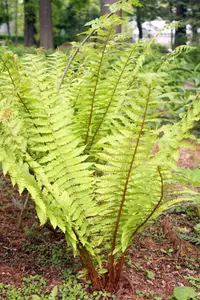
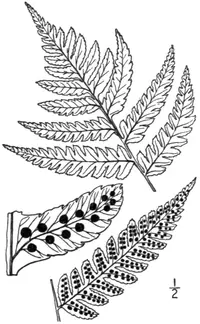
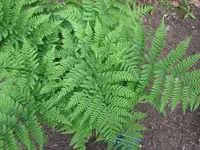
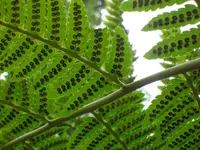
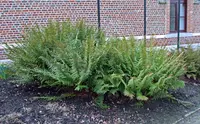
Thick-stemmed woodfern, Dryopteris crassirhizoma, is a hardy, clump-forming fern valued for its strong, upright fronds and robust underground rhizome. It is a deciduous to semi-evergreen species that creates a neat, architectural mound of fresh green foliage.
This fern is native to East Asia, where it grows in woodland and mountain habitats with cool, moist, humus-rich soil. It adapts well to temperate gardens and is often used in shaded borders or naturalistic plantings.
Gardeners generally find it reliable and low-maintenance if its basic needs are met, which makes it straightforward to care for Thick-stemmed woodfern in shaded, consistently moist conditions.

Care Difficulty
Moderate Care

Light Preference
Partial Shade

Water Requirements
Keep Soil Moist

Temperature Preference
Cold Hardy

Hardiness Zone
5–8

Soil Texture
Loamy, Peaty, Organic-rich

Soil pH
Acidic (5.5–6.5), Slightly acidic (6.5–7.0)

Soil Drainage
Moist but well-drained

Fertilization
Minimal (feed rarely)
Scan your plant to receive care tips personalized for your specific plant
Available on iOS and Android
This woodland fern prefers cool, indirect light that mimics a forest floor environment.
This fern prefers consistently moist but not waterlogged soil throughout the growing season.
This species is a hardy fern that tolerates cold winters and mild to warm summers.
This fern prefers consistently moist air to keep fronds lush and resilient.
This fern thrives in loose, humus-rich soil that mimics a cool woodland floor.
This species is well suited to container growing in shaded patios, balconies, or sheltered outdoor spots.
This fern grows well in moderately fertile soil and needs only light feeding in active growth.
Pruning Dryopteris crassirhizoma focuses on hygiene and maintaining a neat clump rather than reshaping the plant.
This fern is most often grown in the ground, with transplanting only needed when clumps outgrow their space or soil becomes exhausted.
This fern is commonly propagated by division, which keeps characteristics true and is more reliable than spores for home growers.
This cold-hardy fern usually needs minimal winter care in most temperate climates.

Plant Health Check
Not sure what's wrong with your plant? Check your plant's health inside the app.
This fern is naturally distributed in cool, temperate forests of China, Korea, Japan, and parts of eastern Russia, where it grows on humus-rich slopes and shaded rocky sites.
The species name crassirhizoma refers to its unusually thick, upright rhizome, which forms a dense central stump that slowly enlarges and can support a long-lived, vase-shaped crown of fronds.
Garden trials in temperate regions show that this species tolerates substantial winter cold and returns reliably each spring, which has led to its use as a hardy architectural fern in shade gardens.

In traditional East Asian materia medica, the dried rhizomes of this species have been formally recorded and studied as a standardized herbal drug, recognized for specific bioactive compounds such as phloroglucinol derivatives that have been investigated in modern pharmacological research.
This species is semi-evergreen to evergreen in many temperate climates. Fronds often stay green through mild winters but may partially die back in colder regions, then re-emerge strongly from the thick rhizome in spring.
Keep your plants happy and healthy with plant identification, disease detection, and easy care guidance.