


Staggered Division
Divide established clumps in early spring in a staggered pattern over several years rather than all at once to maintain a full-looking planting while gradually renewing older, congested crowns.


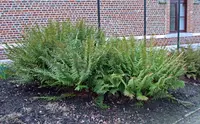
Dryopteris pseudomas is a hardy, deciduous fern valued for its finely divided, arching fronds and dense, upright clump-forming habit. It offers a classic woodland look that suits shaded gardens and naturalistic plantings.
This species is native to parts of Europe and Asia, where it grows in cool, moist forests and along shaded slopes. It tends to be reliable and long-lived when its basic needs are met.
For most gardeners, how to care for Dryopteris pseudomas centers on providing consistent moisture, shelter from strong sun, and humus-rich, well-drained soil. Under these conditions it is considered moderately easy to maintain and slow to spread.

Care Difficulty
Moderate Care

Light Preference
Partial Shade

Water Requirements
Keep Soil Moist

Temperature Preference
Cold Hardy

Hardiness Zone
4–8

Soil Texture
Loamy, Silty, Organic-rich

Soil pH
Acidic (5.5–6.5), Slightly acidic (6.5–7.0)

Soil Drainage
Moist but well-drained

Fertilization
Minimal (feed rarely)
Scan your plant to receive care tips personalized for your specific plant
Available on iOS and Android
This fern prefers cool, sheltered light conditions that mimic woodland shade.
This species prefers consistently moist, not waterlogged, soil.
This hardy fern tolerates cool conditions but benefits from moderate temperatures during active growth.
This fern prefers consistently moist air and reacts quickly to dry indoor conditions.
This woodland fern needs loose, moisture-retentive but well-drained soil to keep roots evenly aerated and damp.
This species adapts well to container growing when root space and moisture balance are managed carefully.
This fern grows well in humus-rich soil and benefits from only light feeding in containers or very poor ground.
Pruning focuses on removing old or damaged fronds to keep the fern tidy and healthy.
This fern is usually grown in the ground but can be transplanted or divided when clumps become crowded.
Division is the most practical method for home propagation, since spore raising is slow and technical.
This hardy fern tolerates typical outdoor winters in much of the US and usually needs minimal special care.

Plant Health Check
Not sure what's wrong with your plant? Check your plant's health inside the app.
Dryopteris pseudomas is considered a hybrid derivative involving Dryopteris filix-mas and Dryopteris affinis, which explains its intermediate frond shape and growth habit compared with those parent species.
This fern has a relatively restricted natural distribution in parts of central and western Europe, often recorded in cooler, humid regions rather than across the full range of its better-known relatives.
Unlike many woodland ferns that favor strongly acidic substrates, Dryopteris pseudomas is frequently associated with mildly calcareous or base-rich soils, especially in moist forest and ravine habitats.
This fern is semi-evergreen in many temperate climates. Fronds often stay green through mild winters but may die back after hard frost. Old fronds are usually trimmed in late winter as new growth emerges in spring.
Keep your plants happy and healthy with plant identification, disease detection, and easy care guidance.

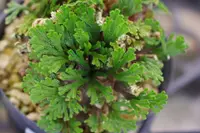
Peacock Moss
Selaginella uncinata
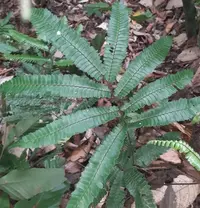
fourleaf maidenhair
Adiantum tetraphyllum
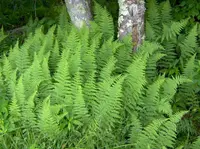
eastern hayscented fern
Dennstaedtia punctilobula
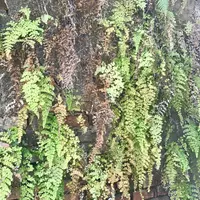
polished maidenhair
Adiantum concinnum
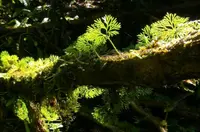
peltate tonguefern
Elaphoglossum peltatum
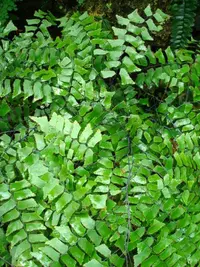
diamond maidenhair
Adiantum trapeziforme
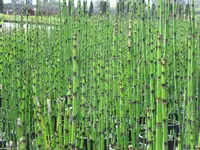
Rough horsetail
Equisetum hyemale
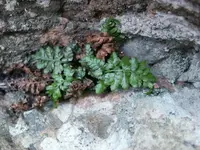
Asplenium balearicum
Asplenium balearicum