Mulch For Coolness
Apply a 3–5 cm layer of shredded bark or leaf mold around the crown (but not touching it) to keep roots cool, conserve moisture, and suppress competing weeds in shaded beds.

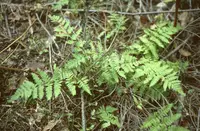
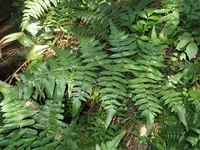
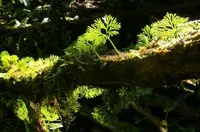
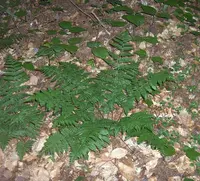
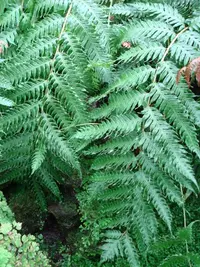
Spinulose woodfern, Dryopteris carthusiana, is a hardy, deciduous fern native to cool, moist forests across much of North America and Europe. It forms graceful clumps of finely divided, lacy fronds that arch outward in a loose vase shape.
This species thrives in shaded, consistently moist, humus-rich soil and fits naturally into woodland gardens or shaded borders. It is generally easy to grow if kept out of hot, dry conditions, which makes it straightforward to care for spinulose woodfern in suitable climates.

Care Difficulty
Moderate Care

Light Preference
Partial Shade

Water Requirements
Keep Soil Moist

Temperature Preference
Cold Hardy

Hardiness Zone
3–8

Soil Texture
Loamy, Silty, Organic-rich

Soil pH
Acidic (5.5–6.5), Slightly acidic (6.5–7.0)

Soil Drainage
Moist but well-drained

Fertilization
Minimal (feed rarely)
Scan your plant to receive care tips personalized for your specific plant
Available on iOS and Android
Dryopteris carthusiana prefers low to moderate light typical of woodland understories.
This fern prefers consistently moist, cool soil without remaining waterlogged.
This hardy fern tolerates a wide temperature range but grows best in cool to mild conditions.
This fern prefers consistently moist air and reacts quickly to dry conditions.
This fern performs best in consistently moist, humus-rich soil that mimics a cool woodland floor.
This species adapts well to container growing outdoors when moisture and root space are managed carefully.
This fern has modest nutrient needs, so focus on light, steady feeding during active growth.
Pruning Dryopteris carthusiana is mainly about hygiene rather than shaping.
This woodland fern is more often transplanted in garden beds than kept long term in containers.
Dryopteris carthusiana is most reliably propagated by division of mature clumps.
This fern is cold hardy in much of its range and usually needs only minimal winter attention.

Plant Health Check
Not sure what's wrong with your plant? Check your plant's health inside the app.
This species has a circumboreal distribution, meaning it naturally occurs across northern parts of North America, Europe, and Asia in cool, moist forests and wetlands.
Its fronds are twice- to thrice-pinnate, with finely divided pinnae and spinulose (tiny toothed) margins, giving the plant a very delicate, lacy texture compared with many other woodferns.
It is particularly common in sphagnum bogs, seeps, and wet forest understories, often growing on rotting logs or saturated soils where competition from many flowering plants is reduced.

This fern readily forms sterile hybrids with closely related woodfern species in the wild, and these hybrid complexes have long challenged botanists to interpret its taxonomy and evolutionary relationships.
Brown fronds usually result from dry soil, low humidity, or excess sun exposure. Old fronds also brown naturally with age. Trim damaged fronds at the base and improve moisture consistency and shade to restore healthier growth.
Keep your plants happy and healthy with plant identification, disease detection, and easy care guidance.