Anemia phyllitidis Care

Anemia phyllitidis

About Anemia phyllitidis

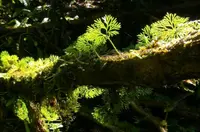
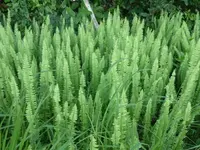
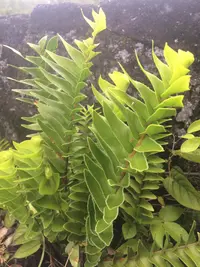
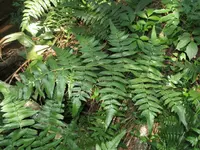
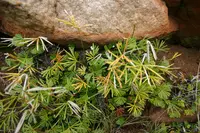
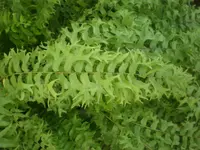
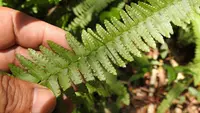
Anemia phyllitidis is a small terrestrial fern, often called a flowering fern, although it does not produce true flowers. It forms delicate clumps with finely divided fronds and contrasting fertile fronds that rise above the foliage.

This species is native to tropical regions of the Americas, where it grows on moist, shaded forest floors and rocky slopes. Its preference for consistent moisture, humidity, and good drainage makes it moderately challenging for beginners.

Those who care for Anemia phyllitidis need to provide stable shade, evenly moist but not waterlogged soil, and protection from drying winds or direct sun.

Main Plant Requirements

Care Difficulty

Moderate Care

Light Preference

Partial Shade

Water Requirements

Keep Soil Moist

Temperature Preference

Tropical / Frost Sensitive

Hardiness Zone

10–11

Soil Texture

Loamy, Peaty, Organic-rich

Soil pH

Acidic (5.5–6.5)

Soil Drainage

Moist but well-drained

Fertilization

Minimal (feed rarely)

Get Personalized Care Plan

Scan your plant to receive care tips personalized for your specific plant

Available on iOS and Android

How to Care for the Anemia phyllitidis

This terrestrial fern prefers bright, indirect conditions that mimic a lightly shaded forest floor.

  • Provide 2–4 hours of soft morning sun with the rest of the day in dappled or filtered light under taller plants or shade cloth.
  • Avoid strong midday and afternoon sun, which can scorch fronds, fade color, and dry the soil too quickly, especially in summer.
  • In deep shade, fronds of Anemia phyllitidis may elongate and thin; move slightly closer to light in spring or early autumn.

Moist, never stagnant soil is essential for healthy growth.

  • Water when the top 1–2 cm of soil feels just barely dry, aiming to keep the root zone consistently damp but not waterlogged.
  • Use loose, well-drained soil rich in organic matter so excess water runs through while still holding even moisture around the roots.
  • In cool seasons reduce frequency as evaporation slows; yellowing, limp fronds suggest overwatering, while crisp, browning tips indicate the plant stayed too dry.

This fern grows best in mild, frost-free conditions with stable temperatures.

  • Aim for 65–80°F (18–27°C) during active growth; brief swings outside this range are tolerated if soil moisture is stable.
  • Protect from cold below 45°F (7°C); prolonged exposure near or below this point can damage fronds and weaken the crown.
  • Anemia phyllitidis dislikes extreme heat above 90°F (32°C); increase shade and humidity and never allow the root zone to dry out during hot spells.

This fern prefers consistently moist air and reacts quickly to dry indoor conditions.

  • Aim for 60–80% humidity; it tolerates brief dips to 50% but struggles in heated, dry rooms.
  • Crisping pinnae edges, pale fronds, and slow unfurling indicate humidity stress rather than underwatering.
  • Increase humidity with a nearby humidifier, grouped plants, or a wide pebble tray, avoiding direct misting of fronds.

This species needs loose, humus-rich soil that stays evenly moist yet drains freely.

  • Use a mix of roughly 50% peat or coco coir, 30% fine compost, and 20% perlite or fine bark for structure and drainage.
  • Target a slightly acidic pH around 5.5–6.5, similar to woodland soil under deciduous trees.
  • Ensure the mix feels springy and well-aerated; coarse materials prevent compaction around the fine roots.
  • Avoid heavy clay, waterlogged sites, or pure sand, which either suffocate roots or dry out too rapidly for Anemia phyllitidis.

This fern is suitable for container growing when given a stable, moisture-retentive setup.

  • Choose a deep, relatively narrow pot to support its rhizomes while limiting surface evaporation from the mix.
  • Select heavier materials like ceramic to reduce tipping as fronds arch outward and catch wind on balconies or patios.
  • Raise the pot slightly on feet or blocks so drainage holes clear the saucer, preventing reabsorption of stagnant water.

This fern benefits from light feeding but grows acceptably in humus-rich soil without heavy fertilization.

  • Use a balanced liquid fertilizer (around 10-10-10 or similar) at 1/4–1/2 strength during active growth in spring–summer.
  • Apply every 4–6 weeks only when soil is moist to avoid root burn.
  • Organic options like dilute compost tea are suitable for sensitive roots of Anemia phyllitidis.
  • Stop feeding in fall–winter, when growth slows or fronds die back.

Pruning needs are minimal and focus on hygiene rather than shaping for this delicate fern.

  • Best time for light pruning is late winter or early spring before strong new growth emerges.
  • Remove dead, yellowing, or damaged fronds at the base with clean, sharp scissors or pruners.
  • Thin a few oldest, congested fronds to improve air flow and reduce fungal risk in dense clumps.
  • Avoid heavy cutting into healthy crowns, which can slow recovery and reduce frond display.

Anemia phyllitidis prefers stable conditions, so repotting or transplanting should be infrequent and gentle.

  • Repot or move plants only when roots circle the pot, poke from drainage holes, or growth becomes weak.
  • Aim for early spring, just as new fronds start to emerge, to support recovery and fresh root growth.
  • Typically shift to a container just 2–3 cm wider every 2–3 years, using loose, humus-rich, well-drained mix.
  • Handle crowns carefully, disturb roots as little as possible, and water thoroughly, then keep evenly moist and shaded for several weeks.

This species is usually propagated by careful division rather than by spores in home settings.

  • Divide mature clumps in early spring when new fronds are just emerging but before strong heat.
  • Lift the plant gently, then separate sections with at least 2–3 growing points and a good root portion.
  • Replant divisions into moist, humus-rich, well-drained substrate and keep in bright shade with high humidity.
  • Spore propagation is possible but slow, requiring sterile conditions, consistently moist medium, and steady warmth.

This fern has limited frost tolerance and benefits from moderate winter protection in colder climates.

  • In regions below about 25–30°F, grow in containers and move plants indoors to a cool, bright, frost-free spot.
  • Outdoors, apply 5–8 cm of loose leaf mulch around the root zone after hard frosts begin.
  • Allow deciduous fronds to die back naturally, then remove them to reduce disease and rot near the crown.

Care Tips

Cool-root placement

Place the pot inside a slightly larger cachepot with damp sphagnum moss packed between, which helps keep the root zone cooler and more stable in moisture during warm spells.

Frond refresh strategy

Instead of trimming single tired pinnae, cut oldest fronds cleanly at the base in late winter to stimulate a flush of new, even growth and maintain an open crown for good air movement.

Gentle substrate cleaning

Once or twice a year, gently lift and loosen compacted surface mix with a blunt stick, then top-dress with fresh fine-textured medium to keep the shallow rhizomes aerated without disturbing them deeply.

Targeted pest inspection

Inspect the undersides of the feathery pinnae with a hand lens every 2–3 weeks, especially near the midrib, since early detection of scale or mites allows simple removal with a damp cloth before damage accumulates when caring for Anemia phyllitidis.

Seasonal pot rotation

Rotate the pot 90° every 2–3 weeks during active growth so new fronds develop evenly around the plant, which prevents lopsided crowns and reduces the risk of fronds stretching toward a single light source and snapping at the base.

Common Pests and Diseases

Fern aphids

This pest feeds on the tender rachis and young fronds, causing pale, distorted growth and sticky honeydew deposits on the foliage. Symptoms include slow frond expansion and sooty mold developing on the honeydew in humid fernhouses.

Solution

Remove heavily infested fronds and rinse remaining foliage with a firm stream of water, paying attention to the undersides of young fronds. Improve air circulation, avoid excess nitrogen fertilization that encourages soft growth, and if needed use an insecticidal soap or horticultural oil labeled for ferns, applied in the evening to reduce leaf burn risk.

Scale insects

These insects attach along the midribs and lower stipes, appearing as small brown or gray bumps that suck sap and cause gradual yellowing and decline of fronds. Symptoms include weakened clumps, poor new frond production, and sticky residue around the plant in sheltered, shaded sites.

Solution

Gently scrape or wipe off individual scales with a cotton swab dipped in isopropyl alcohol, then shower the plant to remove residues. For heavier infestations, repeat applications of horticultural oil at label rates help smother remaining scale, combined with better spacing and reduced overcrowding to limit reinfestation, which is important for Anemia phyllitidis care instructions in shaded collections.

Rhizoctonia leaf spot

This disease produces irregular brown spots along the pinnae margins and tips, often with a dry, papery center, especially in dense, constantly damp plantings. Symptoms include coalescing lesions that distort fronds and reduce photosynthetic area over time.

Solution

Prune and discard affected fronds, then reduce overhead watering and avoid wetting the foliage, especially in the evening. Improve air movement, thin crowded clumps, and if the problem persists apply a fern-safe fungicide labeled for Rhizoctonia, rotating products to limit resistance.

Colletotrichum blight (anthracnose)

This disease causes dark, sunken lesions along the midrib and lower portions of fertile fronds, which can lead to premature withering in warm, humid shade. Symptoms include irregular necrotic patches that follow the veins and may spread rapidly through nursery beds or greenhouse benches.

Solution

Remove and destroy all blighted fronds and plant debris around the crowns, then adjust irrigation to keep the foliage drier and water early in the day. Increase spacing between plants, lower relative humidity if grown indoors, and use a protectant fungicide labeled for anthracnose on ferns during periods of warm, wet weather.

Interesting Facts

Rainforest rock specialist

This fern often grows on shaded, moist rock faces or steep banks in tropical forests, anchoring its roots into crevices where organic debris collects.

Simple-looking fronds

Its fronds are typically entire or only shallowly lobed, giving a smooth, leaf-like appearance that can cause it to be confused with some flowering plants rather than a typical divided fern.

Underside spore bands

Instead of round sori, it develops elongated bands of sporangia on the underside of the fronds, aligned along the veins and protected in part by the slightly inrolled leaf margins.

FAQs about Anemia phyllitidis

This fern is semi-evergreen in mild climates, often retaining fronds through winter if protected from frost. In colder areas, fronds die back and new ones emerge from the rhizome in spring once temperatures warm.

Grow Healthy Plants with Botan Care

Keep your plants happy and healthy with plant identification, disease detection, and easy care guidance.

Botan plant care app — identify plants on mobile

Explore More Plants