


Frond grooming
Inspect fronds every 1–2 weeks and quickly remove yellowing or broken ones with clean scissors to reduce fungal issues and keep new growth better lit and better ventilated.

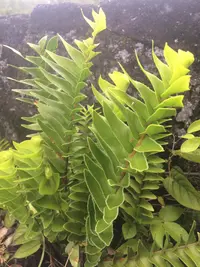
Nephrolepis abrupta is a terrestrial fern known for its arching fronds and dense, fountain-like clumps. It is often grown as a houseplant or in shaded outdoor beds. Native to tropical regions, it thrives in warm, humid environments with filtered light and consistent moisture. The fronds are finely divided, giving a soft, feathery look that works well in hanging baskets or as a lush accent plant. Nephrolepis abrupta tends to be moderately easy to grow when its need for humidity and evenly moist, well-drained soil is met. Understanding how to care for Nephrolepis abrupta mainly comes down to providing stable conditions and avoiding extremes in light and dryness.

Care Difficulty
Moderate Care

Light Preference
Bright Indirect Light

Water Requirements
Keep Soil Moist

Temperature Preference
Tropical / Frost Sensitive

Hardiness Zone
10–11

Soil Texture
Loamy, Peaty, Organic-rich

Soil pH
Acidic (5.5–6.5), Slightly acidic (6.5–7.0)

Soil Drainage
Moist but well-drained

Fertilization
Light (every 4–6 weeks)
Scan your plant to receive care tips personalized for your specific plant
Available on iOS and Android
This fern prefers bright, indirect light that mimics dappled forest shade.
This species needs consistently moist but not waterlogged soil to maintain healthy fronds.
Stable, warm conditions are important for strong frond growth and root health.
This fern prefers consistently moist air and reacts quickly to dry indoor conditions.
This species prefers a loose, moist, organic-rich substrate that never becomes waterlogged.
This fern grows very well in hanging baskets and other containers.
This fern benefits from light, consistent feeding during active growth but suffers if overfed.
Pruning helps maintain a dense, neat shape and supports healthy frond development.
Container-grown plants appreciate periodic repotting to refresh the root zone and support vigorous frond growth.
Division is the most reliable method to create new plants from a mature clump.
This fern is frost sensitive and benefits from sheltered conditions in regions with cold winters.

Plant Health Check
Not sure what's wrong with your plant? Check your plant's health inside the app.
In its native range in the Pacific and parts of Asia, Nephrolepis abrupta often grows as an epiphyte, anchoring on tree trunks or mossy branches rather than in soil, using its roots mainly for attachment rather than nutrient storage.
The species name abrupta refers to the way the pinnae, or leaflets, end rather suddenly with a blunt or slightly notched tip, which helps distinguish it from related Nephrolepis species that have more tapered leaflet tips.
Nephrolepis abrupta is thought to be native or early-introduced to Hawaii, where it has become widespread in moist forests and along streams, forming part of the understory vegetation and sometimes hybridizing with closely related sword fern species.
Brown tips or fronds usually come from low humidity, irregular watering, or salt buildup from fertilizer. Increase humidity, flush the potting mix with clean water occasionally, trim damaged fronds, and avoid letting the soil fully dry out for long periods.
Keep your plants happy and healthy with plant identification, disease detection, and easy care guidance.

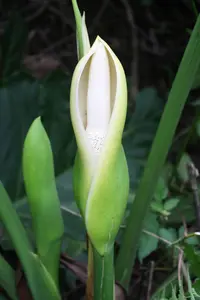
Thaumatophyllum undulatum
Thaumatophyllum undulatum

Philodendron
Philodendron 'Bloody Mary'
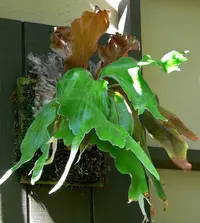
Platycerium stemaria
Platycerium stemaria
Monstera 'Karstenianum'
Monstera 'Karstenianum'
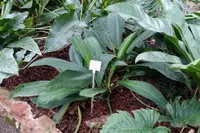
Philodendron wendlandii
Philodendron wendlandii
Fairy crassula
Crassula multicava
West Indian grape
Vitis tiliifolia
Japanese painted fern
Athyrium niponicum