Install sturdy supports
Set up a permanent trellis, wire system, or strainers before the canes reach 30–40 cm, then gently tie new growth with soft ties so the plant establishes a stable framework that carries heavy fruit loads without snapping.


Red-fruited bramble, Rubus scissus, is a thorny, woody shrub in the rose family, related to blackberries and raspberries. It forms arching canes and a dense, scrambling thicket over time.
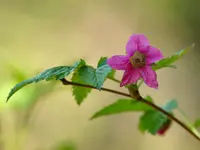
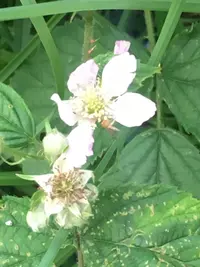
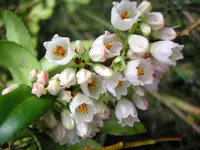
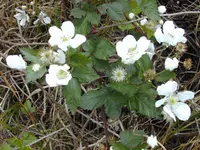
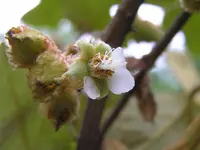
The plant carries white to pale pink flowers that develop into bright red aggregate fruits, attractive to wildlife and visually striking in the landscape. Its deciduous leaves create a more open, bare framework in winter.
Rubus scissus naturally occurs in parts of Europe, typically in woodland edges, hedgerows, and other semi-wild habitats. It is generally robust and adaptable, but the vigorous growth and prickly stems require some space and basic management.
It usually prefers sun to light shade, moderately moist, well-drained soil, and benefits from simple, regular pruning when you care for red-fruited bramble.

Care Difficulty
Moderate Care

Light Preference
Partial Sun

Water Requirements
Moderate Water

Temperature Preference
Cold Hardy

Hardiness Zone
5–8

Soil Texture
Loamy, Sandy, Organic-rich

Soil pH
Acidic (5.5–6.5), Slightly acidic (6.5–7.0)

Soil Drainage
Moist but well-drained

Fertilization
Minimal (feed rarely)
Scan your plant to receive care tips personalized for your specific plant
Available on iOS and Android
Rubus scissus performs best with consistent, bright outdoor light and some daily direct sun.
Rubus scissus prefers evenly moist, not soggy, soil supported by good drainage.
This bramble is cold-hardy but grows best within a moderate temperature range.
Humidity is not a major factor for Rubus scissus, which adapts well to typical outdoor air levels in most climates.
Rubus scissus performs best in deep, moist but well-drained, organically enriched ground.
This species can be grown in containers if the pot is large and stable enough for its vigorous, shrubby growth.
Rubus scissus responds well to modest, balanced feeding rather than heavy fertilization.
Pruning Rubus scissus maintains productivity, limits thickets, and improves air flow.
This species is usually grown in the ground, so focus on thoughtful transplanting rather than frequent repotting.
Rubus scissus is commonly propagated vegetatively to maintain desired traits and speed establishment.
Rubus scissus is generally cold hardy and needs only light winter attention in most temperate climates.

Plant Health Check
Not sure what's wrong with your plant? Check your plant's health inside the app.
Rubus scissus was only formally described in the 21st century from European material, highlighting how taxonomically complex the bramble group is and how new species are still being recognized within it.
This species is known from a relatively limited distribution in parts of western and central Europe, where it occurs in specific woodland and hedgerow habitats rather than being widespread like many other brambles.
Rubus scissus is considered part of a difficult species aggregate within the genus Rubus, and its recognition relies on detailed study of stem armature, leaf shape, and flower and fruit characters by specialist botanists.
This species spreads by arching canes and suckering roots but is usually moderate rather than rampant if pruned and harvested regularly. In fertile, unmanaged ground it can form dense thickets, so edging, mulching, and annual cane removal help contain it.
Keep your plants happy and healthy with plant identification, disease detection, and easy care guidance.