Encourage deep rooting
When plants are young, use less frequent but thorough irrigation and lightly hill soil around the base to promote deeper roots that better tolerate drought and hot winds.

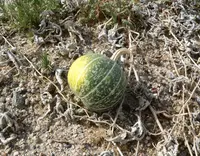
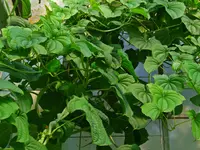
Coyote gourd, Cucurbita palmata, is a perennial vining plant in the squash family, native to arid regions of the southwestern United States and northern Mexico. It spreads along the ground with trailing stems, deeply lobed gray-green leaves, and large yellow flowers that develop into hard, round gourds.
This species is well adapted to dry, open habitats and poor, sandy or gravelly soils. It is drought tolerant once established, but young plants need some moisture to root deeply.
Because it is tough and vigorous, it can be easy to grow in the right climate, but its sprawling habit needs space. Understanding how to care for coyote gourd starts with providing full sun and well-drained soil.

Care Difficulty
Easy Care

Light Preference
Full Sun

Water Requirements
Low Water

Temperature Preference
Warm Climate

Hardiness Zone
8–11

Soil Texture
Sandy, Loamy, Rocky

Soil pH
Slightly acidic (6.5–7.0), Neutral (7.0)

Soil Drainage
Well-drained

Fertilization
Minimal (feed rarely)
Scan your plant to receive care tips personalized for your specific plant
Available on iOS and Android
This desert vine thrives in strong sun but still benefits from some seasonal moderation in exposure.
This species is highly drought-tolerant and prefers infrequent, deep watering once established.
This desert native prefers warm to hot conditions and is sensitive to hard frost.
Humidity is not a significant factor for Cucurbita palmata, which is adapted to very dry desert air.
This desert vine prefers very fast-draining, sandy soil that mimics its native habitat.
This species can be grown in containers, but the plant’s vigorous, sprawling habit makes it less convenient than in-ground culture.
This desert-adapted perennial gourd needs minimal feeding, but light inputs can support stronger growth in poor soils.
Pruning Cucurbita palmata is usually light and focused on keeping the plant healthy and manageable.
This species is rarely kept long term in containers, so care focuses on careful outdoor transplanting rather than frequent repotting.
New Cucurbita palmata plants are most reliably raised from seed under warm, bright conditions.
This desert native is fairly cold tolerant in its range and usually needs little active winter care once established.

Plant Health Check
Not sure what's wrong with your plant? Check your plant's health inside the app.
This species forms a very deep, thick taproot that allows the plant to access subsurface moisture and survive long periods of drought in arid desert habitats of the southwestern United States.
The small, hard fruits are intensely bitter due to high levels of cucurbitacins, a group of defensive compounds that deter most herbivores from eating them.
Its sprawling vines and extensive root system help stabilize sandy or gravelly soils, so wild populations often play a role in preventing erosion in desert washes and open scrub areas.

Cucurbita palmata can naturally hybridize with closely related native squashes, such as Cucurbita digitata, creating intermediate forms that have been important for understanding the evolution and diversification of wild gourds in North America.
The fruits are extremely bitter and not suitable as regular food. Pulp and seeds were traditionally used in small, processed amounts for medicinal and soap-making purposes. For home gardeners, it is safer to treat the plant as ornamental only.
Keep your plants happy and healthy with plant identification, disease detection, and easy care guidance.