Hoya verticillata Care

Hoya verticillata

About Hoya verticillata

Hoya verticillata is a tropical vining houseplant in the dogbane family, valued for its firm, glossy leaves and clusters of star-shaped, often fragrant flowers. It tends to climb or trail, so it is commonly grown on trellises, hoops, or in hanging containers indoors.

This species is native to parts of Southeast Asia, where it grows as an epiphyte on trees, absorbing moisture from humid air and debris around its roots. Its relatively slow growth, succulent-like foliage, and tolerance of brief dryness make it moderately easy to manage once established.

Many growers find that learning how to care for Hoya verticillata focuses on providing bright, indirect light, a free-draining potting mix, and careful watering that avoids prolonged soggy soil.

Main Plant Requirements

Care Difficulty

Moderate Care

Light Preference

Bright Indirect Light

Water Requirements

Low Water

Temperature Preference

Tropical / Frost Sensitive

Hardiness Zone

11–12

Soil Texture

Sandy, Loamy, Organic-rich

Soil pH

Acidic (5.5–6.5), Slightly acidic (6.5–7.0)

Soil Drainage

Well-drained

Fertilization

Light (every 4–6 weeks)

Get Personalized Care Plan

Scan your plant to receive care tips personalized for your specific plant

Available on iOS and Android

How to Care for the Hoya verticillata

This species prefers bright, indirect light with some gentle direct sun for best growth and flowering.

  • Provide 4–6 hours of bright, filtered light each day; early morning sun from an east window or lightly shaded patio suits Hoya verticillata well.
  • Avoid harsh midday and strong afternoon sun, which can cause leaf scorch, yellow patches, or crispy edges, especially behind glass.
  • If light is too low, vines stretch and flowering declines; move gradually to a brighter spot, especially in winter when daylength shortens.

This plant prefers a dry-down cycle rather than constantly moist soil.

  • Water thoroughly only when the top 2–4 cm of soil feels dry, letting excess drain away to avoid roots standing in water.
  • In spring and summer, expect more frequent watering as growth and evaporation increase; in fall and winter, extend the dry period between waterings.
  • Early signs of overwatering include soft, yellowing leaves and a sour soil smell; underwatering shows as limp, wrinkled leaves that recover after a deep soak.

Stable warm temperatures support healthy growth and reliable flowering.

  • Aim for 65–80°F (18–27°C) for active growth; short spikes to 85°F (29°C) are tolerated if humidity is moderate and soil is not waterlogged.
  • Protect the plant from cold; growth slows below 60°F (16°C) and tissue damage can occur near 40°F (4°C), so avoid exposure to frost entirely.
  • Keep away from heating vents, air conditioners, and drafty doors; sudden swings of more than 10°F (6°C) over a day can stress leaves and buds.

This species benefits from moderately humid air but copes with typical home conditions.

  • Aim for 50–70% humidity to support steady leaf growth and flowering.
  • It tolerates short periods around 35–40%, but prolonged very dry air can slow growth and reduce blooming.
  • Crisping leaf edges or stuck flower buds indicate low humidity; use a room humidifier or nearby pebble tray rather than misting heavily.

This species prefers a loose, aerated, fast-draining mix that mimics epiphytic growing conditions.

  • Use a chunky mix such as 40% fine bark, 30% perlite or pumice, and 30% peat-based or coco coir potting mix.
  • Ensure water runs through in seconds and the mix feels springy, not compacted, to keep roots oxygenated.
  • Target a slightly acidic to neutral pH around 6.0–7.0, which suits nutrient uptake for Hoya verticillata.
  • Avoid heavy garden soil, high-clay mixes, or pots where water lingers, as this encourages root rot.

This species is very suitable for container growing due to its vining habit and modest root system.

  • Choose a stable, relatively heavy pot or use a weighted cachepot so trailing vines or supports do not tip the container.
  • Select a container only 2–4 cm wider than the root ball to keep the mix drying at a reasonable rate between waterings.
  • Use porous materials like unglazed terracotta if the home is humid, as they allow faster evaporation and reduce waterlogging risk.

This species responds well to modest feeding during the active growing season.

  • Use a balanced liquid fertilizer (for example 10-10-10 or 20-20-20) at 1/4–1/2 strength for Hoya verticillata.
  • Feed every 4–6 weeks in spring and summer when growth is active.
  • Skip fertilizer in late fall and winter to avoid weak, stretched growth.
  • Organic options like dilute compost tea or a mild slow-release fertilizer also work well in airy potting mixes.

Light pruning helps maintain plant health and a tidy shape without reducing flowering.

  • Best time for pruning is late winter or early spring before strong new growth begins on Hoya verticillata.
  • Remove dead, yellowing, or damaged leaves and stems with clean, sharp scissors or pruning shears.
  • Thin crowded vines to improve light penetration and airflow, shaping the plant on its support.
  • Avoid cutting old flowering spurs, since these can rebloom from the same points.

This hoya prefers slightly tight pots and does not need frequent repotting.

  • Repot every 2–3 years, or when roots circle the pot, emerge from drainage holes, or growth slows noticeably.
  • Best time is spring, allowing the plant to recover and root into fresh mix during the growing season.
  • Choose a pot only 2–3 cm wider with good drainage and a chunky, airy mix to limit root stress.
  • Loosen circling roots gently, keep the root ball mostly intact, water lightly, then keep in bright, indirect light for several days.

Stem cuttings are the most reliable method for increasing plants of this species.

  • Take 2–3 node stem cuttings from healthy, non-flowering vines of Hoya verticillata in late spring or early summer.
  • Remove lower leaves and place nodes in moist, airy mix or water, keeping one node below the surface.
  • Maintain bright, indirect light, 70–80°F temperatures, and high humidity for consistent rooting.
  • Once roots reach 3–5 cm, pot into a small container with well-draining mix and avoid overwatering.

Hoya verticillata is frost-sensitive and needs mild, protected conditions in winter.

  • In climates below 55°F, grow in containers that can be moved indoors before night temperatures drop.
  • Keep indoor winter temperatures around 60–75°F and away from cold drafts or heater blasts.
  • Reduce watering, allowing the top mix to dry more between waterings, as growth slows in short days.
  • Provide bright, indirect light to prevent leaf drop and maintain plant strength for spring growth.

Care Tips

Supportive trellis training

Provide a small trellis, hoop, or wire grid and loosely tie new vines with soft plant ties so the stems harden in a stable position and flower clusters form along well-supported, well-lit sections.

Encourage bloom cycles

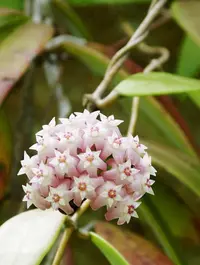
After flowering, avoid cutting off bare spurs and peduncles, since the plant often reuses these structures to produce new umbels of flowers from the same points each season.

Rooted cutting backup

Take a 1–2 node stem cutting in late spring, root it in a small pot with the same mix, and grow it alongside the mother plant as a genetic backup in case of accidental damage or severe pest issues.

Targeted mealybug checks

Inspect leaf axils, peduncles, and the undersides of older leaves monthly, and at the first sign of mealybugs isolate the plant and treat those tight spots with cotton swabs dipped in 70% isopropyl alcohol.

Rot-resistant repotting

During repotting, remove any soft, brown roots and dust the remaining healthy white roots lightly with a commercial fungicidal powder to lower the risk of root rot when returning the plant to a fresh, airy mix for caring for Hoya verticillata.

Common Pests and Diseases

Mealybugs

This pest often hides in leaf axils, along vines, and near nodes, feeding on sap and causing yellowing, leaf drop, and sticky honeydew. Symptoms include stunted new growth and cotton-like white clusters on stems and leaf undersides.

Solution

Isolate the plant, then wipe colonies off with cotton swabs dipped in 70% isopropyl alcohol and rinse the foliage with lukewarm water. Follow up with 2–3 applications of insecticidal soap or neem oil at 7–10 day intervals, and inspect nodes and hanging stems closely when caring for Hoya verticillata.

Spider mites

These insects thrive on Hoya leaves in warm, dry indoor air, causing fine stippling, dull foliage, and delicate webbing between leaves and along vines. Symptoms include slowed growth and a general greyed or dusty look to the leaves.

Solution

Increase humidity around the plant, then shower the foliage thoroughly to remove mites and webbing. Repeat strong water sprays and apply insecticidal soap or horticultural oil to both leaf surfaces every 5–7 days until new growth appears clean.

Soft scale

This pest appears as small, rounded bumps on stems and leaf veins, often matching the plant’s color and producing sticky honeydew. Symptoms include weakened vines, reduced flowering, and sooty mold growing on the honeydew deposits.

Solution

Gently scrape or wipe off visible scale with a soft cloth or cotton swab dipped in 70% isopropyl alcohol, then wash the plant under a gentle shower. Treat remaining juveniles with repeated applications of horticultural oil, ensuring thorough coverage of stems and the undersides of leaves.

Sooty mold

This disease is a fungal growth that develops on honeydew left by sap-sucking insects, forming black, soot-like patches on leaves and stems. Symptoms include reduced photosynthesis and dull, dirty-looking foliage, though leaf tissue is usually not directly damaged.

Solution

Eliminate the underlying honeydew-producing pests such as mealybugs or scale, then wipe affected leaves with a damp cloth and mild soapy water, followed by a clear rinse. Improve air circulation and keep foliage dry to discourage new fungal growth.

Leaf spot

This disease causes small water-soaked or yellowish spots that can expand into brown patches with defined edges, sometimes surrounded by a yellow halo. Symptoms include premature leaf drop, especially on crowded vines with poor air flow or leaves that stay wet for long periods.

Solution

Remove and discard affected leaves, then allow the soil surface to dry slightly and keep water off the foliage. Improve spacing and air movement around the plant, and if spots continue to spread, apply a copper-based or other houseplant-safe fungicide according to the label, focusing on the upper canopy and undersides of leaves.

Interesting Facts

Variable leaf forms

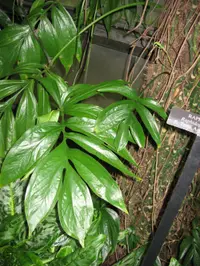
This species shows notable leaf variation, from narrow and lance-shaped to broader, almost oval blades, often even within the same clone, which has led to historical confusion with closely related Hoya species and forms.

Strongly scented umbels

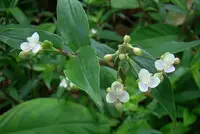
Its star-shaped white flowers with a contrasting pink to maroon corona are produced in tight, spherical umbels and emit a strong, sweet fragrance at night, which is thought to attract nocturnal pollinators such as moths.

Epiphytic climbing habit

In its native Southeast Asian habitats, this species typically grows as an epiphyte on trees or as a lithophyte on rocks, using its wiry, twining stems to climb toward brighter light in the forest canopy.

FAQs about Hoya verticillata

Lack of blooms usually comes from insufficient light, very frequent repotting, or removing old flower spurs (peduncles). Keep the plant slightly rootbound, provide bright light, avoid heavy pruning of peduncles, and maintain consistent temperatures to support flowering.

Grow Healthy Plants with Botan Care

Keep your plants happy and healthy with plant identification, disease detection, and easy care guidance.

Botan plant care app — identify plants on mobile

Explore More Plants