Trunk training
Select 1 strong central leader while the plant is young, remove low competing shoots gradually, and stake the main stem for the first 1–2 years to develop a stable, tree-like framework that can support heavy fruits.

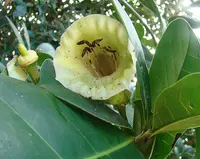
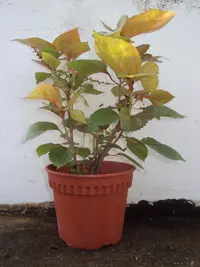
Black calabash, Amphitecna latifolia, is a small to medium evergreen tree from tropical coastal forests of Central America and the Caribbean. It is often grown for its unusual, rounded, gourd-like fruits and glossy, broad leaves. The flowers are tubular, pale to yellowish, and appear along older branches, giving the plant a distinctive, architectural look. In suitable climates it forms a dense canopy and can serve as a striking ornamental or shade tree. It prefers warm conditions, consistent moisture, and well-drained soil. Understanding how to care for black calabash starts with providing a stable, frost-free environment and protection from prolonged drought or cold winds.

Care Difficulty
Moderate Care

Light Preference
Full Sun

Water Requirements
Moderate Water

Temperature Preference
Tropical / Frost Sensitive

Hardiness Zone
10–12

Soil Texture
Sandy, Loamy, Organic-rich

Soil pH
Slightly acidic (6.5–7.0), Neutral (7.0)

Soil Drainage
Moist but well-drained

Fertilization
Minimal (feed rarely)
Scan your plant to receive care tips personalized for your specific plant
Available on iOS and Android
This tropical tree prefers bright, warm conditions with moderate protection from intense sun.
This species prefers consistently moist but not waterlogged soil, especially while establishing outdoors.
This lowland tropical tree thrives in warm, frost-free climates with minimal temperature swings.
This species prefers moderately humid air but usually adapts to typical household levels.
This species performs best in deep, well-drained, slightly acidic to neutral soil with plenty of organic matter.
This tree can be grown in large containers when root space and stability are carefully managed.
Amphitecna latifolia responds to modest feeding in cultivation, though established trees in fertile ground often need little added fertilizer.
Amphitecna latifolia benefits from light structural pruning to maintain a healthy canopy and flowering wood.
This tree is usually grown in the ground, so management focuses on transplanting young plants rather than frequent repotting.
Propagation of Amphitecna latifolia is usually done from seeds, though semi-ripe cuttings are also possible for growers with suitable conditions.
This tropical tree is frost-sensitive and needs protection in regions with cool or cold winters.

Plant Health Check
Not sure what's wrong with your plant? Check your plant's health inside the app.
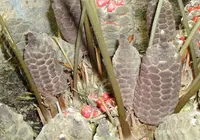
Its pale, tubular flowers open mostly at night and produce a strong odor that attracts nectar-feeding bats, which are the main pollinators in its native coastal forests.
The tree develops large, hard, gourd-like fruits with a thick woody shell that can float, helping disperse seeds along coastal areas and sometimes by sea currents.
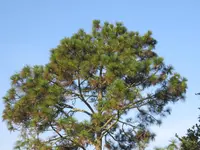
It naturally occurs in lowland tropical coastal habitats, often on limestone or sandy substrates, and tolerates salt-laden winds better than many inland rainforest trees.

The large woody fruits were traditionally used in parts of the Caribbean to make simple containers and utensils because the shell is tough, durable, and naturally bowl-shaped after the pulp is removed.
This tree is evergreen in frost-free climates, holding foliage year-round. In marginal cooler areas it may drop some leaves in cold or drought stress, then refoliate when conditions improve, so leaf density can fluctuate seasonally.
Keep your plants happy and healthy with plant identification, disease detection, and easy care guidance.