

Early trellis setup
Install a sturdy trellis or wire fence before vines start to run, then loosely tie the first shoots with soft garden ties so the plant climbs vertically instead of sprawling and smothering nearby vegetation.

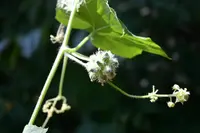
Oneseed bur cucumber, Sicyos angulatus, is an annual climbing vine in the gourd family. It grows rapidly and can form dense, scrambling thickets over nearby plants and structures. The plant has rough, lobed leaves, tendrils for climbing, small greenish flowers, and spiny burs that contain the seeds. It is native to North America and often occurs in moist disturbed areas, riverbanks, crop fields, and roadsides. Fast growth and heavy seeding make it vigorous and sometimes invasive, which complicates how to care for oneseed bur cucumber in managed spaces. It prefers sun to light shade, moist but drained soils, and support to climb.

Care Difficulty
Moderate Care

Light Preference
Full Sun

Water Requirements
Regular Water

Temperature Preference
Warm Climate

Hardiness Zone
5–10

Soil Texture
Sandy, Loamy, Clay

Soil pH
Acidic (5.5–6.5), Slightly acidic (6.5–7.0)

Soil Drainage
Moist but well-drained

Fertilization
Minimal (feed rarely)
Scan your plant to receive care tips personalized for your specific plant
Available on iOS and Android
This vigorous annual vine thrives in full sun but tolerates some light shade in hot regions.
This fast-growing species prefers consistently moist, well-drained soil without prolonged drying or waterlogging.
This warm-season vine grows best in mild to hot conditions and is very sensitive to frost.
Humidity is not a critical factor for Sicyos angulatus, which tolerates a wide range of ambient moisture levels.
Sicyos angulatus prefers loose, well-drained, moderately fertile soil that does not stay waterlogged.
This fast-growing vine is only moderately suitable for container culture and needs careful management to stay stable and hydrated.
This vigorous annual vine usually needs no fertilizer in natural soil, but light feeding can support growth in poor or container substrates when caring for oneseed bur cucumber.
Pruning Sicyos angulatus is mainly used to limit spread and manage density rather than improve flowering.
This annual vine is more often direct-sown or transplanted outdoors than grown long term in containers.
This species is most commonly propagated from seed, which has high viability under suitable conditions.
As an annual, this vine dies back with hard frost and usually needs no special winter care.

Plant Health Check
Not sure what's wrong with your plant? Check your plant's health inside the app.
This species is native to eastern North America, where it grows as an annual climbing vine in moist, disturbed habitats such as riverbanks, roadsides, and crop margins.
The plant produces small, green, spiny burs that contain several seeds; these cling to animal fur, clothing, or equipment, helping the species disperse over long distances.
In favorable conditions the vine forms dense mats over shrubs and trees, shading them out and altering light conditions in riparian and agricultural ecosystems, which has led to its classification as a noxious or invasive weed in several regions outside its native range.

Genetic and field studies show that this annual vine can produce extremely large seed banks in the soil, allowing populations to reappear for years after surface plants have been removed, which makes long-term management particularly challenging in invaded habitats.
This vine spreads very aggressively, often covering shrubs, fences, and other plants in a single season. It self-seeds heavily, so regular removal of young seedlings and burr-like fruits is essential if you want to limit its spread.
Keep your plants happy and healthy with plant identification, disease detection, and easy care guidance.

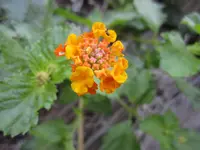
Lantana horrida
Lantana horrida

Pumpkin
Cucurbita moschata 'Musquee de Provence'
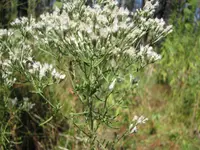
hyssopleaf thoroughwort
Eupatorium hyssopifolium
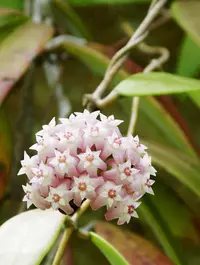
Hoya verticillata
Hoya verticillata
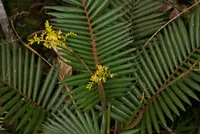
Yellow Rotang Palm
Calamus formosanus
 POPULAR
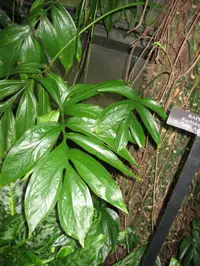
Creeping philodendron
Rhaphidophora decursiva
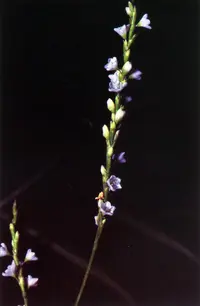
dotted knotweed
Persicaria punctata
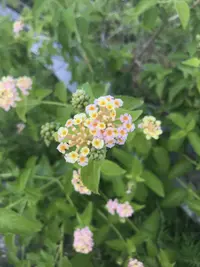
Lantana
Lantana × strigocamara