Pinch Young Stems
Pinch back the soft tips of young stems in late spring to encourage bushier growth and reduce flopping later in the season.

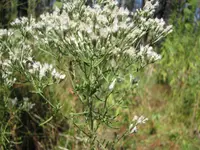
Hyssopleaf thoroughwort, Eupatorium hyssopifolium, is a perennial wildflower native to eastern North America, often found in open meadows, sandy fields, and roadsides. It belongs to the aster family and forms airy clumps of slender stems.
The plant carries narrow, threadlike leaves and loose clusters of small, white flower heads that attract many pollinators. It has a generally upright but delicate appearance.
This species tolerates poor, dry soils and once established can handle heat and short dry spells, which makes it relatively low-maintenance. Those who want to know how to care for hyssopleaf thoroughwort mainly need to focus on providing sun and well-drained soil.

Care Difficulty
Easy Care

Light Preference
Full Sun

Water Requirements
Moderate Water

Temperature Preference
Cold Hardy

Hardiness Zone
5–9

Soil Texture
Sandy, Loamy, Organic-rich

Soil pH
Acidic (5.5–6.5), Slightly acidic (6.5–7.0)

Soil Drainage
Moist but well-drained

Fertilization
Minimal (feed rarely)
Scan your plant to receive care tips personalized for your specific plant
Available on iOS and Android
This perennial prefers full sun but tolerates light shade in hotter regions.
This species prefers evenly moist but not saturated soil, especially during establishment.
This hardy perennial tolerates a wide outdoor temperature range once established.
This species is adaptable and humidity is rarely a limiting factor outdoors in its native range.
Eupatorium hyssopifolium performs best in light, well-drained mineral soils rather than dense, rich substrates.
This species can be grown in containers, but the setup must manage its height and spreading root system.
This native perennial generally needs minimal feeding in average garden soil.
Thoughtful pruning keeps Eupatorium hyssopifolium upright, tidy, and flowering well.
This species is more often transplanted in gardens than kept long-term in containers.
Eupatorium hyssopifolium is commonly propagated by division, cuttings, and seed.
This hardy perennial usually needs little special winter care in temperate climates.

Plant Health Check
Not sure what's wrong with your plant? Check your plant's health inside the app.
This species has unusually narrow, threadlike leaves that give it a fine, airy texture, allowing it to blend visually with grasses while still being a broadleaf perennial.
It flowers late in the season, often from late summer into fall, providing abundant nectar for native bees, butterflies, and other insects when many other wildflowers have finished blooming.
In the wild it often grows in dry, sandy, or pine barrens soils of the eastern United States, showing a strong adaptation to nutrient-poor, fast-draining sites where many other perennials struggle.
This species spreads moderately by self-seeding and short rhizomes. In well-prepared beds it usually forms loose colonies, not dense thickets. Deadhead spent flower heads before seeds mature if you want to limit spread in smaller gardens.
Keep your plants happy and healthy with plant identification, disease detection, and easy care guidance.