Provide climbing support
Install a sturdy, moisture-retentive moss pole or fern pole early and secure aerial roots to it with soft ties to encourage larger, more divided leaves and a stable vertical structure.

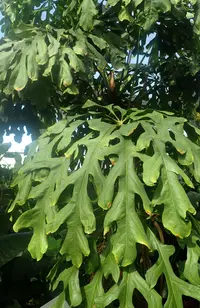
Anthurium clavigerum is a large tropical aroid with deeply divided, dramatic leaves that can develop long, dangling lobes as the plant matures. It often grows as an epiphyte, anchoring to trees in humid lowland forests.
This species is native to Central and South America, where it climbs and spreads in warm, shaded habitats. In cultivation it is considered moderately challenging due to its need for stable warmth, high humidity, and space to develop its climbing habit.
Growers who learn how to care for Anthurium clavigerum usually focus on providing bright filtered light, evenly moist but airy soil, and strong support for its vining stems.

Care Difficulty
Hard Care

Light Preference
Bright Indirect Light

Water Requirements
Keep Soil Moist

Temperature Preference
Tropical / Frost Sensitive

Hardiness Zone
11–12

Soil Texture
Loamy, Peaty, Organic-rich

Soil pH
Acidic (5.5–6.5), Slightly acidic (6.5–7.0)

Soil Drainage
Moist but well-drained

Fertilization
Light (every 4–6 weeks)
Scan your plant to receive care tips personalized for your specific plant
Available on iOS and Android
This species prefers bright, filtered light that mimics dappled tropical forest conditions.
Watering should keep the root zone evenly moist but never saturated.
Stable, warm conditions support strong growth and healthy foliage.
This species prefers high, stable humidity for healthy foliage and aerial roots.
This aroid prefers a loose, chunky, organic-rich mix that mimics epiphytic rainforest conditions.
This species adapts well to container growing when the pot supports its large, vining growth habit.
Nutrient support helps Anthurium clavigerum maintain strong foliage and root growth in containers.
Thoughtful pruning keeps Anthurium clavigerum tidy and supports healthy, directed growth.
Container-grown Anthurium clavigerum benefits from occasional repotting to refresh the root zone.
Vegetative propagation of Anthurium clavigerum is usually done on mature, well-established plants.
This tropical species is frost-sensitive and needs careful winter management in temperate climates.

Plant Health Check
Not sure what's wrong with your plant? Check your plant's health inside the app.
This species develops extremely dissected, octopus-like leaves that can form many narrow lobes, an adaptation that likely helps reduce wind resistance and shed water efficiently in its native lowland tropical forests.
It is a hemiepiphytic climber that often starts life on the forest floor, then attaches to tree trunks and eventually grows high into the canopy supported by long, rope-like aerial roots.
Unlike many showy anthuriums that rely heavily on insect visitors, this species produces long, slender inflorescences thought to be primarily adapted to wind pollination in exposed canopy conditions.

Individual leaves of this species can reach several feet in length in mature specimens growing high in humid tropical canopies, making it one of the aroids noted by collectors for its dramatically outsized, highly divided foliage.
This species is a climbing aroid that naturally anchors to trees with aerial roots. In containers it tends to climb upward rather than spread sideways, so a sturdy moss pole or similar vertical support helps maintain stable, healthy growth.
Keep your plants happy and healthy with plant identification, disease detection, and easy care guidance.