Host Grass Planning
Establish a patch of low, fine-rooted native grasses or sedges the season before planting, as this hemiparasitic species performs best when its roots can attach to suitable host plants.

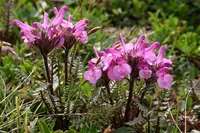
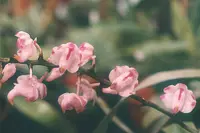
Pink lousewort (Pedicularis rosea) is a small, herbaceous wildflower known for its soft pink, tubular blooms arranged along upright, leafy stems. The finely divided, fern-like foliage gives the plant a delicate look, even in compact clumps.
This species is native to moist alpine and subalpine meadows in parts of Asia, where it often grows in cool, open habitats with consistent soil moisture. As a hemiparasitic plant, it taps into neighboring roots for some nutrients, which makes it more challenging to cultivate in typical garden settings.
Gardeners who want to learn how to care for Pink Lousewort should know it prefers cool temperatures, steady moisture, and light, humus-rich soils with good drainage.

Care Difficulty
Hard Care

Light Preference
Partial Shade

Water Requirements
Keep Soil Moist

Temperature Preference
Cool Climate

Hardiness Zone
6–9

Soil Texture
Loamy, Silty, Organic-rich

Soil pH
Acidic (5.5–6.5)

Soil Drainage
Moist but well-drained

Fertilization
Minimal (feed rarely)
Scan your plant to receive care tips personalized for your specific plant
Available on iOS and Android
This alpine wildflower prefers cool, bright conditions with protection from intense midday sun.
This species prefers consistently moist, cool soil without waterlogging.
This plant is adapted to cool, montane climates and dislikes prolonged heat.
This species prefers consistently moist, cool air and does not tolerate very dry conditions indoors or outdoors.
Pedicularis rosea grows best in cool, moist, but well-aerated soil with high organic content.
This species can be grown in containers but requires careful moisture and root-space management to stay healthy.
This hemiparasitic wildflower usually needs no fertilizer when grown in suitably poor, acidic soil with compatible host plants.
Pedicularis rosea benefits from light, targeted pruning to keep plants tidy and support flowering in naturalistic plantings.
This species is seldom grown in pots; focus on careful transplanting of young plants in suitable garden or meadow sites.
Due to its hemiparasitic nature, propagation of Pedicularis rosea is specialized and usually done by seed alongside suitable host plants.
In climates with cool to cold winters, this hardy perennial usually needs minimal winter care once established in the ground.

Plant Health Check
Not sure what's wrong with your plant? Check your plant's health inside the app.
This species naturally grows in moist alpine meadows and along stream banks in the eastern Himalaya, often at elevations above 3,000 m, where snowmelt keeps the soil cool and wet through the growing season.
Pedicularis rosea is a hemiparasite, meaning it photosynthesizes but also taps into the roots of neighboring plants to draw additional water and nutrients through specialized structures called haustoria.
The pink, helmet-shaped flowers are adapted for pollination mainly by long-tongued bumblebees, which pry open the upper lip of the corolla to reach nectar and in doing so pick up and transfer pollen.

In parts of its native Himalayan range, dense flowering stands of Pedicularis rosea can color entire patches of alpine pasture pink in early summer, providing a highly visible seasonal signal of snowmelt progression and short growing-season timing to local herders and field botanists.
Lack of flowers often comes from plants being too dry at critical growth stages, planted in overly rich or dry soils, or kept too warm. Cool, consistently moist conditions and avoiding heavy fertilization usually improve flowering over the next season.
Keep your plants happy and healthy with plant identification, disease detection, and easy care guidance.