White King's-Spear Care (Asphodeline taurica)

White King's-Spear

About White King's-Spear

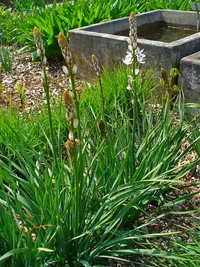
White king's-spear, Asphodeline taurica, is a clump-forming perennial from rocky, dry slopes in parts of southeastern Europe and western Asia. It belongs to the asphodel family and is adapted to poor, stony soils.

The plant produces narrow, grassy blue-green leaves and tall, upright spikes of starry white flowers that open in succession, giving a vertical accent in mixed borders or gravel gardens.

Its drought tolerance and preference for well-drained soil make it suitable for low-maintenance, sunny sites. Gardeners who learn how to care for White King's-Spear usually find it reliable as long as excessive moisture is avoided.

Main Plant Requirements

Care Difficulty

Easy Care

Light Preference

Full Sun

Water Requirements

Low Water

Temperature Preference

Cold Hardy

Hardiness Zone

5–9

Soil Texture

Sandy, Loamy, Rocky

Soil pH

Slightly acidic (6.5–7.0), Slightly alkaline (7.0–7.5)

Soil Drainage

Well-drained

Fertilization

Minimal (feed rarely)

Get Personalized Care Plan

Scan your plant to receive care tips personalized for your specific plant

Available on iOS and Android

How to Care for the White King's-Spear

This sun-loving perennial from rocky habitats performs best in open, bright conditions.

  • Provide 6–8 hours of direct sun daily; full sun suits White King's-Spear in most temperate climates.
  • Accepts light afternoon shade in very hot summers, but too much shade causes floppy growth and fewer flower spikes.
  • In early spring and late autumn, ensure plants are not shaded by taller perennials or structures, and watch for pale, stretched leaves as a sign of insufficient light.

This drought-tolerant perennial prefers infrequent, deep watering rather than constant moisture.

  • In the ground, water only when the top 5–7 cm of soil are completely dry, then soak the root zone thoroughly.
  • Use sharply drained, sandy or gravelly soil so water never pools around the crown; standing water quickly leads to root rot in Asphodeline taurica.
  • During hot, dry summer spells, watch for limp, curling foliage as a sign to water; yellowing, mushy leaves indicate overwatering.

This hardy species tolerates a wide temperature range but grows most vigorously in moderate conditions.

  • Active growth is strongest around 60–75°F (16–24°C), typical of mild spring and early summer weather.
  • Established plants tolerate winter lows near 0°F (−18°C) with good drainage, but young plants benefit from mulch in colder regions.
  • In summer, it handles heat up to about 90°F (32°C) if soil is not waterlogged; prolonged extreme heat with high humidity can stress plants and reduce flowering.

This species tolerates a wide humidity range and usually does not need special humidity control indoors or outdoors.

Asphodeline taurica prefers mineral, free-draining soil that mimics dry, rocky slopes.

  • Use sandy or gravelly loam with at least 40–50% coarse sand or grit to prevent water retention around the roots.
  • Ensure rapid drainage by avoiding high peat content; mix in fine gravel or perlite instead of sponge-like organic materials.
  • Aim for slightly alkaline to neutral pH (7.0–8.0), adding garden lime if the native soil is very acidic.
  • Avoid heavy clay, compacted sites, or locations that stay wet after rain, as prolonged saturation promotes root rot.

This species can be grown in containers if the pot is set up to stay dry around the roots.

  • Choose a deep, narrow pot so the long taproot can extend downward without curling at the base.
  • Fill the base with a 2–3 cm layer of coarse gravel to speed drainage away from the root zone after watering.
  • Use an unglazed terracotta pot to allow evaporation through the sides, which keeps the mix drier in rainy or cool periods.

This drought-tolerant perennial needs only modest feeding for reliable growth and flowering.

  • Apply a light dressing of compost or well-rotted manure around clumps in early spring as new growth starts.
  • Use a balanced slow-release fertilizer (around 10-10-10) at half strength once in spring for White King's-Spear in poorer soils.
  • Avoid high-nitrogen products, which push leafy growth over flowers and can weaken stems.
  • Do not feed during late fall and winter dormancy to prevent soft, frost-prone growth.

Pruning Asphodeline taurica is simple and mainly focuses on tidiness and supporting good flowering.

  • In late spring to early summer, deadhead spent flower spikes at the base to encourage a neater appearance.
  • Remove dead, yellowing, or damaged leaves at ground level using clean, sharp hand pruners or scissors.
  • Thin out congested clumps every few years by taking out the weakest shoots to maintain airflow and vigor.
  • Avoid cutting fresh green foliage hard in autumn so the plant can store energy for next season.

This species is more often grown in garden beds than in containers, so focus on careful transplanting of established clumps.

  • Plan transplanting for early spring or early fall, when temperatures are mild and soil is workable.
  • Look for signs such as crowded crowns, declining flowering, or slow growth despite good care.
  • Lift clumps with a fork, keeping as much root and surrounding soil as possible to limit disturbance.
  • Replant into well-drained soil at the same depth, water thoroughly, then keep evenly moist until re-established.

Asphodeline taurica is most commonly propagated by seed or by division of mature clumps.

  • Sow fresh seeds in late fall or early spring in a gritty, well-drained mix, as they benefit from cool conditions.
  • Provide bright light and keep the substrate just lightly moist to support steady germination.
  • Divide established clumps in early spring, lifting and gently teasing sections apart with several shoots and roots each.
  • Replant divisions immediately, water in well, and shade lightly for 1–2 weeks to reduce transplant stress.

This hardy perennial usually needs minimal winter attention in most temperate gardens.

  • Tolerates typical frost in USDA zones around 5–8 when planted in well-drained soil.
  • Apply a light 5–8 cm mulch after the ground cools, keeping it slightly away from the crowns to prevent rot.
  • Allow foliage to die back naturally, cutting it off near ground level in late winter before new growth emerges.
  • Move container-grown plants to a sheltered, unheated spot to avoid repeated freeze–thaw of the root ball.

Care Tips

Improve Winter Drainage

In cold, wet climates, plant on a raised mound or low berm 10–15 cm high to keep the crown above the soggiest soil and reduce winter rot risk when growing White King's-Spear.

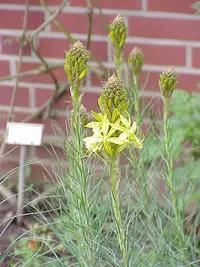
Support Tall Spikes

Install discreet, thin stakes or low plant rings before flower spikes reach 30–40 cm so the tall stems stay upright in wind and do not snap at the base.

Gravel Mulch Layer

Use a 2–3 cm top layer of coarse grit or gravel around the crown instead of organic mulch to protect the roots while keeping the neck of the plant dry and discouraging rot.

Control Self-Seeding

If volunteers are not wanted, cut spent flower spikes before seed pods fully mature and dispose of them, leaving only a few stems to ripen if seed collection is planned.

Divide Sparingly

Only lift and divide clumps every 5–7 years in early spring, and replant divisions immediately at the same depth to reduce transplant shock and maintain strong flowering.

Common Pests and Diseases

Rust

This disease causes orange to brown powdery pustules on leaves and flower stems, often leading to early yellowing and dieback. Symptoms include weakened clumps and reduced flowering.

Solution

Remove and dispose of affected leaves as soon as pustules appear, and avoid overhead watering to keep foliage dry. Improve spacing and airflow around plants, and if rust is persistent, apply a sulfur or copper-based fungicide labeled for ornamental perennials, following the product directions carefully.

Leaf spot

This disease produces small tan to dark brown spots on leaves that may merge into larger patches in wet or crowded plantings. Symptoms include premature browning and a generally untidy appearance of the clump.

Solution

Cut off and discard spotted foliage to reduce the source of infection, and water at soil level rather than over the leaves. Increase sun exposure and air circulation where possible, and in severe cases use a broad-spectrum ornamental fungicide during damp periods according to label instructions.

Aphids

These insects cluster on young shoots and flower stems, sucking sap and causing curling, distortion, and sticky honeydew that can attract sooty mold. This pest can also weaken developing flower spikes and reduce bloom quality.

Solution

Spray colonies off with a strong stream of water from a hose, focusing on tender shoot tips and undersides of leaves. For persistent infestations, apply insecticidal soap or a light horticultural oil, repeating as needed and avoiding application during high heat or direct midday sun.

Narcissus bulb fly

This pest lays eggs near the base of plants, and the larvae tunnel into the fleshy rootstock, causing sudden yellowing, collapse of shoots, or failure to emerge in spring. Symptoms include soft, decayed centers when affected clumps are lifted and inspected.

Solution

Lift and inspect declining clumps, discarding any soft or tunneled root sections and replanting only firm, healthy pieces. Use fine mesh or fleece over emerging shoots in early spring in regions where this fly is active, and maintain strong plant vigor with well-drained soil to help remaining plants tolerate minor damage.

Crown rot (wet soil)

This disease develops in poorly drained or heavy soils, leading to a soft, brown, decaying crown and collapse of shoots from the base. Symptoms include stunted growth, yellowing foliage, and plants that pull away easily at soil level.

Solution

Dig up and discard severely affected plants and improve drainage by loosening soil, adding grit, or creating raised beds before replanting. Water deeply but infrequently, avoid waterlogged conditions, and space plants so air can move around the crown to support long-term Asphodeline taurica plant care.

Interesting Facts

Crimean steppe specialist

This species is naturally concentrated in the Crimean Peninsula and neighboring steppe and rocky habitats, where it grows in dry, open, limestone-rich soils that many other perennials cannot tolerate.

Evening-scented flowers

Its star-shaped white flowers typically open more fully and release a stronger fragrance in the evening, which aligns with the activity patterns of its main pollinating insects in its native range.

Distinct from garden asphodelines

Although often confused with other ornamental asphodelines in cultivation, this species is botanically distinguished by its more compact habit, narrower leaves, and specific distribution centered on Crimea and adjacent regions.

FAQs about White King's-Spear

Poor flowering usually comes from insufficient light, overly rich or waterlogged soil, or young, crowded clumps. Ensure full sun, good drainage, and avoid heavy feeding. Mature clumps often need several seasons to build enough energy to flower well.

Grow Healthy Plants with Botan Care

Keep your plants happy and healthy with plant identification, disease detection, and easy care guidance.

Botan plant care app — identify plants on mobile

Explore More Plants