Rocky site preparation
Before planting, clear a sunny rock garden pocket or crevice of competing roots and mix in coarse grit or small gravel so the bulbs sit in a sharply drained, stony matrix that mimics their native mountain habitat.

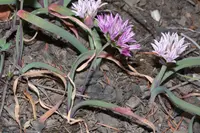
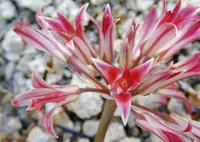
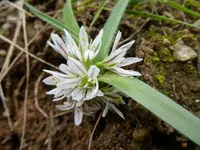
Olympic onion, Allium crenulatum, is a small bulb-forming perennial native to rocky slopes and open ridges of the Pacific Northwest mountains. It often grows in thin, gravelly soils with good drainage. The plant forms low clumps of narrow, grass-like leaves and produces rounded clusters of pink to rose flowers on short stems in late spring or early summer. Its compact size and tolerance of lean, well-drained soil make it suitable for rock gardens and troughs. It prefers full sun, moderate moisture, and protection from heavy summer irrigation. These traits make it relatively easy to grow for those who learn how to care for Olympic onion in conditions similar to its natural habitat.

Care Difficulty
Moderate Care

Light Preference
Full Sun

Water Requirements
Low Water

Temperature Preference
Cold Hardy

Hardiness Zone
4–8

Soil Texture
Sandy, Loamy, Rocky

Soil pH
Slightly acidic (6.5–7.0), Neutral (7.0)

Soil Drainage
Well-drained

Fertilization
Minimal (feed rarely)
Scan your plant to receive care tips personalized for your specific plant
Available on iOS and Android
This mountain onion prefers bright, open conditions that mimic its native rocky slopes.
This small bulb needs moisture in the cool season but drier conditions once foliage begins to fade.
This species is adapted to cool summers and cold, snowy winters typical of higher elevations.
Humidity is not a significant factor for Allium crenulatum, which is adapted to dry, open habitats.
Allium crenulatum prefers sharply drained, gritty soil that mimics its native rocky slopes.
This species can grow reasonably well in containers if drainage is carefully managed.
This small native bulb needs only light feeding, so focus on supporting soil health rather than heavy fertilizer inputs when caring for Olympic onion.
Allium crenulatum needs minimal pruning, mainly to keep clumps tidy and reduce disease risk.
This species is most often grown in rock gardens or beds, so focus on dividing and transplanting clumps rather than frequent repotting.
Allium crenulatum is commonly propagated by division of bulbs and, less often, by seed for larger naturalized colonies.
This mountain onion is cold hardy in much of the US and usually needs little special winter care in the ground.

Plant Health Check
Not sure what's wrong with your plant? Check your plant's health inside the app.
This species is native to the Pacific Northwest mountains, where it grows in thin soils on rocky ridges, talus, and exposed outcrops, often above 1,000 m. Its bulbs anchor in crevices that drain quickly and experience strong temperature swings.
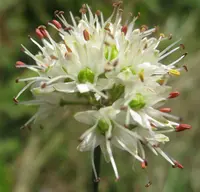
The tepals, which are petal-like flower parts, have finely scalloped or notched edges that give the umbels a frilled appearance. This crenulated margin is a key trait used by botanists to distinguish it from closely related mountain onions.
The compact clusters of pink to rose-purple flowers offer accessible nectar and pollen to small native bees and other insects in short alpine summers. Flowering typically coincides with snowmelt, helping early-season pollinators find reliable forage.

This species is considered a regional endemic in the Pacific Northwest, with natural populations restricted to specific mountain ranges in Washington, Oregon, and parts of British Columbia, making its rocky alpine habitats especially important for long-term conservation.
The bulbs and leaves are technically edible, as with many wild alliums, but this species is small and not usually harvested for food. Local regulations may also protect it, so culinary use is not recommended.
Keep your plants happy and healthy with plant identification, disease detection, and easy care guidance.