Stake Heavy Stems
Install discreet bamboo stakes or a slim cage early in the season so you can loosely tie stems before they arch and snap under their own weight, especially in windy or exposed spots.

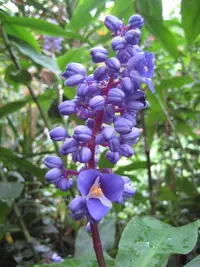
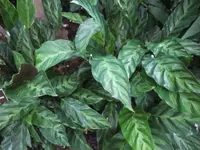
Blue ginger, Dichorisandra thyrsiflora, is a tropical perennial from the rainforests of Brazil. It is grown mainly for its vivid blue flower spikes and lush, glossy foliage.
This plant forms upright clumps that resemble a small ginger, though it is actually in the spiderwort family. In warm, humid conditions it can reach shrub-like size and bloom over a long season.
It prefers bright, filtered light, consistently moist but not waterlogged soil, and good air circulation. Once its basic needs are understood, it is moderately easy to care for Blue ginger in suitable indoor or outdoor settings.

Care Difficulty
Moderate Care

Light Preference
Partial Shade

Water Requirements
Keep Soil Moist

Temperature Preference
Tropical / Frost Sensitive

Hardiness Zone
10–11

Soil Texture
Loamy, Organic-rich

Soil pH
Acidic (5.5–6.5), Slightly acidic (6.5–7.0)

Soil Drainage
Moist but well-drained

Fertilization
Light (every 4–6 weeks)
Scan your plant to receive care tips personalized for your specific plant
Available on iOS and Android
This species prefers bright, indirect light that mimics a lightly shaded tropical understory.
This plant prefers evenly moist but not saturated soil throughout the active growing season.
This tropical species grows best in consistently warm, frost-free conditions.
This species prefers consistently high humidity to maintain healthy foliage and flowering.
This species grows best in evenly moist, airy, organic-rich soil that drains freely yet does not dry out rapidly.
This species is well suited to container growing, especially in cooler climates where it cannot stay outdoors year-round.
This species responds well to moderate feeding during the warm growing season.
Pruning supports tidy growth and sustained flowering in Dichorisandra thyrsiflora.
Container-grown plants benefit from periodic repotting to maintain vigorous growth.
This plant is most often propagated by stem cuttings or division.
Cold-sensitive plants need considered winter care in regions with frost or freezing temperatures.

Plant Health Check
Not sure what's wrong with your plant? Check your plant's health inside the app.
Despite the common name blue ginger, this species is not a true ginger at all but belongs to the Commelinaceae, the same family as tradescantia and spiderwort, which is evident in its three-petaled, asymmetrical flowers.
The tall, cane-like stems are actually formed by tightly overlapping leaf bases, called pseudostems, which help the plant stay upright in the shaded, humid understory of Atlantic Forest habitats in Brazil.
In suitable climates the plant often flowers from late summer into fall, producing dense, tapered clusters of blue to violet blooms at the tips of stems, which can extend ornamental interest beyond the usual tropical flowering season.

This species is native to remnants of Brazil’s Atlantic Forest, one of the world’s most threatened biodiversity hotspots, and is sometimes used in conservation-focused gardens to highlight flora from this endangered ecosystem.
Lack of flowers often comes from insufficient light, irregular feeding, or allowing the plant to dry out repeatedly. Stable warmth, bright shade, and a balanced fertilizer during the growing season usually restore flowering over time.
Keep your plants happy and healthy with plant identification, disease detection, and easy care guidance.